
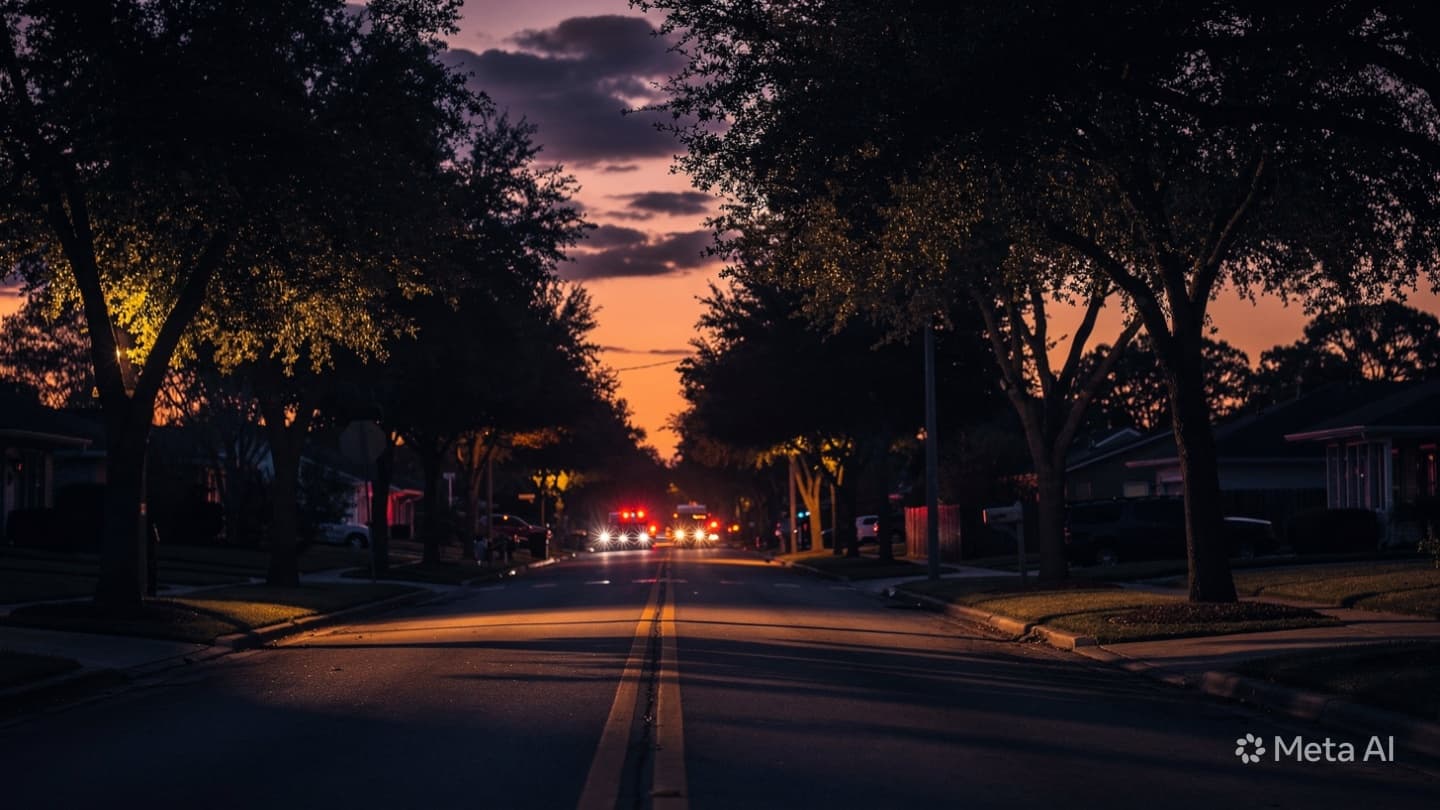
There is a particular kind of silence that descends upon a neighborhood when the normal flow of life is interrupted by something profound and jarring. In a corner of Oregon today, the air has grown still, charged with the weight of an ongoing crisis that has left a community in a state of suspended animation. The scene is one of stark contrast: the familiarity of suburban streets, the quietude of a residential afternoon, now intersected by the presence of law enforcement and the grim uncertainty of an individual barricaded within a home.
When news of a fatal shooting breaks the veneer of a community’s peace, the initial shock is often replaced by a slow, gnawing awareness of the fragility of our collective safety. We hear reports of casualties, and the analytical mind attempts to piece together a narrative that makes sense of the senseless. Yet, in this moment, the facts are secondary to the atmosphere—the tension that ripples through the cordoned-off blocks, the quiet communication among neighbors, and the professional, somber movements of the tactical teams as they navigate the impasse.
It is a situation that forces a collective pause, a moment where the rhythm of the everyday is discarded in favor of a singular, desperate focus. We watch, we wait, and we reflect on the nature of these events—how they materialize from the shadows of a life unseen and manifest in the disruption of the public order. The barricade itself becomes a symbol of this disconnection, a physical barrier that separates the known world of the community from the turbulent, unresolved reality inside the home.
As law enforcement works to resolve the situation, there is a meticulous adherence to procedure, a commitment to the preservation of life that stands as a testament to their difficult role in such moments. They operate with a calculated patience, knowing that the outcome is never guaranteed and that the volatility of the situation demands a steady hand and a clear, focused intent. This is the machinery of our response, the structured effort to restore a sense of balance when the foundation has been so severely shaken.
The community, meanwhile, is left to process the unfolding event from behind the barriers, feeling the weight of the tragedy without having the context to fully grasp it. They are the silent witnesses, the ones whose homes are now the backdrop for a story that will permanently mark the history of their town. It is a shared burden, an experience of communal trauma that necessitates a support system beyond the tactical, one that is built on the simple, vital act of leaning on one another in the wake of the unforeseen.
Reflecting on such events, one is struck by the vast distance between our internal lives and the external actions that can shatter a community in an instant. The questions—the why, the how, the what if—will undoubtedly follow, as they always do, but for now, the focus is on the present, on the resolution, and on the slow, often agonizing work of moving toward a future where the current silence is replaced by the resumption of normalcy.
We observe the developments from a distance, our thoughts anchored in the hope for a peaceful conclusion. This incident in Oregon serves as a somber reminder of the vulnerabilities we hold within our structures, of the capacity for a singular act to command the attention and the collective energy of a community. It is a heavy, sobering reality, one that highlights the necessity of both the protective mechanisms we build and the communal bonds we foster to survive the aftermath of such disruptions.
In the end, as the sun dips below the horizon and the scene remains frozen, we are reminded of the inherent unpredictability of the world we navigate. We look to the authorities, we look to our neighbors, and we look within ourselves to find the capacity for resilience. The resolution of the barricade will eventually come, the investigation will ensue, but the memory of this day, of this stillness in an Oregon town, will linger, a testament to the fragile, and sometimes precarious, nature of the lives we live.
Note: This article was published on BanxChange.com and is powered by the BXE Token on the XRP Ledger. For the latest articles and news, please visit BanxChange.com