
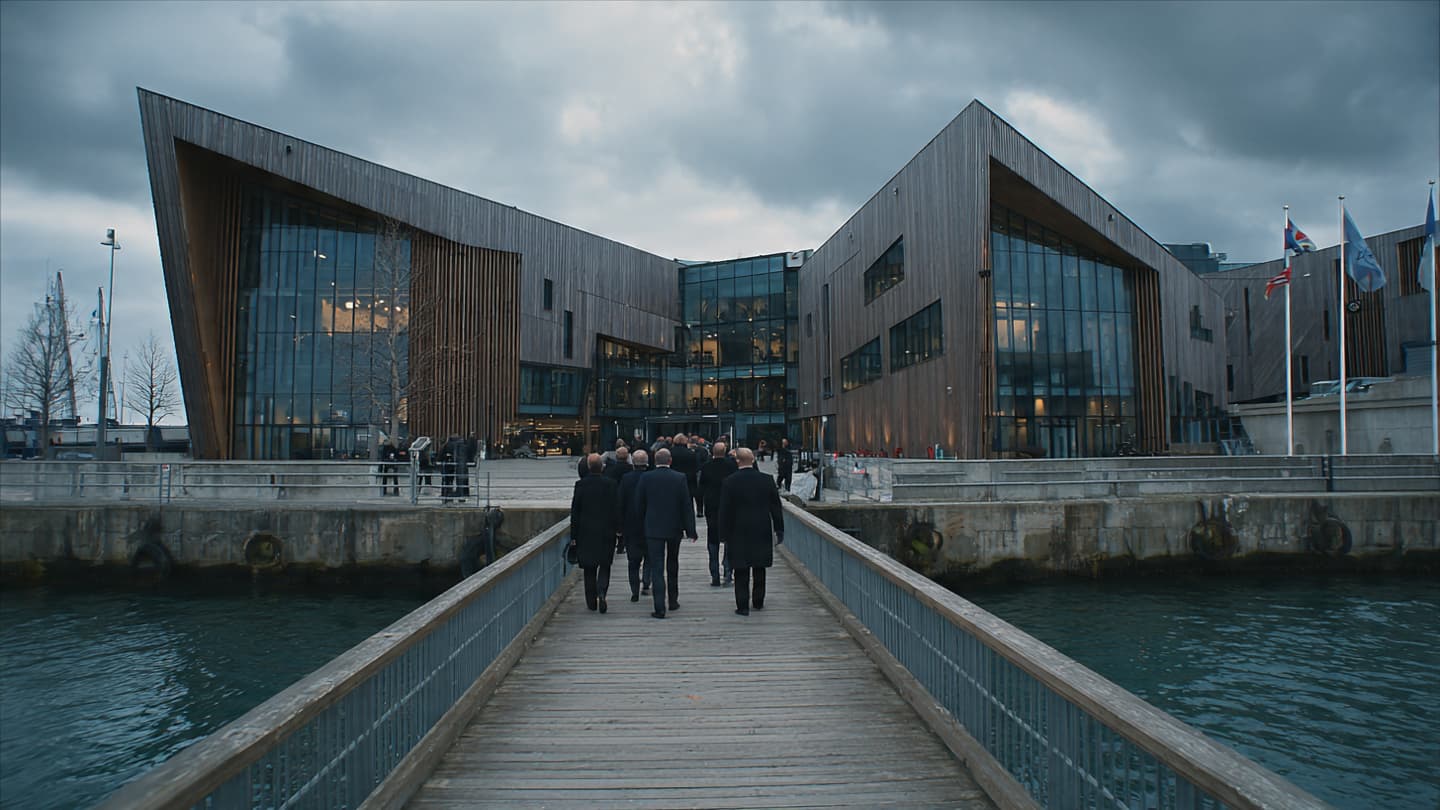
The sea air in Helsingborg carried the cool restraint of late spring, moving softly between conference halls and harbor cranes while diplomats crossed polished corridors beneath the pale Nordic light. Around the gathering of NATO foreign ministers, conversations unfolded not with thunder, but with the measured cadence of officials accustomed to uncertainty — a world where military movements are often announced in brief statements, yet echo for years across borders and generations.
It was there, against the quiet coastline of southern Sweden, that NATO Secretary General Mark Rutte welcomed the announcement by Donald Trump that the United States would send 5,000 additional troops to Poland. The decision arrived after days of confusion surrounding earlier signals from Washington that suggested deployments to the alliance’s eastern flank might instead be scaled back.
In Europe, where memory often travels alongside geography, troop movements are never merely logistical. They move through older histories — through railway towns, forests once crossed by armies, and capitals that learned long ago to measure security not only in treaties, but in presence. Poland, positioned along NATO’s eastern frontier, has increasingly become one of those symbolic crossroads where alliance politics and regional anxiety meet.
The announcement appeared to reverse an earlier Pentagon decision that had halted or delayed a planned deployment of thousands of American troops. That earlier pause had stirred concern among several NATO allies already watching Washington’s broader reassessment of its military posture in Europe. For weeks, officials across the alliance had been preparing for the possibility that the United States might gradually reduce its footprint on the continent, urging European members to carry more of the burden for their own defense.
Yet diplomacy often moves like weather over water — shifting direction with little warning. Trump’s latest declaration, shared publicly and tied in part to his relationship with Polish President Karol Nawrocki, altered the atmosphere almost overnight. NATO commanders, according to Rutte, were already working through the operational details as ministers gathered in Sweden.
For Poland, the decision carried both strategic and emotional significance. Warsaw has long argued that NATO’s eastern edge requires visible reinforcement, especially as instability continues to shape the wider region surrounding Ukraine and the Baltic corridor. American troops stationed on Polish soil have come to represent more than military capability; they function as a physical reassurance that the alliance’s promises remain tangible.
Still, beneath the formal welcomes and diplomatic phrasing, there lingered a quieter uncertainty. Several allied officials described Washington’s recent messaging as difficult to interpret, particularly after earlier statements emphasizing reductions in Europe. Some governments privately questioned whether the troop deployment reflected a long-term strategy or a temporary political adjustment shaped by personal alliances and shifting pressures inside NATO itself.
The broader conversation unfolding around the alliance has become increasingly complex. Europe is simultaneously attempting to strengthen its own defense capacity while remaining deeply reliant on American military infrastructure, intelligence, and deterrence. Rutte himself acknowledged this balance in Sweden, noting that NATO’s trajectory still points toward a “stronger Europe” that gradually becomes less dependent on a single ally, even as American deployments continue to anchor the alliance’s eastern defenses.
Outside the conference venue, the Swedish coastline remained calm. Ferries crossed the narrow straits between Scandinavia and continental Europe much as they always have, carrying commuters, cargo, and ordinary routines beneath cloudy skies. Yet beneath those familiar movements, another map was quietly being redrawn — one marked not by roads or shipping lanes, but by calculations of deterrence, alliance cohesion, and political trust.
For NATO, the announcement may offer short-term reassurance to allies closest to Russia’s frontier. But it also underscores the fragile rhythm now shaping transatlantic security: a pattern of reversals, recalculations, and carefully managed public signals. In today’s Europe, even a single troop announcement can ripple outward across ministries, markets, and borderlands alike.
As ministers departed Helsingborg and the Baltic evening settled over the harbor, the alliance carried forward with its familiar mixture of confidence and caution. The troops themselves may soon arrive on Polish soil, but the larger question — how Europe and America will define their partnership in the years ahead — continues to move quietly beneath the surface, like tides beneath cold northern waters.
AI Image Disclaimer: Illustrations were generated using AI and are intended as visual interpretations of current events.
Sources:
Reuters Associated Press CBS News AFP The Washington Post
Note: This article was published on BanxChange.com and is powered by the BXE Token on the XRP Ledger. For the latest articles and news, please visit BanxChange.com