
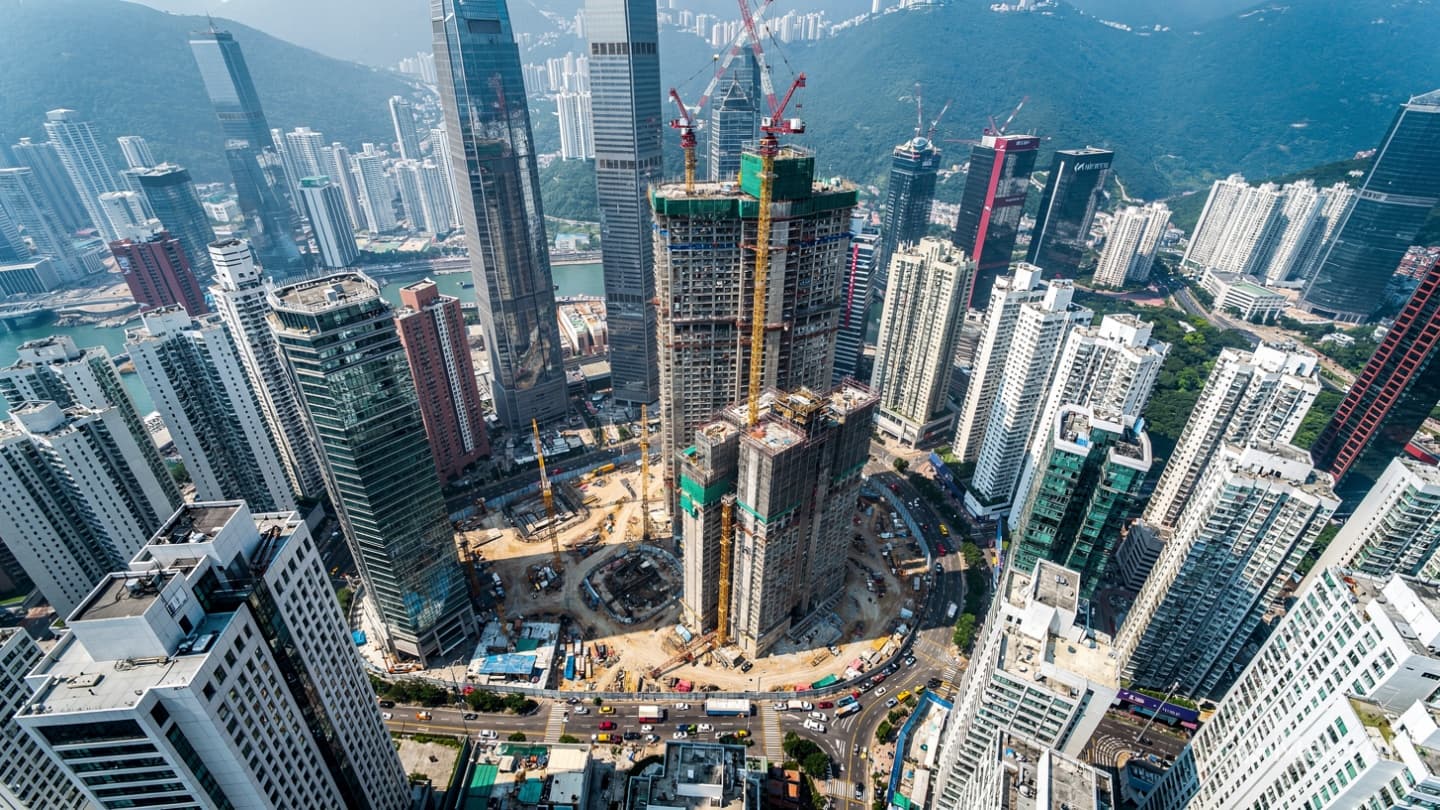
In the quiet hours before the city reaches its crescendo, the vertical world of Hong Kong demands an unwavering precision. High above the bustling thoroughfares of the Mid-Levels, where the skyline pushes against the persistent humidity of early summer, the skeleton of a new structure stood as a testament to the ceaseless growth of the metropolis. For those who weave their days into the lattice of scaffolding and steel, the environment is both a workplace and a precarious landscape of rhythm and risk.
The morning light usually catches the metallic edges of these sites, casting long shadows that stretch across the surrounding greenery. Workers move with a practiced ease, their motions dictated by the necessity of balance and the complex choreography of urban development. It is a world where height is measured in meters and time is marked by the shifting sun, yet every structural element relies on the integrity of the whole, a delicate architecture of human effort.
On this particular morning, a sudden stillness disrupted the routine hum of construction. The architecture of the site, typically so robust in its appearance, proved unexpectedly vulnerable to the forces of physics and chance. What began as a standard operation quickly transformed, shifting the atmosphere of the site from one of industrious progress to an immediate, heavy silence that seemed to ripple outward across the neighborhood.
The scaffolding, a temporary companion to the rising building, succumbed to an unforeseen compromise. In that singular moment, the line between safety and tragedy thinned, leaving no space for correction. The event unfolded with a swiftness that defied the measured pace of the day, turning the focus of those present toward the ground below, where the reality of the situation became starkly, irrevocably clear.
Emergency responders moved quickly to navigate the dense urban fabric, arriving as the morning heat began to intensify. The contrast between the rigid, unyielding construction materials and the fragility of the human form has always been a somber aspect of city building, a reality that the city acknowledges through rigorous protocols and constant vigilance.
Investigation teams from the Labour Department have since initiated their inquiries, looking to understand the mechanics behind the structural failure. Their work is a deliberate process of tracing movements, inspecting materials, and analyzing the environmental conditions that may have played a role. In the wake of such an event, the industry often pauses to reconsider the permanence of its safety measures.
The site remains quiet for now, a temporary monument to the work that remains unfinished. The surrounding neighborhood, largely accustomed to the constant rhythm of building and renewal, feels the weight of this interruption. It is a reminder of how deeply the infrastructure of the city is tied to the lives of those who build it, layer by layer, floor by floor.
The Labour Department continues to supervise the site as officials conduct a thorough review of the equipment and safety records. This incident serves as a solemn marker in the city’s ongoing narrative of development, prompting a review of existing standards to ensure the protection of workers who operate in these elevated, often challenging, environments.
Note: This article was published on BanxChange.com and is powered by the BXE Token on the XRP Ledger. For the latest articles and news, please visit BanxChange.com