
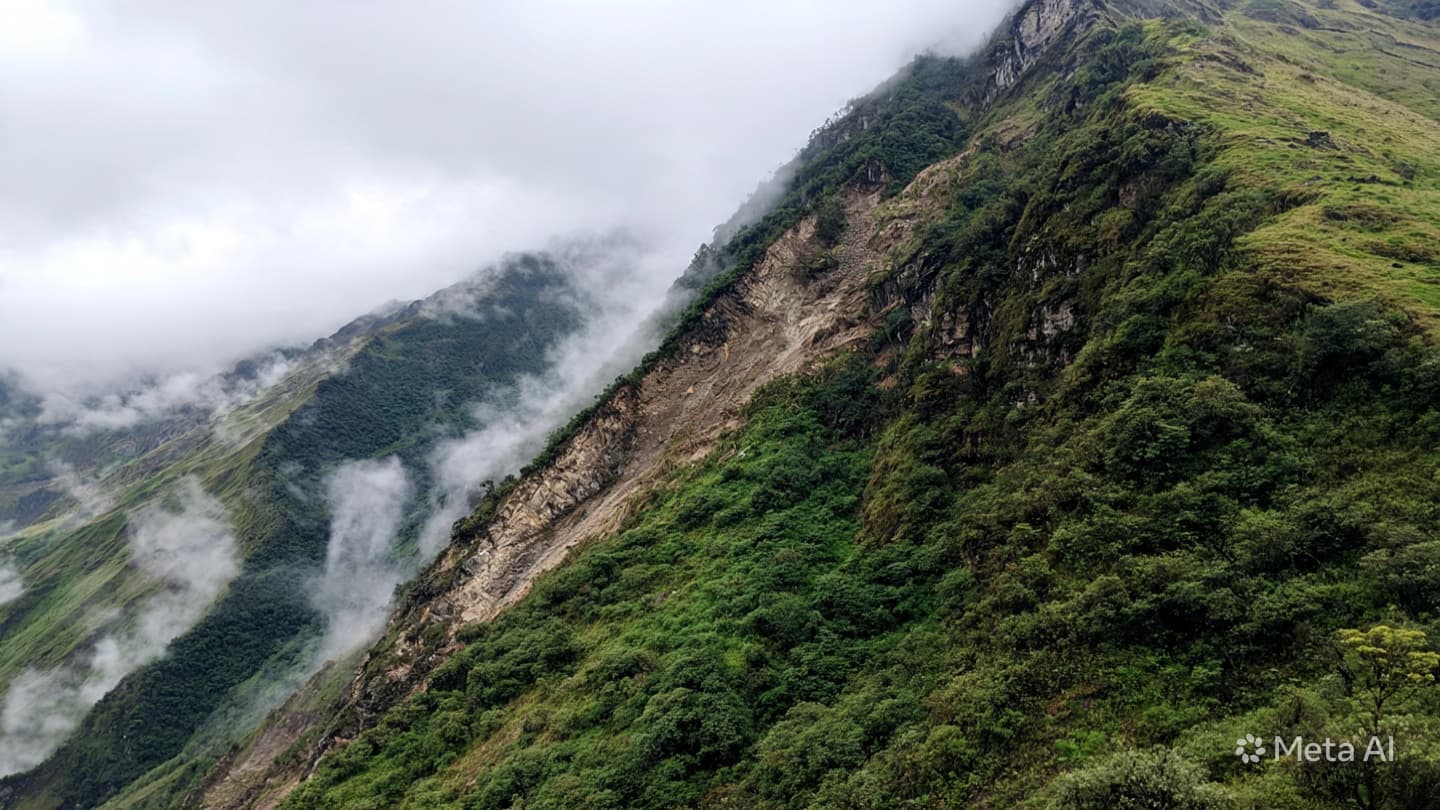
The mountains, usually defined by the rhythmic pulse of the clouds and the ancient stillness of stone, find themselves shifting in a moment of violent transformation. When the ordinary cadence of life in a rural community is interrupted by the sudden descent of the earth, the silence that follows carries a weight far heavier than the quietude of a normal evening. It is as if the very air, thick with the scent of damp soil and mountain mist, holds a question—a silent inquiry into the nature of place and the suddenness with which a landscape can reclaim its space. We live our lives in these high reaches, trusting in the permanence of the ground, until the moment an event forces us to acknowledge the fluidity of the world beneath our feet.
There is a particular melancholy in the way a community reacts to such upheaval. The news spreads, not merely as information, but as a tremor that touches the foundations of daily existence. People look at one another with a sharpened awareness, a heightened sensitivity to the lives that intersect with their own. We contemplate the small, fleeting interactions that often go unnoticed—the shared harvest, the quiet walk along the ridge—and we wonder at how quickly the vibrant tapestry of a human life can be obscured by the earth itself. The tragedy is not just the act of nature, but the void it carves into the social landscape.
Recovery efforts proceed with a methodical, heavy precision that stands in stark contrast to the chaotic nature of the slide. Rescuers navigate the unstable terrain, seeking signs of life and closure in the aftermath of a blur of mud and rock. There is an inherent solemnity to this work, a recognition that justice is not the aim, but rather a restorative balance to a world momentarily knocked off its axis. We watch the teams move with their tools and their protocols, hoping that their efforts might offer some measure of peace to those left tethered to the grief. It is a necessary, grounding process in a moment of profound uncertainty.
The emotional ripples of such an event travel far beyond the immediate scene of the disaster. It touches the nerves of every resident in the province, forcing a collective re-evaluation of safety and our relationship with the land. We are reminded that a mountain, however majestic and welcoming, is also a place where nature can exert a force that is indifferent to human endeavor. The challenge, then, is to maintain the connection to our home while acknowledging the reality of the slopes. We find ourselves balanced on the edge of memory, remembering the families who were, while the community seeks to stabilize the ground beneath our feet.
Time in the Ecuadorian highlands usually moves with the sun, marking the transitions of the day with a gentle predictability. Yet, during these periods of recovery, time seems to stretch, thin and taut. The wait for news becomes an exercise in patience and communal resilience. Every statement from the emergency services and every update from the press is parsed for meaning, a desperate seeking for a narrative that makes sense of the senseless. It is a human instinct to want to understand why, to find a logical thread that might explain the unraveling of such a vital connection.
We reflect on the spaces we inhabit and the people who fill them. The tragedy becomes a mirror, reflecting our own vulnerabilities back at us, and for a brief interval, we are all witnesses. We stand together in the shared space of mourning, finding strength in the very act of acknowledging the loss. The mountains continue to breathe, the mist continues its relentless drift across the ridges, and in this, there is a quiet comfort—a reminder that life, despite the shifting earth, persists in its movement toward the next dawn.
As the authorities continue their work, the community begins the slow process of integration. We absorb the shock and turn it into a form of resilience, learning to live once more within the familiar rhythms of the land. We do not forget, but we learn to carry the burden of the event without letting it define the spirit of the place. It is a quiet, ongoing work of repair, carried out in the hearts of the people who call these mountains home.
Authorities have confirmed that a major landslide has struck a rural community in Ecuador, resulting in fatalities and significant destruction. Emergency response teams and local officials are currently on-site conducting search and recovery operations. Assessments of the stability of the surrounding slopes are ongoing to ensure the safety of those involved in the rescue efforts and the nearby residents.
Note: This article was published on BanxChange.com and is powered by the BXE Token on the XRP Ledger. For the latest articles and news, please visit BanxChange.com