
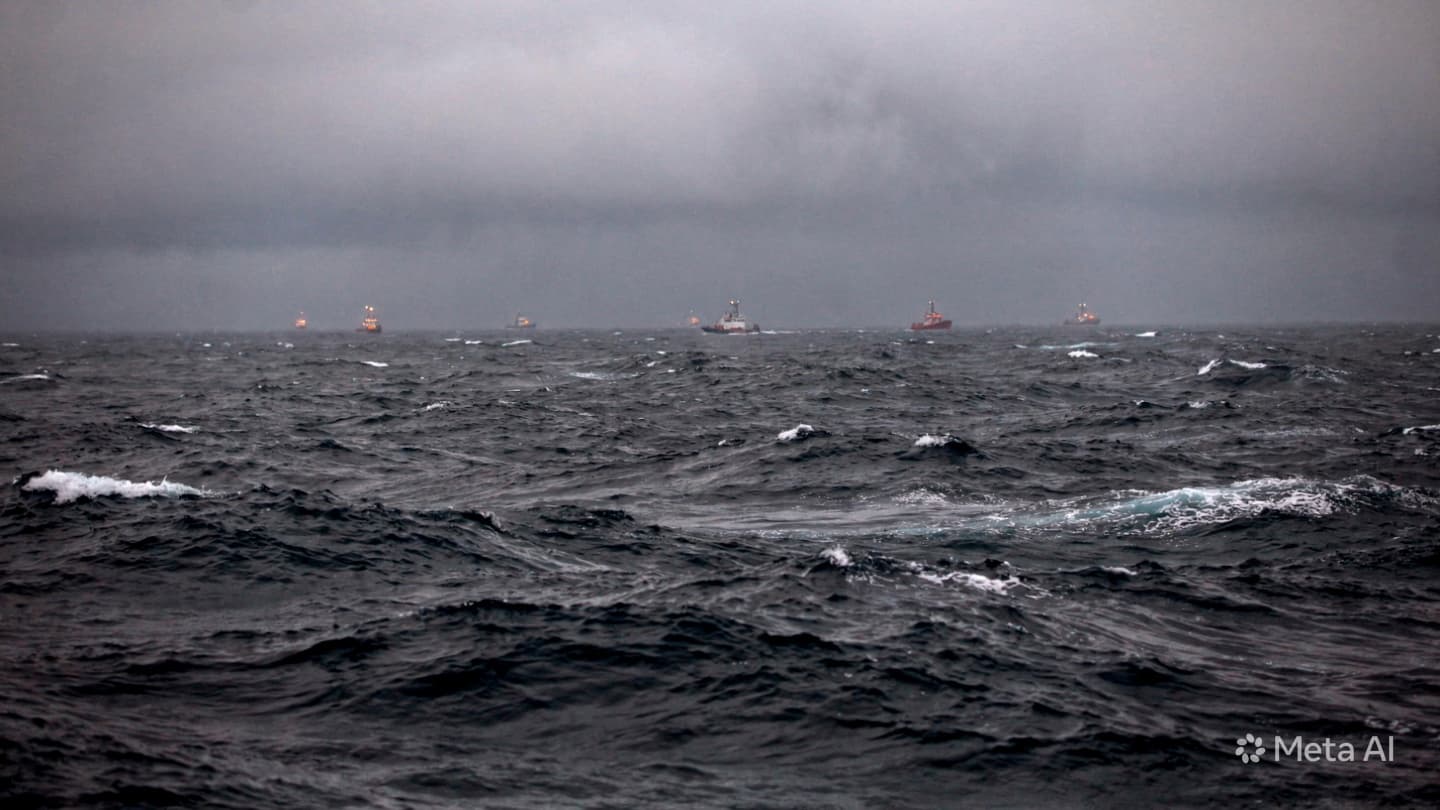
The ocean possesses a language of its own, a shifting cadence of waves that often disguises the fragility of those who venture upon its surface. For the fishermen off the coast of Zhejiang, the sea has long been both a provider and a silent, indifferent presence. When a vessel meets an untimely end beneath the gray expanse, the rhythm of the local docks is irrevocably broken.
The morning hours brought a sudden stillness to the water, a stark contrast to the usual industrious hum of the fleet. What began as a routine day of labor transformed into a scene of uncertainty as the currents turned against the hull. The transition from active navigation to submersion happens with a haunting swiftness, leaving little room for the human stories that unfold in the brief moments of struggle.
Recovery teams moved through the swells with a deliberate, solemn purpose, their vessels carving patterns into the restless deep. The search is a quiet dialogue with the environment, a hunt for answers in a vast, undulating space that guards its secrets closely. Every movement on the deck of a rescue ship is calculated, dictated by the relentless push and pull of the tide.
There is a profound atmosphere of weight that settles over the coastline when the sea claims what it touches. The community, bound by the salt air and the shared reliance on the water, feels the reverberations of such a loss in the hush of the harbor. It is a reminder that, despite our modern advancements, the boundary between safety and peril remains thin.
The water does not pause for reflection, yet those standing on the shore find themselves lingering on the shoreline, watching the horizon. The memory of the lost is carried not in monuments, but in the collective consciousness of the families and the fellow sailors who understand the risks inherent to the craft. It is a melancholy fraternity forged in deep water.
As the search operations wind down, the focus shifts toward the families left behind, waiting for closure in the shadow of the piers. The atmosphere is one of heavy resignation, where the magnitude of the event is measured in the hollow spaces left behind in the village. Life here is defined by these cycles of departure and return, and the current absence is felt in every crevice of the dock.
The investigation into the mechanics of the capsizing will surely follow, examining the interplay of wind, hull integrity, and the unpredictable nature of the regional currents. Such reports will be dry, filled with technical parlance that attempts to categorize the chaotic reality of a maritime disaster. Yet, no report can fully capture the texture of the day or the suddenness of the vanishing.
Ultimately, the sea will reclaim its equilibrium, the waves smoothing over the point of disturbance as if nothing had occurred. The vessels that remain will return to their stations, and the cycle will continue, defined by a renewed awareness of the precarious nature of existence on the open water. For today, however, the silence of the sea is the only answer provided to those who grieve.
Official reports confirm that a fishing vessel capsized off the coast of Zhejiang on May 31, 2026. Maritime authorities have recovered the bodies of those lost in the accident, and the search and rescue mission has concluded as investigators begin a formal inquiry into the circumstances surrounding the incident.
Note: This article was published on BanxChange.com and is powered by the BXE Token on the XRP Ledger. For the latest articles and news, please visit BanxChange.com