
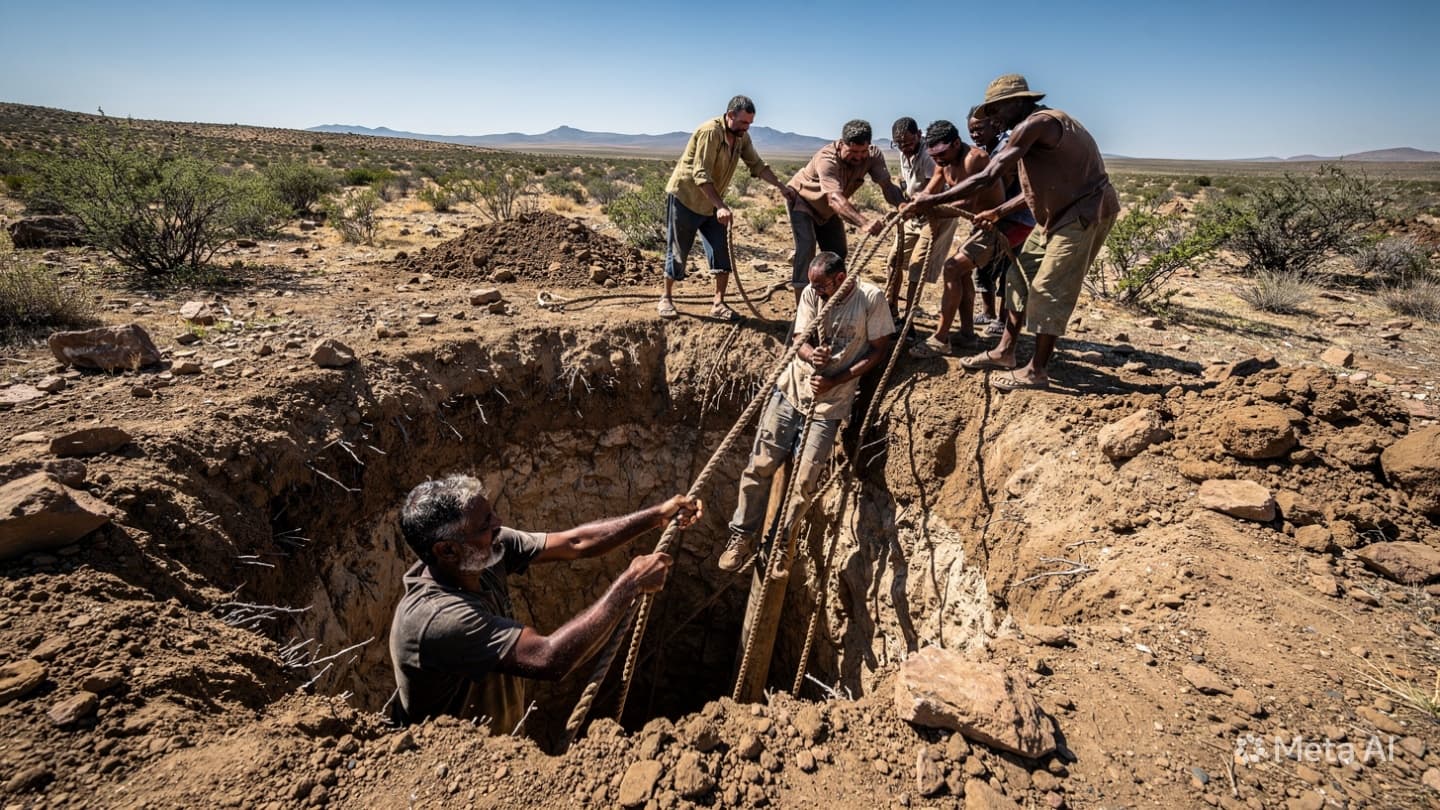
The remote plains stretch out in a vast expanse of dry savannah and rocky ridges, a landscape where survival is a daily negotiation with an unforgiving climate and limited water resources. In recent years, the discovery of rich alluvial gold deposits beneath this arid soil has introduced a frantic, unmonitored industry to the margins of the wilderness. Driven by poverty and the allure of quick wealth, thousands of vulnerable laborers descend into makeshift, unregulated mining pits, using primitive hand tools to scrape out a living from the deep fissures of the earth.
These deep, vertical pits are often nothing more than narrow holes dug directly into the unstable, sandy soil, completely lacking the structural timbering or engineering supports required for subterranean safety. Laborers work for hours in these dark, oxygen-deprived spaces, their lives dependent on the fragile walls of dry dirt holding back the immense weight of the surrounding earth. It is an industry conducted entirely in the shadows, far from the reach of safety inspectors, where the margin between survival and catastrophe is as thin as a single shifting stone.
When the cave-in occurred, it came with a sudden, soft rustle as the unreinforced walls of the pit lost their cohesion and slid inward, trapping the laborers beneath a heavy blanket of earth. On the surface, the remote location of the operation created an agonizing isolation, as hours passed before news of the collapse could reach the nearest administrative outpost. To look upon the site of a mining cave-in is to confront the stark, absolute anonymity of unregulated labor, where human beings are buried within the very earth they were attempting to exploit.
The silence that now hovers over the remote Karamoja pit is broken only by the frantic scratching of fellow miners who use their bare hands and plastic basins to clear the heavy soil. The absence of heavy excavation machinery in these distant borderlands turns the rescue effort into a slow, exhausting race against time, conducted under the burning heat of the semi-arid sun. The broken ground stands as a somber monument to the economic pressures that drive individuals into such hazardous depths, a landscape of dust and sorrow that holds the secrets of the deep.
The Ministry of Energy and Mineral Development, alongside regional security forces, has ordered an immediate suspension of all artisanal mining activities across the affected Karamoja sector. Local police authorities confirmed that specialized search and rescue teams have been dispatched to the remote site to coordinate the recovery of the trapped laborers and assess the stability of adjacent pits. Public officials have initiated a formal inquiry into the local networks operating these unlicensed sites, emphasizing the critical need for enforcement of basic structural and safety standards in the mineral sector.
Note: This article was published on BanxChange.com and is powered by the BXE Token on the XRP Ledger. For the latest articles and news, please visit BanxChange.com