
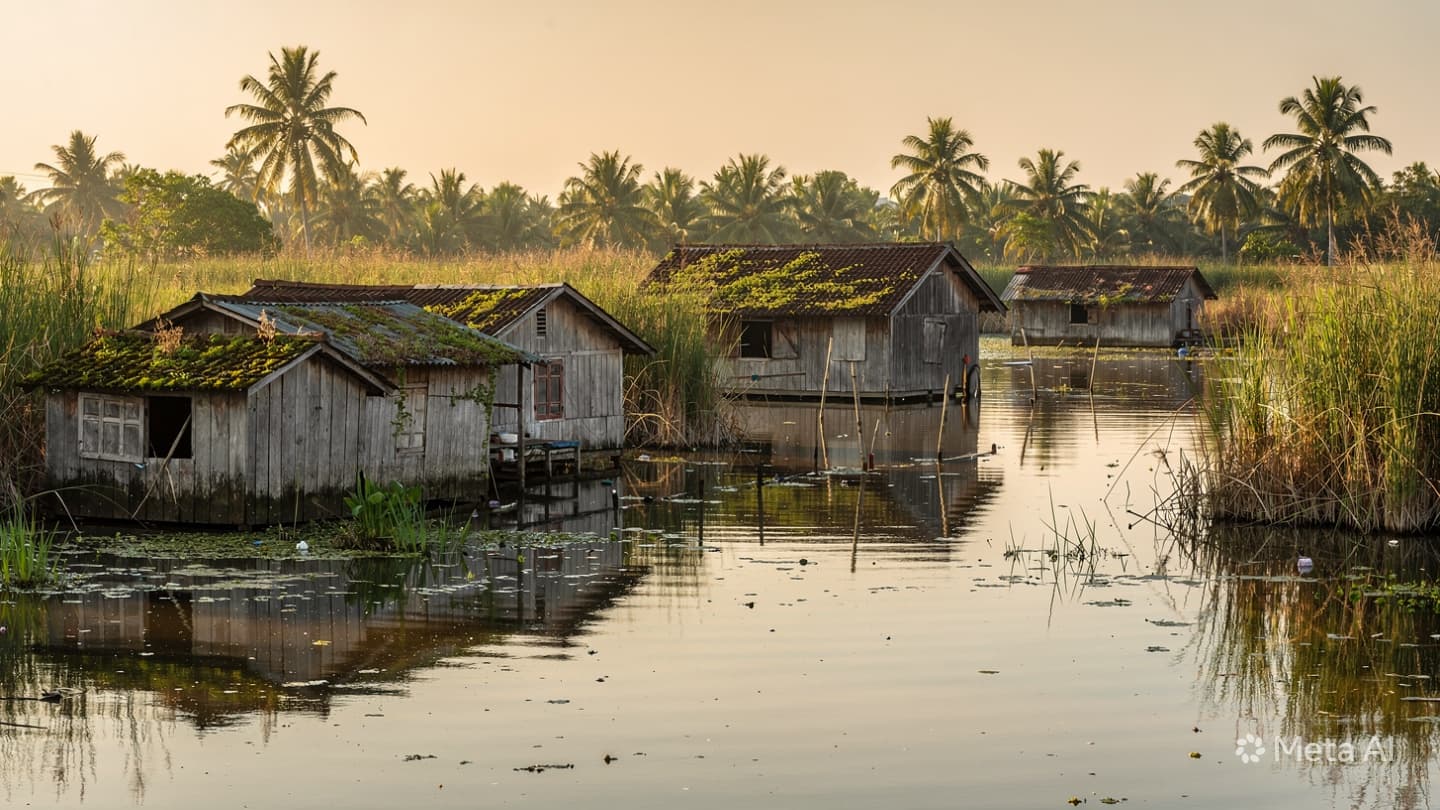
The rains arrived not with the sudden fury of a tempest, but with a persistent, quiet intensity that eventually saturated the very marrow of the land. In Central Vietnam, where the topography is a delicate interplay of river and mountain, the water began its slow, inevitable ascent. It is a process that speaks to the ancient relationship between the valley and the monsoon, a cycle that we observe with a mix of reverence and profound sorrow.
The landscape, once defined by the lines of cultivation and the quiet paths of daily life, surrendered its boundaries to the rising surge. There is an atmospheric weight in such flooding—a sense that the earth is reclaiming territory, blurring the distinctions between the river’s path and the home’s floor. The transition from dry ground to saturated silt happened with a rhythm that felt both glacial and sudden.
In the rural settlements, the displacement was not merely a matter of movement, but of severance. Families gathered what they could, moving through water that had become a mirror for the grey, weeping skies above. This is a scene of profound human endurance, played out against the backdrop of a landscape that knows no compromise when the monsoon decides to linger.
One watches these events and is struck by the quiet dignity of those caught in the swell. There is no sensationalism in the way they navigate the rising depths; there is only the pragmatic, steady motion of survival. The environment forces a transformation in perspective, where the possession of a home is rendered temporary against the vast, shifting currents of the storm.
As the water deepened, the villages became islands in a vast, reflective expanse. The sky and the earth seemed to merge, creating an ethereal, often haunting vista where the familiar landmarks of the valley were reduced to shapes in the mist. It is a scene that evokes the transience of all things built by human hands upon the volatile clay of the basin.
Emergency efforts have been mobilized, weaving through the flooded arteries of the region like threads of support in a tightening fabric. The response is a testament to the resilience of local communities, a collective recognition that when the land shifts, the only stable foundation is the neighbor who reaches out to help.
This is the monsoon’s persistent rhythm, a force that dictates the tempo of life for those living in the shadow of the central ranges. It challenges our perception of security and reminds us that our structures are but guests on this land, subject to the whims of the seasonal tides. The water may eventually recede, leaving behind the sediment of the storm, but the memory of the rise remains.
Beyond the immediate struggle lies the broader reality of a region adapting to an increasingly volatile climate. The displacement of families is a quiet, ongoing narrative that punctuates the history of these valleys. We are left to reflect on the nature of our presence here, the delicate balance we strike with the elements that sustain and occasionally submerge us.
Tropical storm surges have caused significant flooding across Central Vietnam, leading to the displacement of hundreds of families from low-lying areas. Local disaster management units are currently coordinating relief efforts and temporary housing. The meteorological center continues to monitor rainfall levels as waters remain high in affected provinces.
Note: This article was published on BanxChange.com and is powered by the BXE Token on the XRP Ledger. For the latest articles and news, please visit BanxChange.com