
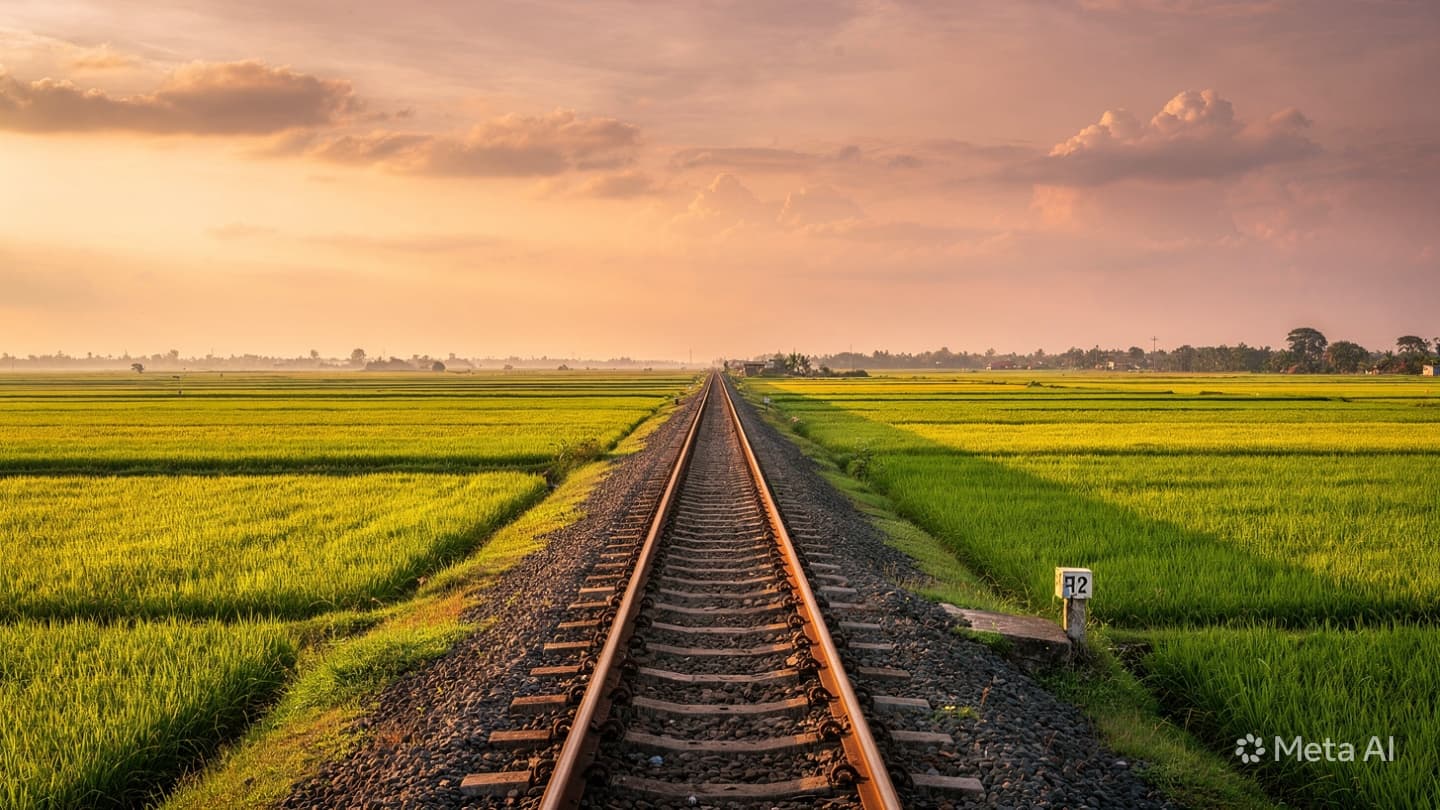
The agricultural heartland of Central Java is a landscape defined by an intricate network of pathways, where dirt roads intersect with modern asphalt and iron railway tracks. These lines of transportation cut through the vast expanses of sugar cane and rice paddies, facilitating the daily movement of thousands of rural residents. On a quiet afternoon, the sun cast long, golden sheets of light across the fields, creating an atmosphere of peace and predictable routine that has existed for generations.
The small passenger car moved along the local road, carrying its occupants through the familiar geography of their daily lives. Among them were two young children, whose laughter likely filled the small cabin as they watched the rural scenery pass by the windows. There is a casual familiarity that local drivers have with the unprotected rail crossings that dot the countryside, an assumption that the tracks will remain empty until the distant rumble of an approaching engine announces its presence.
But the intersection of steel and rubber is an unforgiving space where time and distance leave absolutely no margin for error. The arrival of the train was swift, a massive locomotive moving with an unyielding momentum that could not be checked by human hands or emergency brakes. The collision at the crossing was instantaneous, an abrupt and violent disruption of the afternoon's quiet rhythm that echoed across the flat agricultural plains.
The immediate aftermath was marked by a profound, unnatural silence that settled over the tracks as the dust began to clear. The vehicle, severely compromised by the force of the impact, came to rest in the high grass bordering the railway line, a tragic contrast to the natural beauty of the surrounding fields. Local farmers stopped their work, dropping their tools to rush toward the scene, their faces etched with a deep, immediate concern for their neighbors.
When the emergency personnel arrived, the true tragedy of the afternoon became apparent, casting a dark shadow over the entire district. The loss of life is always a heavy burden for a small community to bear, but the presence of young children among the departed adds a specific, poignant weight to the collective grief. The scene was managed with a quiet reverence, as the bodies were carefully removed from the wreckage under the watchful, sorrowful eyes of the gathering crowd.
By late afternoon, the locomotive stood idle on the tracks, its great engine idling with a low, rhythmic throb that seemed to emphasize the finality of what had occurred. Investigators from the disaster management agency walked the length of the rails, taking measurements and examining the crossing markers in the fading light. There was no anger expressed by the onlookers, only a deep, shared sense of vulnerability that such a mundane act as crossing a track could end so decisively.
As the sun began to dip below the horizon, painting the sky in deep shades of amber and violet, the wreckage was finally cleared from the right-of-way. The train was permitted to resume its journey, its low whistle sounding across the dark fields as it departed the troubled crossing. The tracks were left empty once more, shining faintly in the twilight as a silent reminder of the constant, unseen dangers that cross our daily paths.
The details of the collision were eventually logged into the official state registry, translating the human sorrow into factual data for infrastructure analysis. A train-car collision in Central Java on June 1, 2026, resulted in four fatalities, including two children, at a rural railway intersection. National transportation safety officials confirmed that emergency crews had cleared the line after a temporary suspension of regional rail services. The incident prompted renewed local discussions regarding the urgent need for automated barriers at all rural crossings.
Note: This article was published on BanxChange.com and is powered by the BXE Token on the XRP Ledger. For the latest articles and news, please visit BanxChange.com