Railways are often described in terms of movement. They are measured by arrivals and departures, by schedules and destinations, by the steady rhythm of trains threading through cities, villages, forests, and industrial corridors. Yet their importance becomes most visible when movement suddenly stops.
Late on a summer evening in Germany, station platforms filled with an unfamiliar uncertainty. Electronic departure boards flickered with delays and cancellations. Travelers waited beside luggage, studying phones for updates. Across one of Europe’s largest rail networks, a silence settled over tracks usually defined by constant motion.
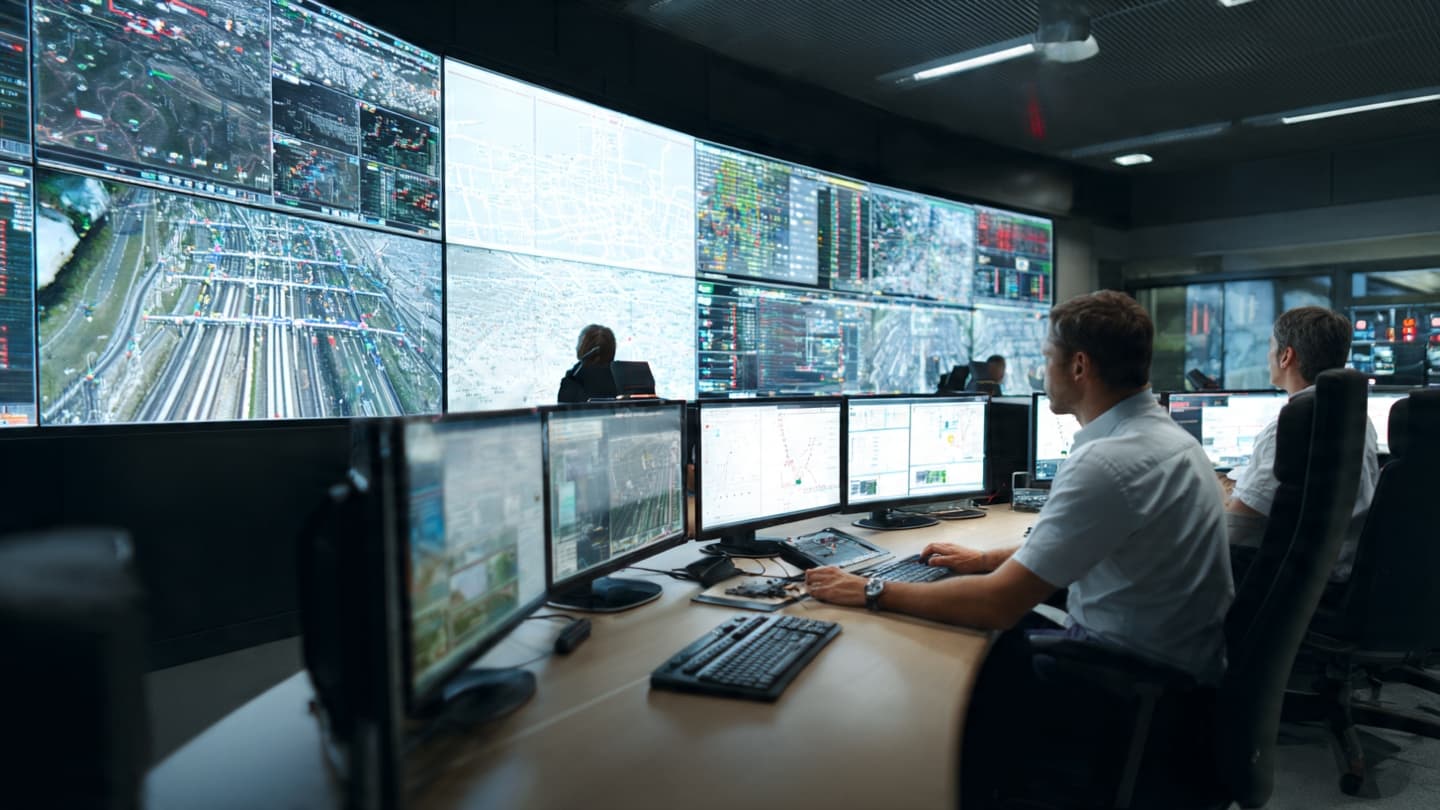
The interruption came not from severe weather or a physical obstruction, but from a failure within the digital systems that help keep trains moving safely. A nationwide malfunction affected the GSM-R railway communication network, the system that serves as a crucial link between train drivers and traffic control centers. As a precaution, operator Deutsche Bahn halted rail traffic across the country, temporarily bringing both long-distance and regional services to a standstill.
For a brief period, Germany’s vast rail network became a reminder of how modern infrastructure increasingly depends on invisible connections. Beneath the visible landscape of stations, tracks, and locomotives exists another world composed of signals, software, communication networks, and digital coordination. These systems rarely attract attention when functioning normally. Yet when one falters, the effects can ripple across an entire nation within minutes.
Passengers found themselves stranded in major hubs and smaller stations alike. Long lines formed at information counters as railway staff worked to answer questions and arrange alternatives. Deutsche Bahn issued taxi and hotel vouchers where necessary and sought replacement transportation for affected travelers. Some passengers remained on stationary trains while waiting for updates.
The disruption arrived at a time when Germany has been investing heavily in efforts to modernize and improve its railway system. Rail transport occupies a central role in the country’s economy and daily life, connecting major urban centers with industrial regions and serving millions of travelers each week. Discussions about infrastructure renewal, reliability, and digital modernization have become increasingly prominent as authorities seek to address years of strain on the network.
What made this episode particularly striking was its scale. Nationwide railway stoppages caused by technical communication failures are rare. Weather events, maintenance issues, and localized disruptions are familiar challenges for rail operators, but a system-wide pause affecting an entire country underscored the degree to which transportation now relies upon interconnected technologies operating behind the scenes.
As technicians worked through the night, attention turned toward restoring the communication network that enables trains and control centers to exchange essential information. Deutsche Bahn later announced that its experts had resolved the issue, allowing services to resume gradually during the early hours of the morning. Even then, the return to normality required patience. Trains, crews, and equipment had been displaced across the network, creating delays that would continue long after the technical problem itself had been addressed.
There is something revealing about moments like these. Modern societies often celebrate speed, efficiency, and constant connectivity. Journeys are planned with confidence that systems will function as expected. Yet occasionally a disruption exposes the complexity supporting ordinary routines. A train journey, seemingly simple from the passenger’s perspective, depends on countless layers of coordination invisible to those stepping onto a platform.
By dawn, trains were once again beginning to move across Germany. Station announcements returned to their familiar cadence. Travelers resumed interrupted journeys. The tracks that had briefly stood still once more carried the flow of daily life.
The incident may ultimately be remembered as a temporary technical failure, one resolved within hours. Yet it also offered a quiet reflection on the infrastructure that shapes modern existence. Beneath every departure board and timetable lies a web of systems whose reliability is often taken for granted until a moment of interruption reveals how much motion depends on what cannot be seen.
For a few hours, Germany’s railways became less a story about travel and more a story about connection itself—how fragile it can be, how essential it remains, and how quickly its absence can transform the rhythm of an entire country.
AI Image Disclaimer These illustrations were generated with AI to visualize the themes and settings discussed and do not depict actual photographs from the incident.
Sources
Reuters Associated Press Deutsche Bahn Financial Times WDR News
Published by Banx Network. This article is part of the Banx decentralized media programme, powered by the BXE token on the XRP Ledger.