
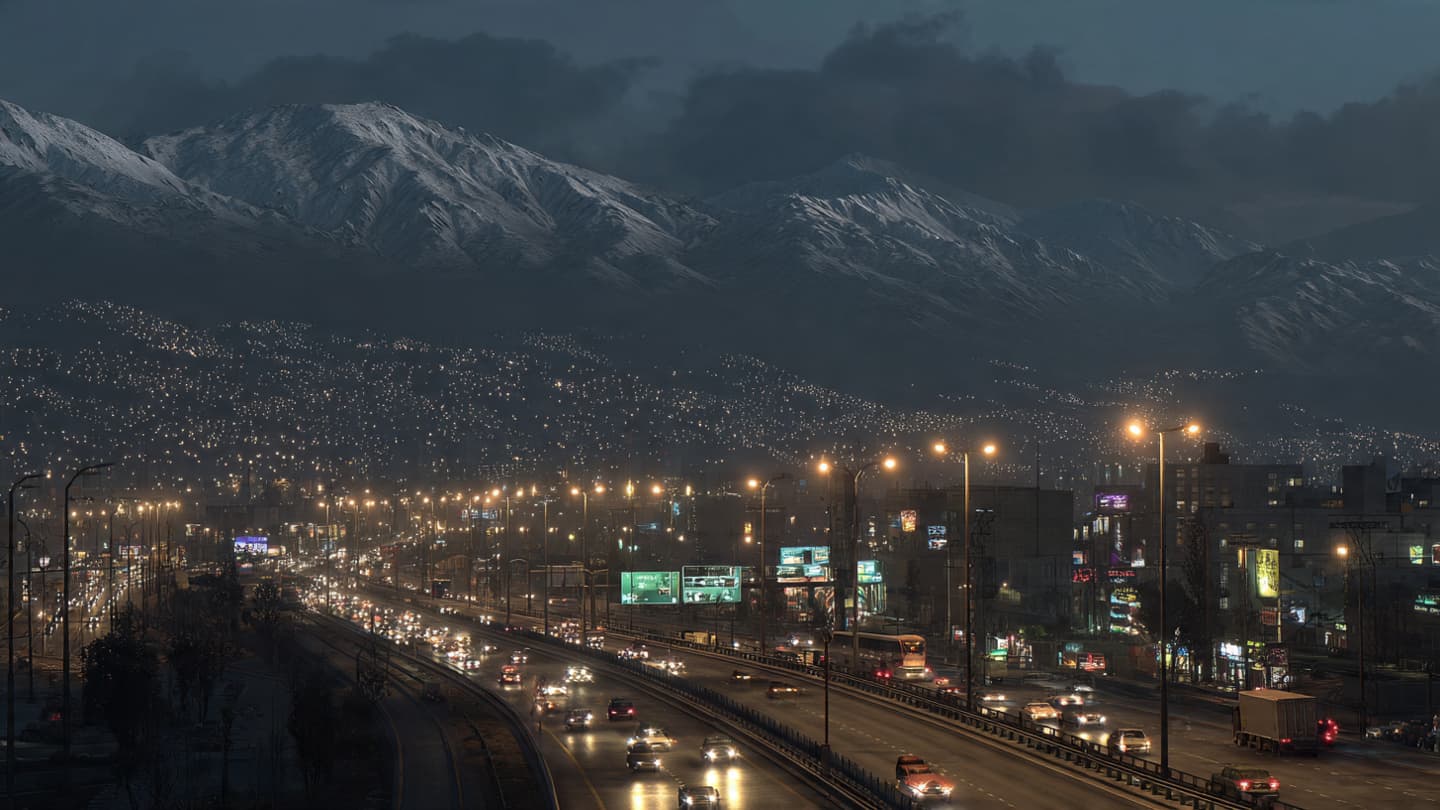
The evening call to prayer drifts softly across Tehran while traffic thickens beneath the city’s mountains, headlights stretching through long avenues lined with sycamore trees and concrete towers. Cafés fill with quiet conversation, televisions murmur with regional news, and somewhere behind heavily guarded government compounds, discussions unfold in measured tones about war, restraint, and the uneasy mathematics of power.
It is within this atmosphere — tense yet deeply familiar to the region — that a senior Iranian general long associated with the country’s hard-line security establishment has emerged as an influential figure in indirect talks with the United States over the risk of broader conflict in the Middle East.
For years, the general built his reputation not through diplomacy, but through military command, strategic alliances, and Iran’s regional security networks extending through Iraq, Syria, Lebanon, and beyond. His career was shaped during decades when Tehran viewed itself as encircled by sanctions, foreign pressure, and military threats, and when the language of deterrence became central to Iran’s political identity.
Now, according to regional officials and diplomatic observers, that same figure is playing a significant role in conversations intended to prevent escalation between Iran and the United States at a moment when the Middle East remains suspended between open conflict and cautious restraint.
The paradox is not unusual in the region. In Middle Eastern politics, military figures often become negotiators precisely because they command influence over the forces capable of altering events on the ground. Diplomacy here frequently moves through security institutions as much as through foreign ministries. The people best positioned to calm confrontation are sometimes those most closely associated with its machinery.
The talks themselves remain indirect and carefully controlled, carried through intermediaries in Gulf capitals and diplomatic back channels shaped by years of distrust. Publicly, both Tehran and Washington continue presenting firm positions. Yet beneath official rhetoric, there appears to be growing recognition that escalation could spiral unpredictably across a region already strained by war in Gaza, tensions in the Red Sea, militia activity in Iraq and Syria, and ongoing disputes surrounding Iran’s nuclear program.
For Iran, hard-line commanders occupy a unique place within the state’s political architecture. The Islamic Revolutionary Guard Corps, in particular, functions not only as a military institution but also as a major political and strategic force deeply intertwined with national decision-making. Senior commanders often influence foreign policy calculations as directly as elected officials.
This reality complicates how outside governments interpret Iranian diplomacy. Western policymakers have long debated whether Iran’s civilian diplomats or security figures ultimately hold greater authority during moments of crisis. In practice, analysts say, meaningful negotiations often require alignment between both spheres.
The general now drawing attention reportedly commands respect among conservative factions skeptical of engagement with Washington. His participation therefore carries symbolic importance. It suggests that discussions surrounding de-escalation may extend beyond technocratic diplomacy into the core of Iran’s security establishment itself.
Still, the atmosphere surrounding the talks remains fragile. Decades of hostility have created a relationship defined by interruption rather than continuity — agreements reached and abandoned, back channels opened and closed, periods of calm followed by sudden confrontation. Every military strike, sanctions announcement, or regional incident has the potential to unsettle months of quiet negotiation.
Across the Gulf region, governments are watching carefully. Arab states that once viewed Iran primarily through the lens of rivalry have increasingly pursued cautious diplomatic engagement while simultaneously maintaining close security ties with the United States. The region’s leadership understands that even limited conflict between Tehran and Washington could disrupt shipping routes, energy markets, and already fragile political balances.
Meanwhile, ordinary life continues beneath the shadow of strategic calculation. In Tehran bazaars, merchants discuss inflation and currency pressures more often than geopolitics. In Baghdad and Beirut, families follow regional headlines while navigating electricity shortages and economic uncertainty. For civilians across the Middle East, diplomacy is often experienced indirectly — through the absence or presence of airstrikes, checkpoints, sanctions, or sudden instability.
The involvement of a hard-line Iranian general in diplomatic efforts also reflects a broader transformation in modern conflict itself. Military power and negotiation no longer operate as separate phases but increasingly overlap. Generals become intermediaries. Intelligence officials become negotiators. Quiet meetings unfold alongside military exercises and public warnings.
American officials have remained cautious in publicly describing the contacts, emphasizing deterrence while also signaling interest in preventing wider regional war. Iranian leaders, for their part, continue balancing domestic expectations of resistance with practical concerns about economic strain and regional stability.
As night settles over Tehran, the city’s lights flicker beneath the mountains while political calculations continue behind closed doors. Somewhere in secure compounds and diplomatic residences, conversations persist in guarded language — neither friendship nor reconciliation, but an attempt to manage danger before it moves beyond control.
The presence of a hard-line commander within those discussions reveals something enduring about the modern Middle East: that in a region shaped by decades of conflict, the figures most closely associated with confrontation are often also the ones entrusted with preventing it.
AI Image Disclaimer These images were generated using AI tools to visually interpret the themes and setting of the article.
Sources
Reuters Associated Press International Crisis Group Al Jazeera United Nations reports
Note: This article was published on BanxChange.com and is powered by the BXE Token on the XRP Ledger. For the latest articles and news, please visit BanxChange.com