
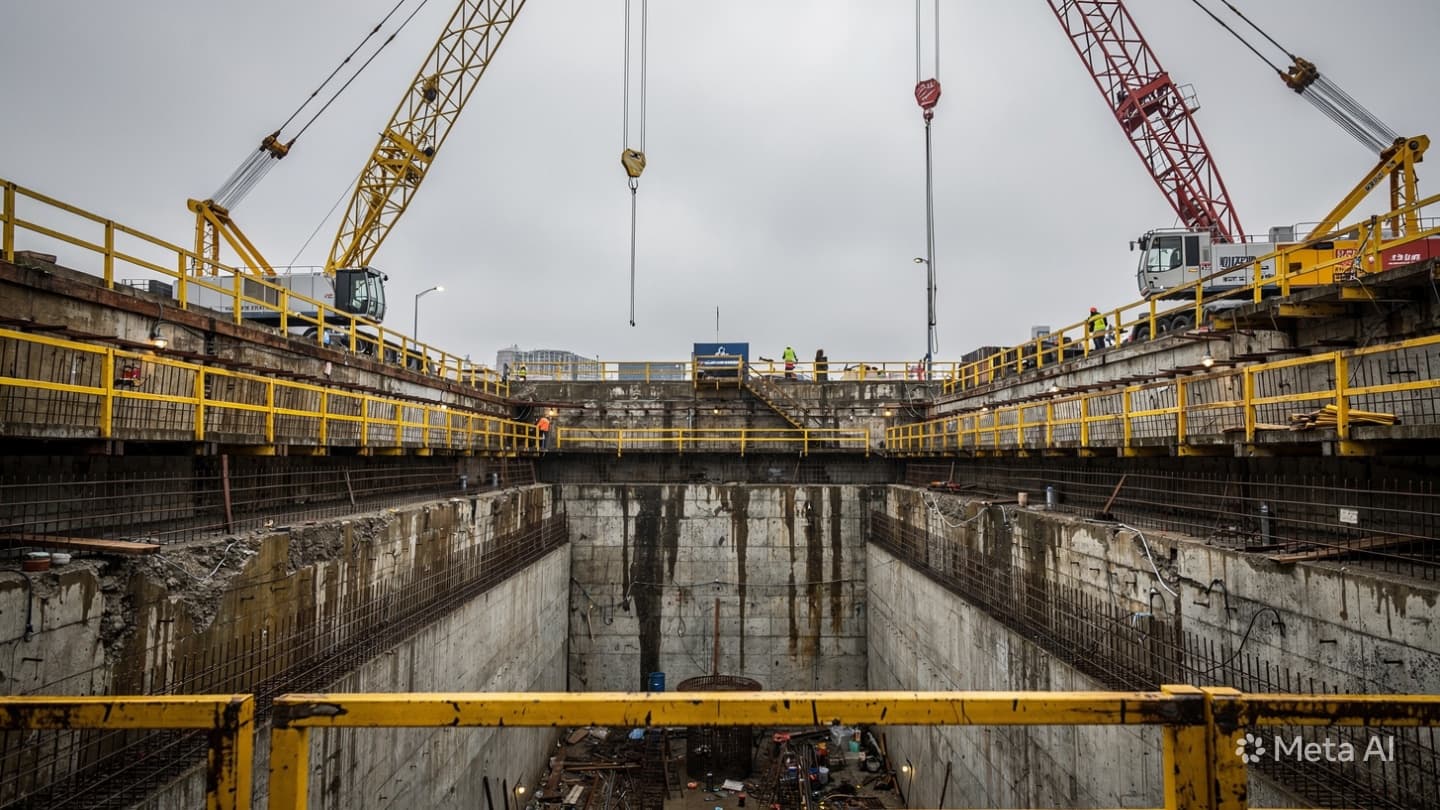
Beneath the surface of the growing metropolis lies a hidden geography of conduits and concrete, a subterranean world built by the steady, uncelebrated labor of those who work in the dark. The expansion of the city’s drainage infrastructure moves forward through an intricate dance of heavy machinery, calculated stress, and industrial fortitude. It is a environment defined by the cold smell of wet earth and the sharp, metallic tang of grease and weathered iron.
On a damp morning shadowed by gray clouds, the routine operations at a major drainage project were proceeding with the familiar, mechanical rhythm that governs large-scale engineering. Chains rattled against steel casings, and the low rumble of generators vibrated through the mud-slicked ground as materials were lowered into the deep shafts. There is a specific trust placed in the tools of this trade, an assumption that the links of steel will hold against the massive weight of the earth they displace.
Without warning, the tension within the lifting apparatus dissolved in a single, sharp report that echoed down the concrete chamber like a gunshot. A heavy component, suspended moments before by the strength of industrial metallurgy, succumbed instantly to the pull of gravity as the mechanism failed. In the confined space of the excavation site, the margin between safety and catastrophe is measured in inches and fractions of a second.
The aftermath of an industrial failure brings an immediate, unnatural stillness to a workplace that is normally defined by continuous, rhythmic noise. Engines are cut, the heavy machinery sits idle in the gray light, and the workers gather in quiet, stunned groups along the perimeter of the yellow caution tape. The heavy chain hoist, now broken and slack, lies draped across the machinery like a discarded ribbon, its utility vanished in an instant of mechanical fatigue.
There is a profound dignity in the labor that shapes the unseen veins of the city, a recognition that the comfort of the modern urban environment is purchased through constant vigilance and physical risk. When a failure occurs, it exposes the delicate vulnerabilities that remain embedded within our most robust engineering systems. The community of builders is left to contemplate the fine line that separates a successful shift from an unexpected tragedy.
Inspectors and safety officials soon arrived at the scene, their clipboards and measuring tapes contrasting with the heavy iron tools scattered across the work area. They examine the fractured metal under bright floodlights, seeking the microscopic flaws or structural stresses that led to the sudden release of tension. The investigation is a quiet, analytical post-mortem of a physical event, a searching for answers within the grain of the broken steel.
The incident has renewed discussions regarding safety protocols and equipment maintenance schedules within the regional construction sector, particularly regarding lifting gear used in deep excavations. As infrastructure projects grow more complex and demanding, the stress placed on secondary mechanical systems becomes a critical focus for labor advocates. The goal remains the elimination of the unforeseen failure, ensuring that those who build the city return from the depths at the day's end.
The Director of Drainage Services issued a formal media release regarding the fatal accident at the Hong Kong project site on June 1, 2026, confirming the death of a worker following a chain hoist failure. Operations at the site have been suspended indefinitely while forensic engineers conduct a thorough review of the mechanical components involved.
Note: This article was published on BanxChange.com and is powered by the BXE Token on the XRP Ledger. For the latest articles and news, please visit BanxChange.com