
Few places on Earth carry the emotional weight of Chernobyl. The name itself evokes memories of sirens, evacuation buses, abandoned buildings, and invisible radiation drifting through the air. For decades, the exclusion zone surrounding the site stood as a symbol of technological catastrophe and human vulnerability. Yet nature, with its patient indifference to human narratives, has been quietly writing a different story there.
Researchers studying wildlife populations inside the Chernobyl exclusion zone have reported that large mammals continue surviving and, in some cases, thriving within the abandoned region. Wolves, deer, wild boars, and other species have increasingly occupied territories once emptied by human evacuation following the 1986 nuclear disaster.
The findings do not suggest that radiation is harmless. Scientists continue emphasizing that the long-term biological effects of radioactive contamination remain complex and serious. Certain species have shown genetic abnormalities and environmental stress linked to radiation exposure. Nevertheless, the absence of large-scale human activity appears to have created conditions allowing wildlife populations to recover in unexpected ways.
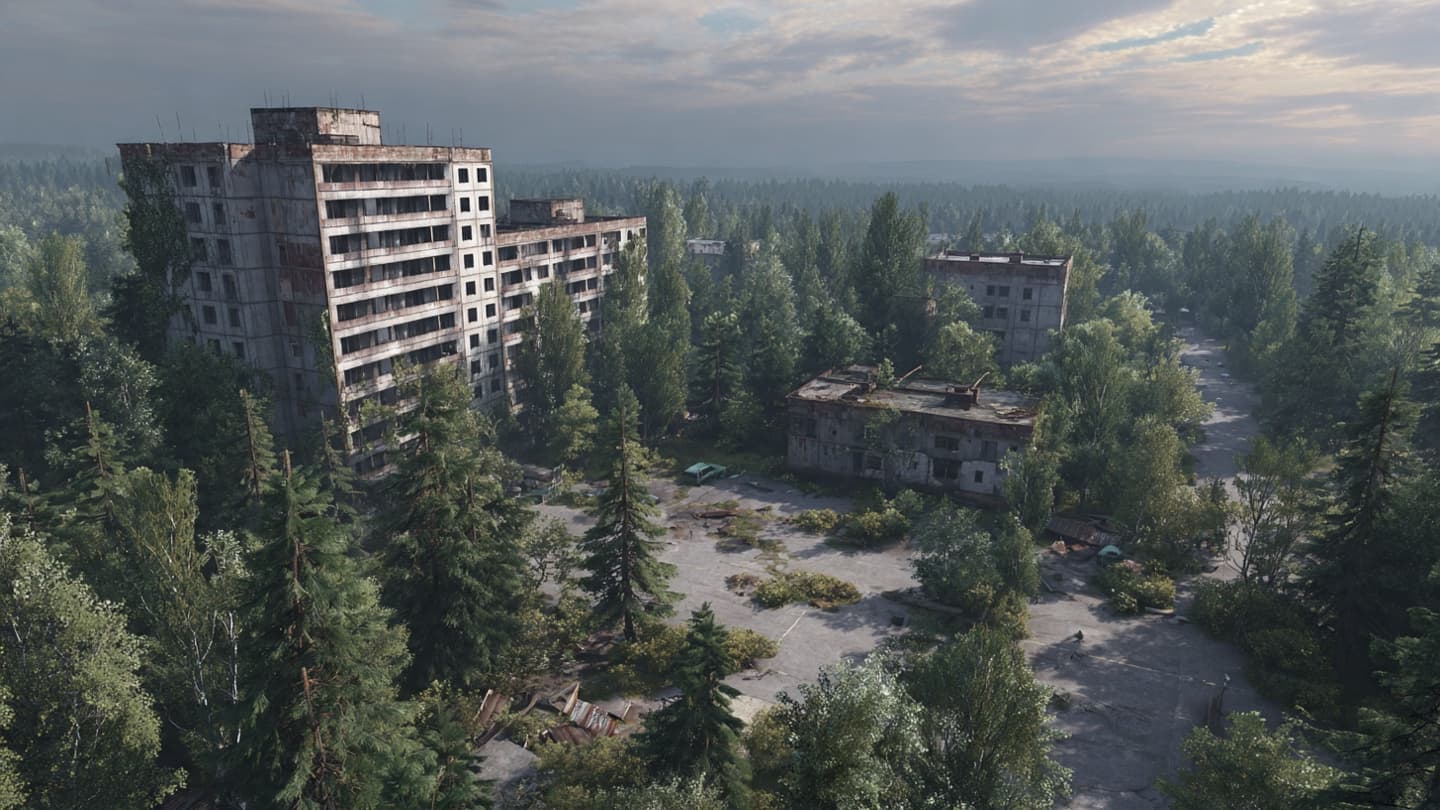
The Chernobyl exclusion zone has gradually become an unusual ecological laboratory. Without urban development, intensive agriculture, industrial expansion, or dense human settlement, forests and ecosystems reclaimed vast areas once dominated by infrastructure. Nature expanded slowly through abandoned roads, buildings, and villages left untouched for decades.
Researchers studying the region often describe a paradox at the heart of Chernobyl’s recovery narrative. Radiation remains a dangerous environmental factor, yet human absence itself may reduce many other pressures typically harmful to wildlife, including habitat destruction, hunting, pollution, and land fragmentation. In some respects, ecosystems appear more resilient to contamination than to continuous human disturbance.
The phenomenon has inspired broader discussions regarding humanity’s relationship with the natural world. Across many regions globally, wildlife populations decline primarily due to habitat loss and industrial activity rather than isolated environmental disasters alone. Chernobyl therefore raises difficult questions about how profoundly human expansion shapes ecosystems even outside catastrophe zones.
At the same time, scientists remain careful not to romanticize the exclusion zone. Radiation continues posing measurable risks to both wildlife and human health, and the disaster’s social and environmental consequences remain historically devastating. Researchers stress that ecological adaptation should not be interpreted as environmental restoration in a conventional sense.
Still, the resilience displayed by many species inside the zone has challenged assumptions regarding ecological recovery. Nature often adapts in nonlinear ways difficult for humans to predict. Forests regrow, animal populations migrate, and ecosystems reorganize themselves according to conditions that may appear contradictory from a human perspective.
Public fascination with Chernobyl has also grown through documentaries, photography, and scientific reporting portraying abandoned cities gradually overtaken by vegetation. For many observers, the region symbolizes both warning and reflection—a reminder of technological risk alongside evidence of nature’s enduring capacity for renewal under certain conditions.
As trees continue growing through cracked pavement and animal tracks replace the movement of crowded streets, Chernobyl remains suspended between tragedy and transformation. The exclusion zone does not erase the memory of disaster, but it quietly reveals something equally profound: when human presence retreats, the natural world often returns in ways both unsettling and deeply humbling.
AI IMAGE DISCLAIMER: Visuals are created with AI tools and are not real photographs.
SOURCES CHECK: Reuters BBC National Geographic Smithsonian Magazine Scientific American
Note: This article was published on BanxChange.com and is powered by the BXE Token on the XRP Ledger. For the latest articles and news, please visit BanxChange.com