The horizon in Haiti is rarely still. It is a landscape defined by the movement of its people, a rhythm shaped by history, geography, and the persistent, quiet struggle for stability. In recent months, this rhythm has intensified, pulling more than 1.5 million souls into a state of flux. To observe this from a distance is to witness a profound shifting of foundations, where the very concept of home has been rewritten by the steady, unyielding pressure of instability.
There is a contemplative silence that settles over the displacement statistics, a weight that numbers alone cannot carry. Each figure represents a doorway closed, a street left behind, and a community fragmented. The movement is not merely across geography, but across the emotional thresholds of memory and future. Families navigate the shifting terrain of their existence, carrying with them the memories of what once was—the familiar shade of a tree, the specific cadence of a neighbor’s greeting—while grappling with the stark, often harsh reality of the present.
The humanitarian narrative here is woven into the fabric of everyday life. It is seen in the way the cities pulse with a new, strained energy, as the arrival of so many forces a reconfiguration of the urban heart. Public spaces transform into makeshift vessels for the displaced, and the resources that were already thin are stretched to their limit. It is an environment where the act of living is a constant negotiation, a delicate balance between the need for immediate survival and the faint, flickering hope of something more permanent.
Observers of this situation often find themselves struck by the sheer scale of the disruption. When a million and a half people are set in motion, the ripple effects touch every corner of the nation. It is a demographic shift that speaks to the fragility of the institutions meant to hold the society together. The state of displacement becomes, for many, a way of life, a long-term residency in the temporary, where the transition from "what was" to "what comes next" remains frozen in an agonizing, undefined state.
The landscape of this crisis is not just one of lack, but one of profound psychological weight. The trauma of repeated displacement—fleeing once, then again, then a third time—leaves a mark that is as indelible as it is invisible. It is a weariness that sits in the bones, a quiet resignation that coexists with the drive to survive. The stories of those caught in this current are stories of resilience, certainly, but they are also stories of exhaustion, of spirits that have been stretched thin by the relentless demands of a crisis that seems to have no end.
As the international community watches, the discourse often drifts toward the analytical—logistics, budgets, policies. Yet, there is a human element that defies such framing. It is the mother who organizes her few belongings with the same care she once used for a permanent home; it is the child who maps their reality through the boundaries of a shelter; it is the neighbor who gives their last bit of food to a stranger who has lost everything. These are the small, quiet acts of defiance against a reality that seeks to strip away their humanity.
The season adds its own layer of complexity to this narrative. With the cycle of weather and the looming threats of the Atlantic, the vulnerability of those in temporary dwellings increases, turning the wait for security into a race against the elements. The environment itself seems to reflect the urgency of the moment, with the sky, the wind, and the earth all bearing witness to the precariousness of life for those currently without a stable place to rest their heads.
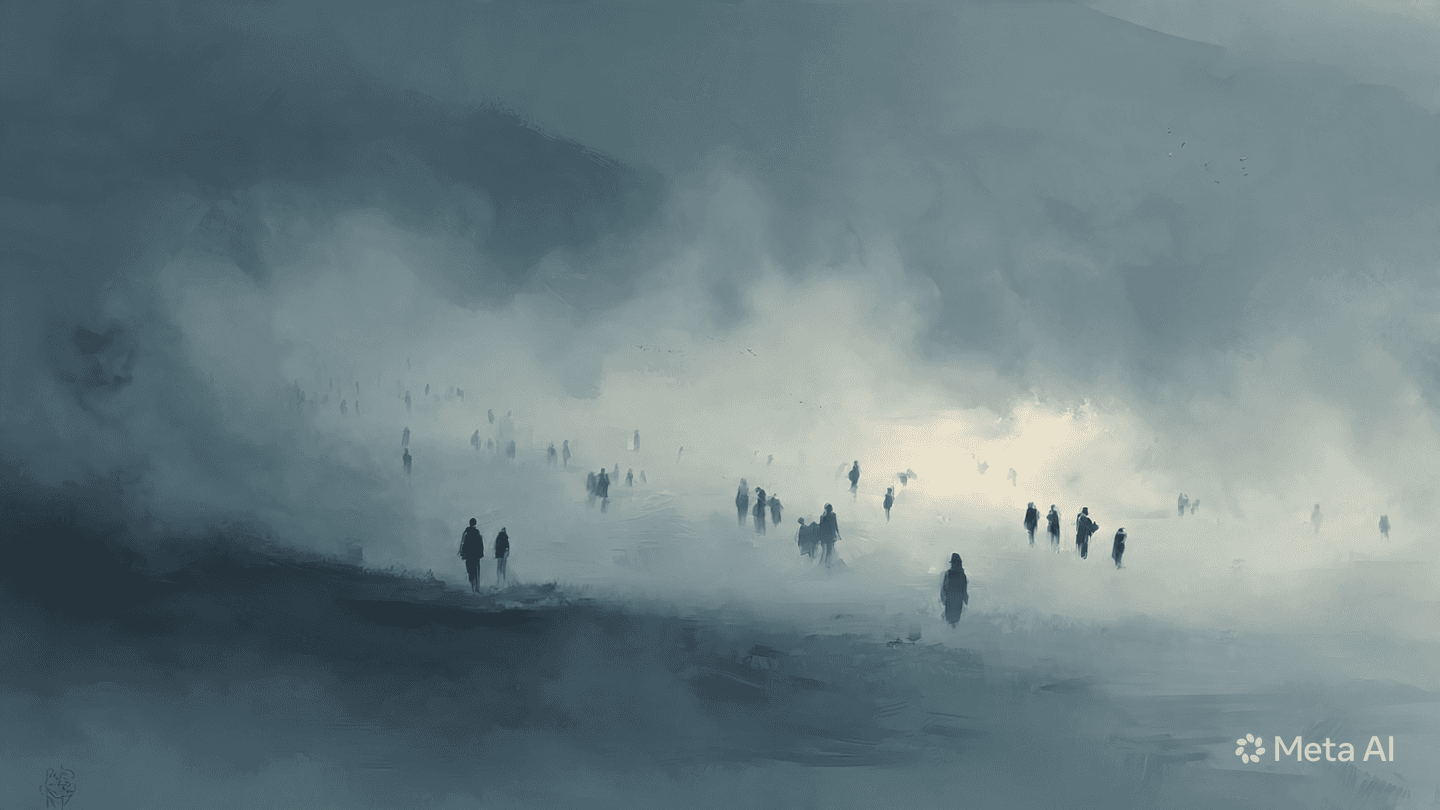
In the end, the situation in Haiti is a testament to the endurance of the human spirit in the face of overwhelming odds. It is a reflection of a nation at a crossroads, where the path forward is obscured by the fog of current challenges. To document this is to bear witness to a moment of profound transformation, a time when the collective identity of a people is being tested and reshaped by the currents of their history. The outcome remains uncertain, but the urgency of the moment is absolute.
According to the International Organization for Migration, the total number of internally displaced persons in Haiti has reached approximately 1.5 million. The report emphasizes that more than half of those displaced are women and children. Humanitarian agencies are currently calling for long-term strategies to move beyond emergency relief, citing the urgent need for enhanced security, basic service restoration, and support for communities hosting the displaced populations.
Published by Banx Network. This article is part of the Banx decentralized media programme, powered by the BXE token on the XRP Ledger.