
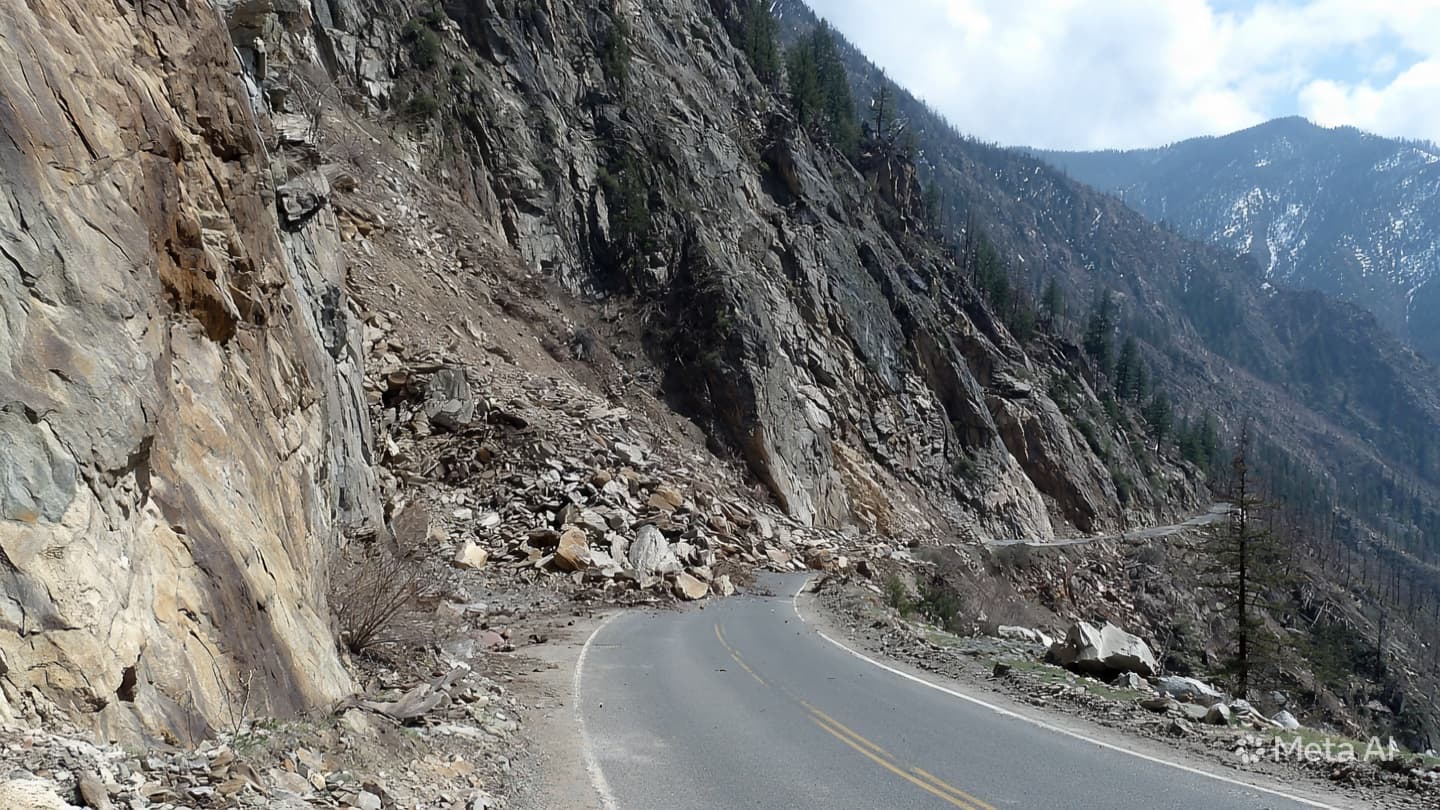
The landscape of Sant Julià de Lòria is a place of dramatic verticality, where the town clings to the slopes of the valley and the surrounding mountains loom with an ancient, restless presence. It is a geography of constant, subtle shift, where the elements of weather—the persistent rain, the freeze and thaw of the seasons—work in an eternal, slow-motion sculpture of the terrain. When this geological patience is broken, and a landslide descends upon the highway, it is a reminder that the mountain is not a static backdrop, but a powerful, living actor.
A landslide is an event of absolute, unarguable force. It is the mountain reclaiming its space, a cascading torrent of rock and debris that ignores the boundaries we have drawn for our roads and our homes. When such a cascade occurs, the car caught in its path becomes a momentary focal point in a much larger, geological timeline. The injury to the driver is a poignant, human-scale tragedy set against the vast, indifferent power of the falling earth.
The response to such an event is often defined by the urgency of the moment—the quick mobilization of specialized equipment, the precariousness of the search, and the careful extraction of the driver. It is a process that requires a deep respect for the instability of the site, a recognition that the mountain has not finished its movement. The authorities who oversee this recovery are not just managing an accident; they are navigating a geography that has, in an instant, become a zone of extreme uncertainty.
For the residents of Sant Julià, the event prompts a reflection on the nature of their home. To live in such a place is to accept a partnership with the environment that is as rewarding as it is risky. It requires a constant, quiet vigilance, an awareness that the ground beneath us is part of a dynamic system that operates on a scale far beyond our control. The landslide is a sobering punctuation mark in the story of the valley, a reminder of the raw forces that define the limits of our habitation.
As the authorities begin the work of assessing the slope and securing the road, the broader conversation turns to the future of infrastructure in a changing climate. It is a dialogue that seeks to balance the necessity of connectivity with the reality of the landscape’s volatility. The process is diligent and necessary, providing a foundation for safety even as it acknowledges the limitations of our ability to fully tame the terrain.
The driver, currently receiving care, is at the center of the local concern, a reminder of the fragility that characterizes our passage through these valleys. The community comes together in the aftermath, a shared recognition of the suddenness with which our world can shift. It is a moment of reflection, where the quiet life of the town is contrasted with the sudden, violent activity of the slope above.
Ultimately, the landslide serves as a chapter in the long, storied interaction between the people of Sant Julià and the peaks that surround them. The mountain will continue to shift, and the road will remain a vital, albeit vulnerable, necessity. It is a story of endurance, of the constant effort to live within the rhythms of the earth, and of the profound respect required to navigate a world that is always in the process of becoming something new.
Local officials in Sant Julià de Lòria are conducting a geological assessment of the slope following the landslide. The driver remains under medical supervision, and the road is currently closed for safety inspections.
Note: This article was published on BanxChange.com and is powered by the BXE Token on the XRP Ledger. For the latest articles and news, please visit BanxChange.com