
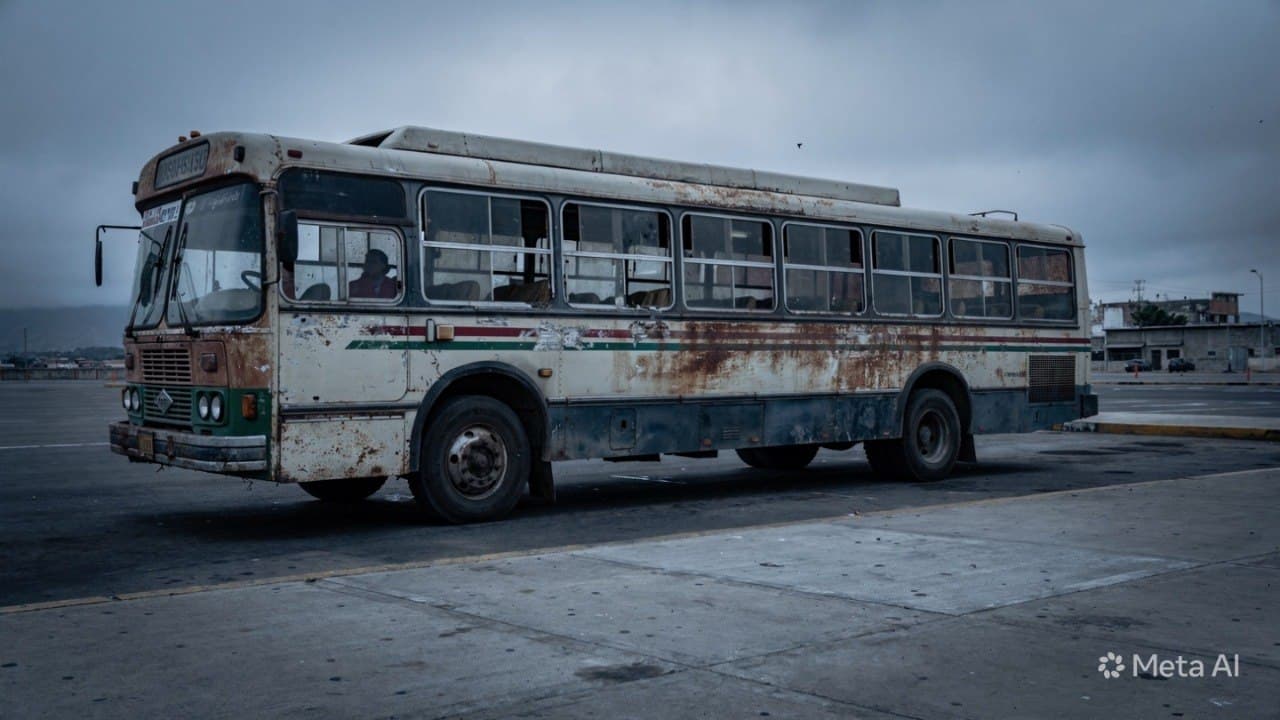
The morning light climbs slowly over the uneven ridges of Tegucigalpa, painting the capital’s sprawling valleys in hues of pale amber and slate. Below, the city wakes to a familiar, rhythmic mechanical chorus—the coughing acceleration of vintage school buses and the low hum of microbuses tracing their well-worn patterns through the steep, labyrinthine streets. For decades, these vehicles have served as the vital, beating arteries of urban life, carrying the quiet ambitions of laborers, students, and vendors from peripheral hillside settlements into the bustling commercial core. Yet, beneath the operational noise of this essential daily transit, an invisible, constricting net has long been tightening around those who sit behind the wheel.
To drive a public transport vehicle through the capital is to navigate a landscape where geography is secondary to unseen boundaries. The asphalt ribbon is not merely a path from one neighborhood to another; it is a space partitioned by unspoken demands and the persistent weight of extortion. For those who operate these routes, each morning departure carries an implicit negotiation with survival, an awareness that the modest fare collected from passengers must somehow satisfy external forces operating from the shadows. The quiet tension is etched into the faces of the operators, manifest in the quick glance at the rearview mirror and the lingering hesitation at isolated intersections.
This fragile equilibrium fractured once more in the early hours of the week, when the quiet of the urban transport network was pierced by direct physical violence. In separate incidents that unfolded along the city’s complex transit corridors, two drivers became the physical casualties of a dispute that has long remained simmering beneath the surface. The assaults were not random outbursts of anger, but deliberate, calculated expressions of enforcement, leaving two more workers wounded and a community of drivers retreating into a protective, anxious stillness. The physical damage to the vehicles and the injuries sustained by the operators serve as a stark reminder of the terms governing daily transit.
The mechanics of this intimidation operate with a cold, systematic predictability that mimics the administrative precision of a legitimate enterprise. Transport cooperatives are routinely presented with demands that exceed their financial capacities, forcing a difficult balancing act between maintaining service and ensuring personal safety. When these unwritten transactions falter, the retaliation is swift and visual, designed to send ripples of caution through every terminal and rest stop in the city. The recent physical interventions underscore a reality where the simple act of providing public transportation carries a risk that cannot be mitigated by caution alone.
Inside the crowded terminals, an uneasy quiet has descended over the drivers who gather between shifts to share coffee and muted conversation. The camaraderie that typically defines these spaces has been replaced by a collective calculations of vulnerability, with many questioning how long they can continue to navigate paths that feel increasingly compromised. The empty seats of buses parked prematurely along the curbs speak to a quiet, temporary strike of necessity, a collective holding of breath as the transport community assesses the immediate dangers of the road. For the millions who depend on these wheels to access their livelihoods, the stillness at the terminals creates an immediate, anxious ripple across the entire metropolitan economic fabric.
The problem extends far beyond the immediate trauma of the individuals involved, reflecting an enduring structural challenge that has resisted numerous enforcement strategies over the years. Specialized security units and targeted patrols have historically been deployed across the most volatile sectors, yet the underlying networks driving the extortion continue to adapt, shifting their focus or altering their methods to evade oversight. The resilience of these illicit structures creates a sense of cyclical inevitability, where brief periods of calm are viewed not as permanent resolutions, but as mere interludes before the next inevitable confrontation on the asphalt.
As the afternoon heat settles into the dust of the capital’s central avenues, the broader implications for Tegucigalpa’s urban development become increasingly apparent. A transport system operating under the constant threat of disruption is a fragile foundation for a city seeking economic stability and social cohesion. The economic strain placed on small-scale operators filters downward, ultimately impacting the affordability and reliability of travel for the most vulnerable segments of the population who have no alternative means of mobility. The ongoing tension serves as a somber indicator of how deeply localized insecurity can disrupt the baseline functions of civic life.
In the wake of the latest individual targeting, regional security administrators confirmed that formal investigations have been initiated into the coordinated extortion structures operating within the capital's transport sector. Law enforcement personnel have increased their presence at key transit hubs and along major arterial routes in an effort to restore a semblance of order and encourage drivers to resume their regular schedules. Municipal authorities emphasize that stabilizing the transport network remains a critical priority for the city's economic continuity. Meanwhile, the wounded operators remain under medical supervision, their recovery watched closely by a fraternity of drivers who must decide, with each rising sun, whether to turn the ignition key.
Note: This article was published on BanxChange.com and is powered by the BXE Token on the XRP Ledger. For the latest articles and news, please visit BanxChange.com