
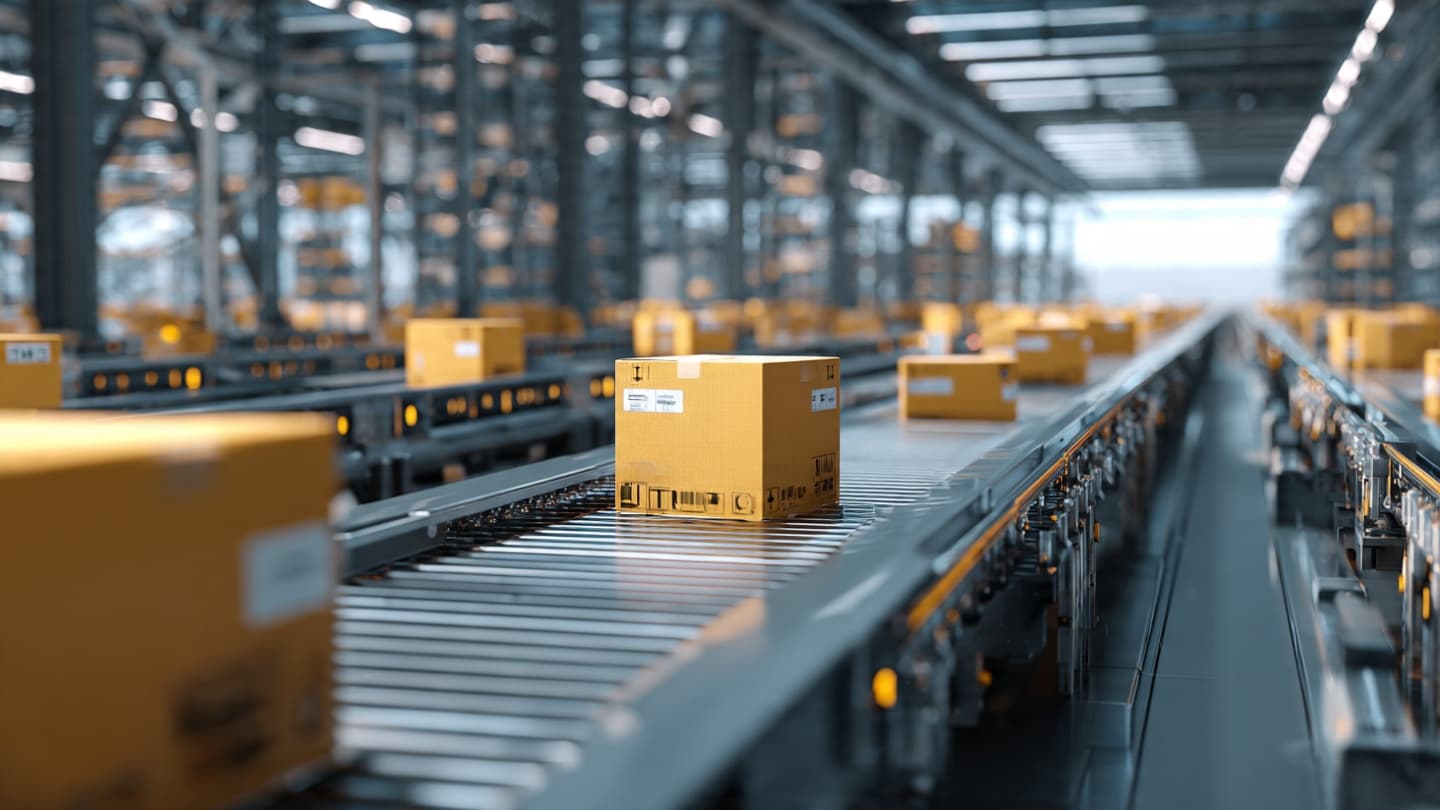
Behind every online purchase lies a vast invisible system working with extraordinary precision. From the moment a customer clicks “buy,” thousands of coordinated actions begin unfolding across warehouses, software systems, transportation networks, and delivery routes. What once required extensive human coordination is now increasingly supported by automation and robotics.
Amazon is expanding its automated logistics systems across its global warehouse network, strengthening its use of robotics, artificial intelligence, and predictive algorithms to improve fulfillment speed and operational efficiency. The move reflects broader industry trends toward highly automated supply chain infrastructure.
Modern fulfillment centers are no longer simple storage facilities. They operate as highly coordinated environments where robotic systems assist in locating, sorting, and transporting goods across vast indoor spaces. These systems are designed to reduce delays, optimize space usage, and improve delivery accuracy across millions of daily transactions.
Artificial intelligence plays a central role in predicting demand patterns, managing inventory levels, and optimizing shipping routes. By analyzing historical purchasing behavior and real-time market trends, these systems can anticipate product demand before orders are even placed in some cases.
The expansion of automation also reflects increasing pressure on global logistics networks. Rising consumer expectations for faster delivery times have transformed e-commerce competition into a race for efficiency. Companies that can deliver goods more quickly and reliably often gain significant market advantage.
At the same time, automation raises ongoing discussions about labor transformation within the logistics sector. While robotic systems handle repetitive and physically demanding tasks, human workers increasingly focus on oversight, system maintenance, quality control, and complex operational decision-making.
Industry analysts note that automation does not eliminate human involvement but reshapes it. Warehouse environments are evolving into hybrid systems where humans and machines work side by side, each contributing to different aspects of operational performance.
The logistics industry itself is undergoing one of the most significant transformations in modern commerce. Global trade expansion, e-commerce growth, and digital payment systems have all contributed to rising demand for faster and more efficient supply chains. Automation is viewed as a key response to these pressures.
However, the rapid adoption of automated systems also requires substantial investment in infrastructure, software integration, and workforce training. Companies must balance technological advancement with operational stability, ensuring that automation enhances rather than disrupts existing systems.
As Amazon continues expanding its automated logistics capabilities, the broader picture reflects a changing global economy where speed, precision, and data-driven decision-making increasingly define how goods move around the world. Behind the simplicity of a delivered package lies a deeply complex network quietly learning to think and act in real time.
AI IMAGE DISCLAIMER: Illustrations were produced with AI and serve as conceptual depictions.
SOURCES CHECK: Reuters Bloomberg CNBC The Wall Street Journal TechCrunch
Note: This article was published on BanxChange.com and is powered by the BXE Token on the XRP Ledger. For the latest articles and news, please visit BanxChange.com