
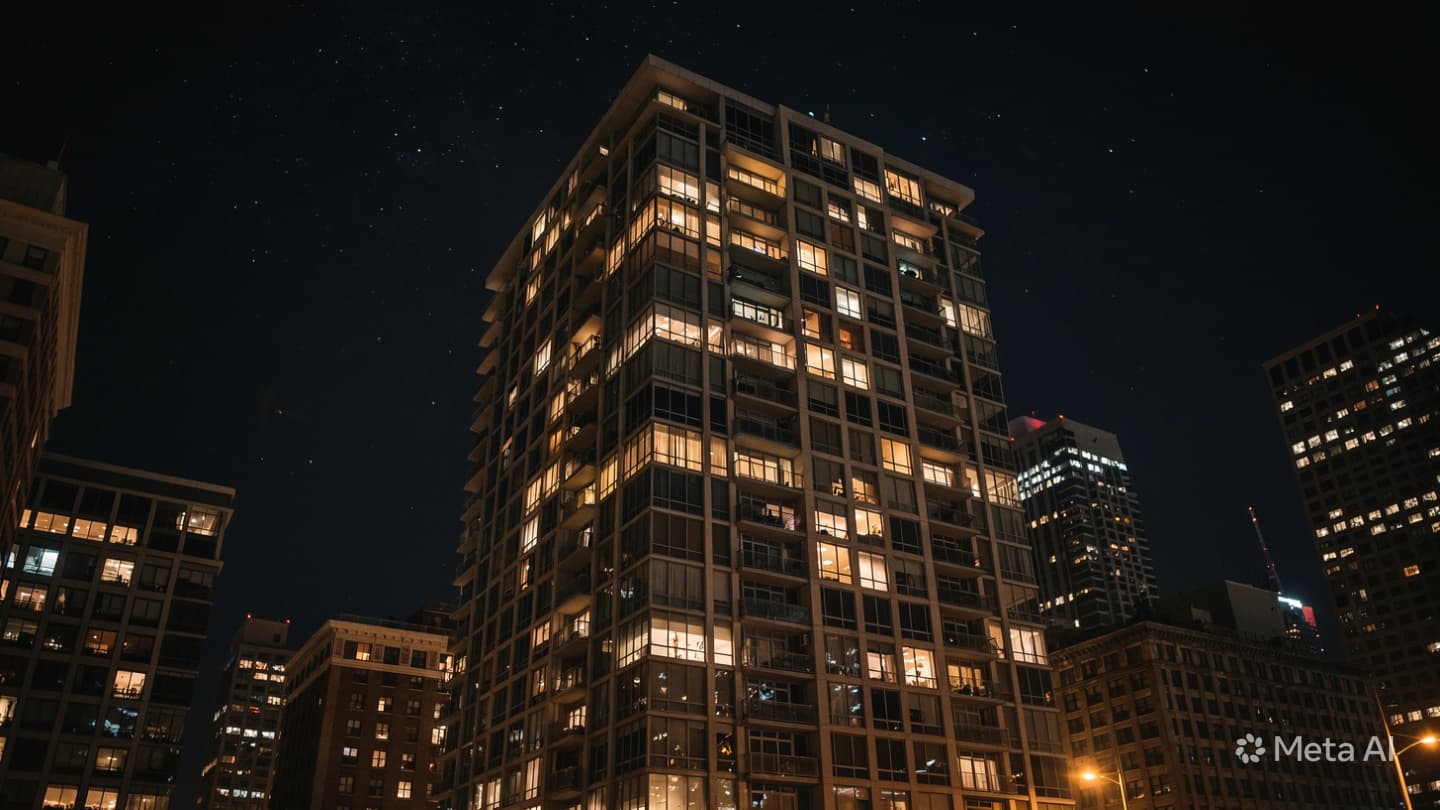
The rhythm of downtown Chicago at night is a complex composition of distant sirens, the low hum of distant transit, and the steady, flickering glow of a city that never fully yields to darkness. It is an environment where the sheer scale of the architecture—the soaring glass, the intricate steel—dwarfs the individual, yet within these massive residential complexes, the intimate stories of human life continue, pulse by pulse. There is a sense of hidden order here, a belief that behind the security of lobby doors and the height of elevator floors, the quietude of a private existence is somehow guaranteed by the very density of the surroundings.
Yet, this urban veneer of protection can be stripped away in a single, discordant instant. When the silence of a residential complex is broken by the sharp, undeniable report of violence, the entire atmosphere of the surrounding block shifts. The air, typically charged with the indifference of metropolitan anonymity, suddenly feels heavy, watchful. It is a moment where the physical reality of the building—the corridors, the shared elevators, the lobby—becomes a stage for an event that defies the expected order of a Tuesday night, leaving a trace that lingers long after the scene is cleared.
Residents who call such a space home are often united only by the coincidence of their lease, yet in the wake of a tragedy, a different, more somber bond is forged. The realization that safety is not merely a matter of locks and cameras, but a fragile condition dependent on the movements and intentions of others, settles into the consciousness of the building. It is a unsettling transition from the mundane routines of entry and exit to a state of heightened awareness, where the familiar layout of one’s own residence is suddenly framed by the context of what has transpired just down the hall.
For those tasked with the response—the officers who arrive with the practiced, somber efficiency of the city’s emergency services—the task is one of containment and analysis. They move through these concrete canyons with a focus that ignores the skyline, their gaze fixed on the immediate details of the scene. It is a world of forensic scrutiny, of yellow tape and hushed conversations, a mechanical effort to impose logic upon an event that, in its immediate aftermath, feels utterly devoid of any coherent explanation.
The city, meanwhile, continues its relentless pace outside. The trains still run, the traffic still flows through the grid of the Loop, and the life of the metropolis remains largely unchanged by the localized tragedy within a single address. This indifference is perhaps the most striking aspect of urban life: the ability of a city to absorb the most profound human loss and continue its momentum, seemingly unaffected. It forces a quiet reflection on the nature of our place within such a massive system, and the speed at which we can be erased from its memory.
As investigators piece together the timeline of the shooting, the narrative begins to crystallize, yet the core of the event remains stubbornly private. The motive, the relationship between the parties involved, and the specific sequence of decisions that led to the encounter—these are the elements that fill the police reports and the evening news cycles. They provide a semblance of closure, a way to package the violence into a container that the public can process, even as the emotional ripples of the incident continue to resonate with those closest to the site.
There is a recurring cycle to these reports, a predictable rhythm of discovery, investigation, and, eventually, a new headline that pushes the previous one into the archives. This is the nature of the news in a place like Chicago, where the scale of human interaction produces a constant stream of incidents that test the city’s capacity for grief and recovery. Yet, to treat such an event merely as a headline is to overlook the specific, human weight of the loss, the interruption of a life that had its own trajectory, its own plans, and its own place in the complex weave of the downtown population.
The building itself will eventually return to its standard rhythm, the lights will remain on, and new tenants will move into the spaces left vacant by the departures. The tragedy will become a footnote in the history of the address, a moment of local gravity that is slowly replaced by the mundane realities of daily maintenance and residency. We are left to wonder about the resilience of the space, and the manner in which the city absorbs these moments of darkness, folding them into its architecture until they are indistinguishable from the background noise of the street.
Ultimately, these events serve as a stark reminder of the complexity of our shared existence in the dense, vertical environments of the modern city. The proximity of our lives—separated by thin walls and shared air—is both the strength and the vulnerability of the urban experience. We live in the shadow of one another, often unaware of the currents that swirl in the quiet spaces just beyond our own thresholds, until the moment they break through with a clarity that cannot be ignored.
Police responded to a residential complex in downtown Chicago following reports of a shooting that occurred late Tuesday night. Upon arrival, officers discovered one individual suffering from a fatal gunshot wound, with a second victim found deceased at the scene. Authorities have initiated an investigation into the circumstances of the incident, and while the scene has been secured, no suspects are currently in custody. The investigation remains ongoing as detectives process evidence collected from the site.
Note: This article was published on BanxChange.com and is powered by the BXE Token on the XRP Ledger. For the latest articles and news, please visit BanxChange.com