
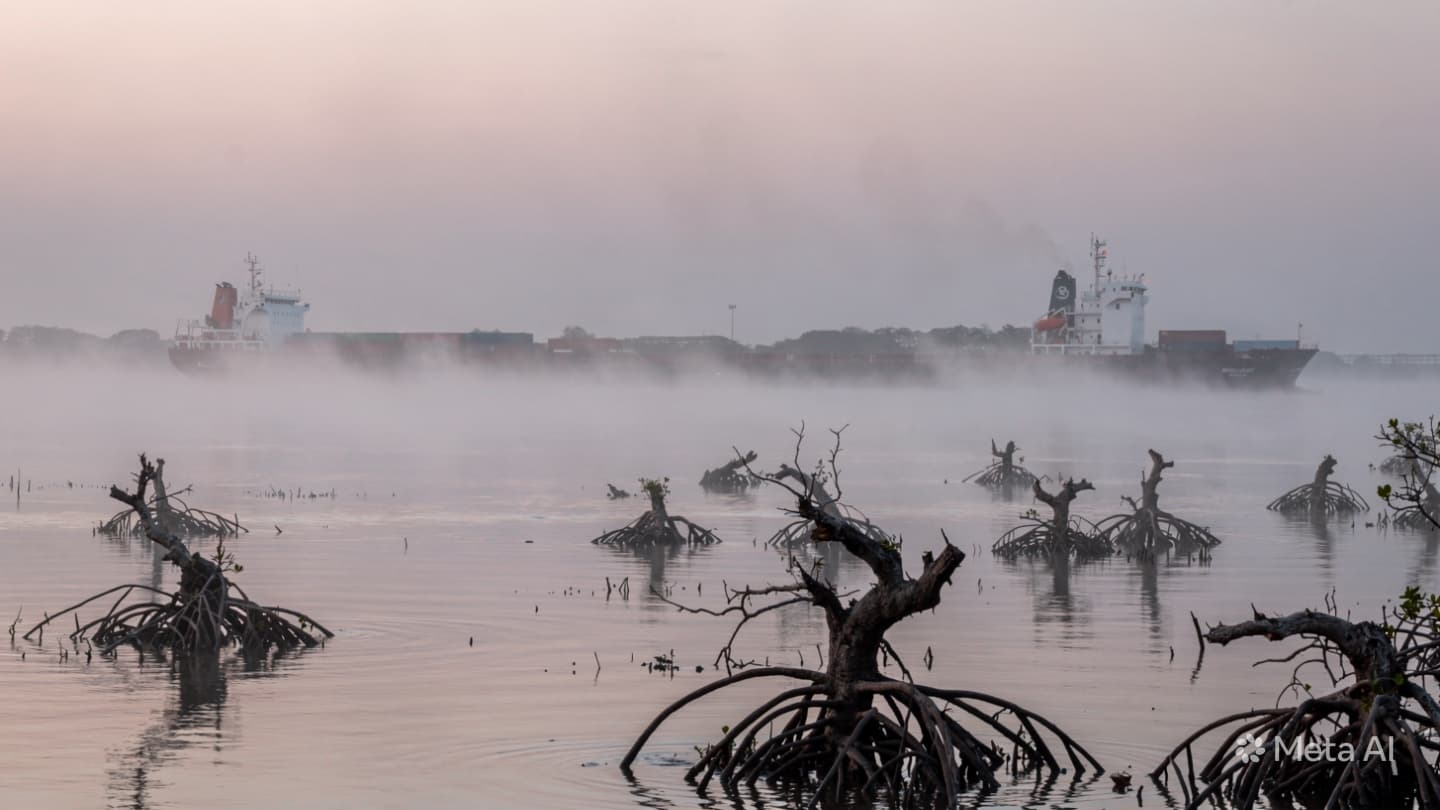
The waters of the Guayas River move with a thick, sluggish energy as they approach the Pacific, carrying the debris of the interior mountains through the sprawling industrial heart of Guayaquil. It is a landscape defined by its humidity and its movement, a place where the air always tastes of salt, diesel, and the heavy sediment of the lowlands. Along the mangrove-lined canals that fringe the southwest districts, the tides rise and fall with a predictable, ancient rhythm, masking the complex human dramas that unfold along the muddy banks. To observe the river at dawn is to see a mirror of the city itself—vast, gray, and holding secrets that rarely rise willingly to the surface.
In recent years, the relationship between the city and its waterways has grown increasingly shadowed, as the quiet shipping lanes have become the primary arteries for a global commerce of a much darker nature. The labyrinth of natural channels that once served local fishermen is now a contested geography, mapped out by criminal syndicates that operate with the wealth and discipline of multinational corporations. The silence of these coastal estuaries is frequently broken not by the call of water birds, but by the low hum of high-powered outboard motors moving through the darkness without lights. It is a world where territory is measured in access to the water, and where every square mile of shoreline is fiercely defended.
The discoveries that occasionally interrupt the morning routine of the port workers are characterized by a grim, repetitive geometry that has become terribly familiar to the local population. Packages washed ashore or left in the high grass of the riverbanks speak of a violence that has lost all sense of human proportion, reduced to a method of disposal that treats the human form as mere cargo. The utilization of heavy plastic containment is a chilling detail, a technical choice made to delay discovery and ensure the clean, anonymous transport of what remains after the accounts are settled. These moments bring a profound, freezing stillness to the neighborhood, a reminder of the proximity of the shadow world.
The narrative surrounding these discoveries is quickly claimed by the authorities, who point to the ongoing friction between the region's dominant criminal factions as the primary driver of the bloodshed. The names of these organizations are spoken in the media with a mixture of sensationalism and dread, yet on the ground, they represent a more abstract, pervasive terror that alters how people move through their own streets. The feud is not a simple disagreement over territory, but a total war for control of the exit points to the global market, a conflict where the stakes are high enough to justify any level of cruelty. The institutional response is often reactive, arriving after the tide has already delivered its grim burden.
The local communities, particularly in the impoverished barrios that look out over the mudflats, have developed a quiet, protective numbness to the violence that surrounds them. They watch the arrival of the police boats and the forensic teams with a detached, observational distance, knowing that the structural causes of the conflict remain untouched by the yellow tape and the flashing lights. There is an understanding that the river will continue to flow, the cargo will continue to move, and the internal logic of the syndicates will dictate the life expectancy of those who step into their path. It is a survival strategy born of necessity, written in the closed doors and lowered eyes of the waterfront.
As the afternoon heat settles over the port, the smell of industrial activity mixes with the organic decay of the mangroves, creating an oppressive atmosphere that seems to weigh heavily on the spirits of the residents. The state's efforts to project control through increased patrols and specialized task forces look small against the vast, chaotic backdrop of the shipping terminals and informal settlements. The resources of the ministry are stretched thin, deployed across a landscape where the adversary is wealthy, fluid, and deeply embedded in the local economy. The announcements from the capital carry an air of determined optimism, but the reality on the water remains unyielding.
The true tragedy of this coastal conflict lies in its normalization, the way the language of the state and the media gradually adapts to describe horrors that should shock the collective conscience. The bodies in the bags become statistics, the factions become corporate rivals in an illicit market, and the river itself becomes a passive accomplice to the erasure of lives. The reflection on these events leaves one with a sense of weariness, a realization that the cycle of retribution has achieved a momentum that seems independent of human volition, driven entirely by the economic imperatives of the trade.
In the twilight, the cranes of the major container ports stand like giant, silent birds against the darkening sky, their lights flickering on to guide the legitimate commerce of the nation. Below them, in the dark shadows of the piers and the hidden inlets, the other commerce continues its silent preparation for the night's run. The Guayas flows onward, indifferent to the nature of the burdens it carries, its gray waters swallowing the history of the day as it empties into the vast, unforgiving expanse of the sea.
In the final assessment, Ecuadorean police officials in the southwestern port city of Guayaquil recovered eight human bodies, bound and concealed within plastic bags, in an area known as a critical transit point for maritime drug trafficking. The Interior Ministry attributed the killings to an intensifying turf war between the Los Lobos and Los Choneros criminal organizations, who are competing for control over illicit export routes. The grim discovery highlights the escalating severity of gang violence along Ecuador's Pacific coast, which has increasingly impacted local port infrastructure and residential neighborhoods.
Note: This article was published on BanxChange.com and is powered by the BXE Token on the XRP Ledger. For the latest articles and news, please visit BanxChange.com