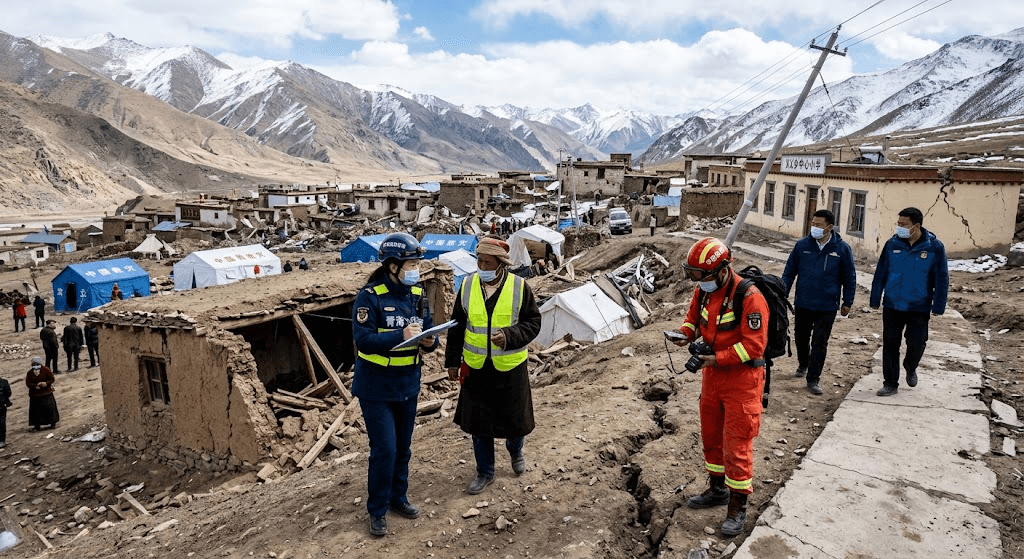
The winds that sweep across the plains of Oddar Meanchey do not carry the weight of politics or the noise of regional strife; they speak only in the language of the elements—a raw, indifferent force that reshapes the landscape with chilling efficiency. Recent reports from the National Committee for Disaster Management (NCDM) highlight the profound vulnerability of these northern provinces, where a series of wind-related disasters have left behind a trail of damaged homes, flattened crops, and an atmosphere of quiet, collective recovery. There is a melancholy in the sight of once-sturdy structures now reduced to remnants, their loss a testament to the persistent instability of the season.
These events are a reminder of the fragility of rural existence, where the shelter of a roof is the primary bulwark against the shifting temper of the climate. For the families in Oddar Meanchey, the storm is not merely a meteorological phenomenon but a deeply disruptive life event, severing the continuity of the daily cycle. To witness the aftermath is to see the quiet, dogged determination of those who must now piece together the fragments of their livelihoods, moving through the debris with a sense of resignation that is both heartbreaking and deeply human.
The NCDM’s documentation of these damages—a ledger of broken homes and lost agricultural potential—is essential, providing the empirical foundation upon which recovery efforts are built. Yet, these numbers cannot capture the full extent of the psychological burden that such events place upon a community. The fear of the next gust, the uncertainty regarding the long-term viability of their homes, and the strain of rebuilding with limited resources create a pervasive sense of insecurity that lingers long after the winds have stilled.
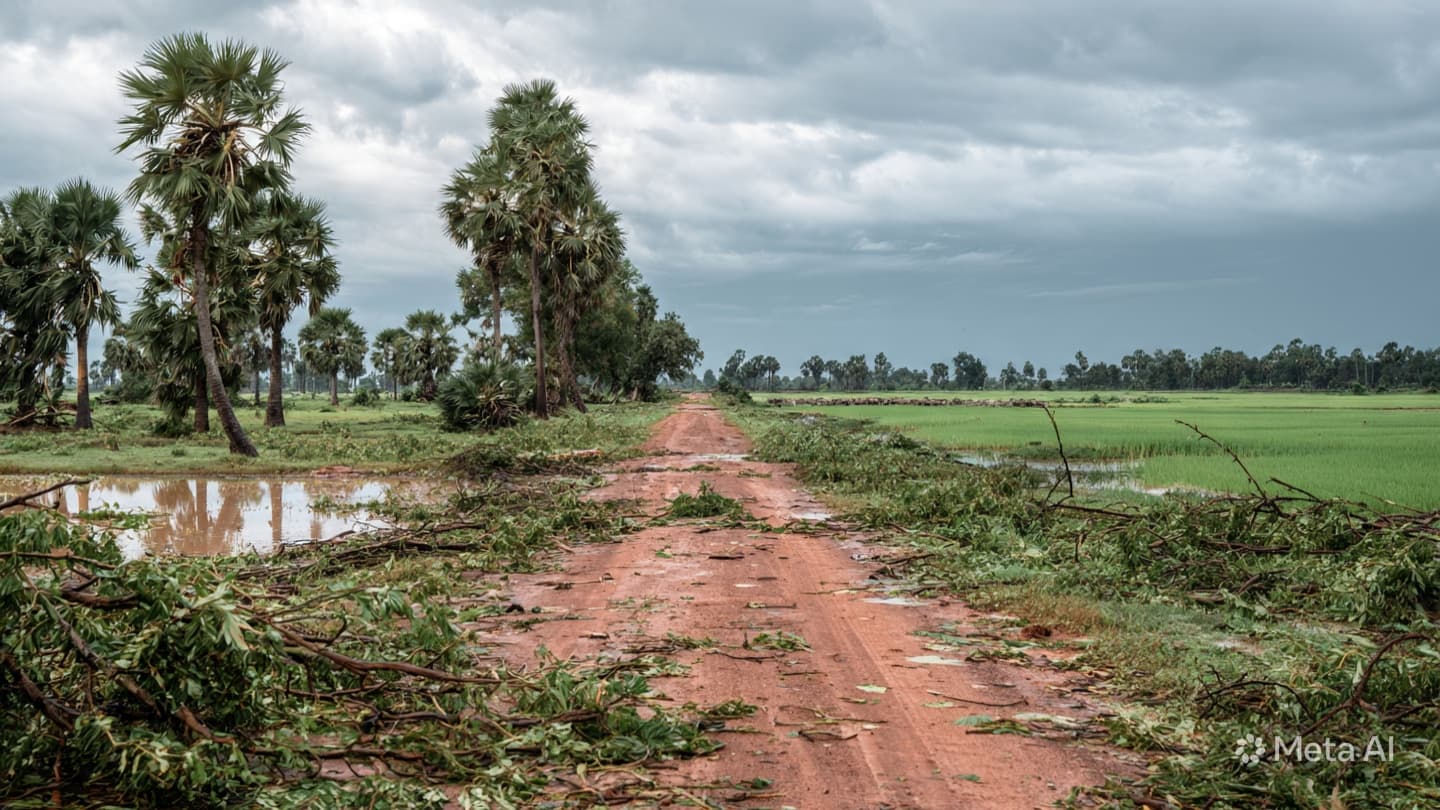
Across the province, the landscape has been subtly altered. Trees stand fractured, and the pathways that connect small villages have become clogged with the detritus of the storm. In this quiet aftermath, the community functions in a state of suspended animation, waiting for the resources and the support that will allow them to regain their footing. It is a time for reflection on the necessity of better, more durable infrastructure, and a recognition that the environment is becoming an increasingly unpredictable actor in the lives of the most vulnerable.
There is a quiet, persistent beauty in the way these communities rally. Neighbors move to assist neighbors, pooling their limited labor to clear the paths and patch the holes in each other’s roofs. It is an act of defiance against the randomness of the disaster, a way of asserting that their lives hold meaning despite the destructive reach of the elements. Yet, this reliance on communal strength should not obscure the reality that the scale of these events often exceeds what a local population can manage alone.
As the recovery proceeds, the focus turns to the broader implications of these wind-related events. They are part of a larger pattern, a shift in the regional weather dynamics that seems to favor the sudden, the intense, and the destructive. For policymakers, the challenge is to move beyond the reactive, to invest in the foresight that might minimize the impact of such occurrences. It is a task of profound importance, for the resilience of the province depends on the ability to anticipate the next turning of the wind.
Ultimately, the report from the NCDM is a call to be more present in our stewardship of these areas. It is an acknowledgment that the well-being of the inhabitants of Oddar Meanchey is tethered to our ability to respond to the changing reality of the environment. The quiet rebuilding occurring now is only a temporary respite; true security lies in the development of systems that can withstand the unpredictable, ensuring that no family is forced to endure the loss of their home simply because the sky decided to change its rhythm.
The National Committee for Disaster Management (NCDM) has released assessment data indicating that recent high-wind events in Oddar Meanchey Province caused significant damage to residential property and agricultural infrastructure. Local authorities are currently coordinating emergency relief efforts, providing temporary shelter and essential supplies to the most affected families. Meteorological assessments suggest that these wind events, which occurred between June 22 and June 24, 2026, are consistent with intensified seasonal transition patterns in the northern regions of Cambodia.
Published by Banx Network. This article is part of the Banx decentralized media programme, powered by the BXE token on the XRP Ledger.