The snow in the high Pyrenees has a deceptive stillness, looking from a distance like a soft, white blanket draped over the rough shoulders of the rock. But those who venture beyond the marked trails of the Arcalís region know that this beauty is often held in a delicate, precarious balance. A shift in the wind, a slight rise in temperature, or the heavy weight of a single turn can shatter that equilibrium, turning a pristine snowfield into a roaring river of white ice.
It happened in the quiet hours of the afternoon, when the sun was beginning to cast long, blue shadows across the couloirs. A fracture line, clean and sudden as a lightning bolt, zipped across the upper slope, releasing thousands of tons of packed winter accumulation. The avalanche descended with a muffled, terrifying roar, a cloud of frozen powder rising high into the thin air as it swept through the bowl, swallowing everything in its path.
In the valley below, the sudden plume of white mist rising above the ridge line was the first indication that the mountain had shifted. For the backcountry skiers caught in the path of the slide, the world instantly dissolved into a chaotic, suffocating darkness where up and down lost all meaning. The snow, once light and fluid under their skis, solidified into a substance as heavy and unforgiving as poured concrete the moment the motion stopped.
The response from the emergency services was a testament to the cold efficiency required in moments where minutes dictate the boundary between life and death. Within moments of the alarm being raised, the rhythmic thudding of helicopter rotors began to echo through the valleys, the aircraft climbing steeply against the jagged peaks. Onboard, specialized mountain rescue technicians checked their beacons and avalanche probes, their faces set in the grim focus of those who have looked into the snow many times before.
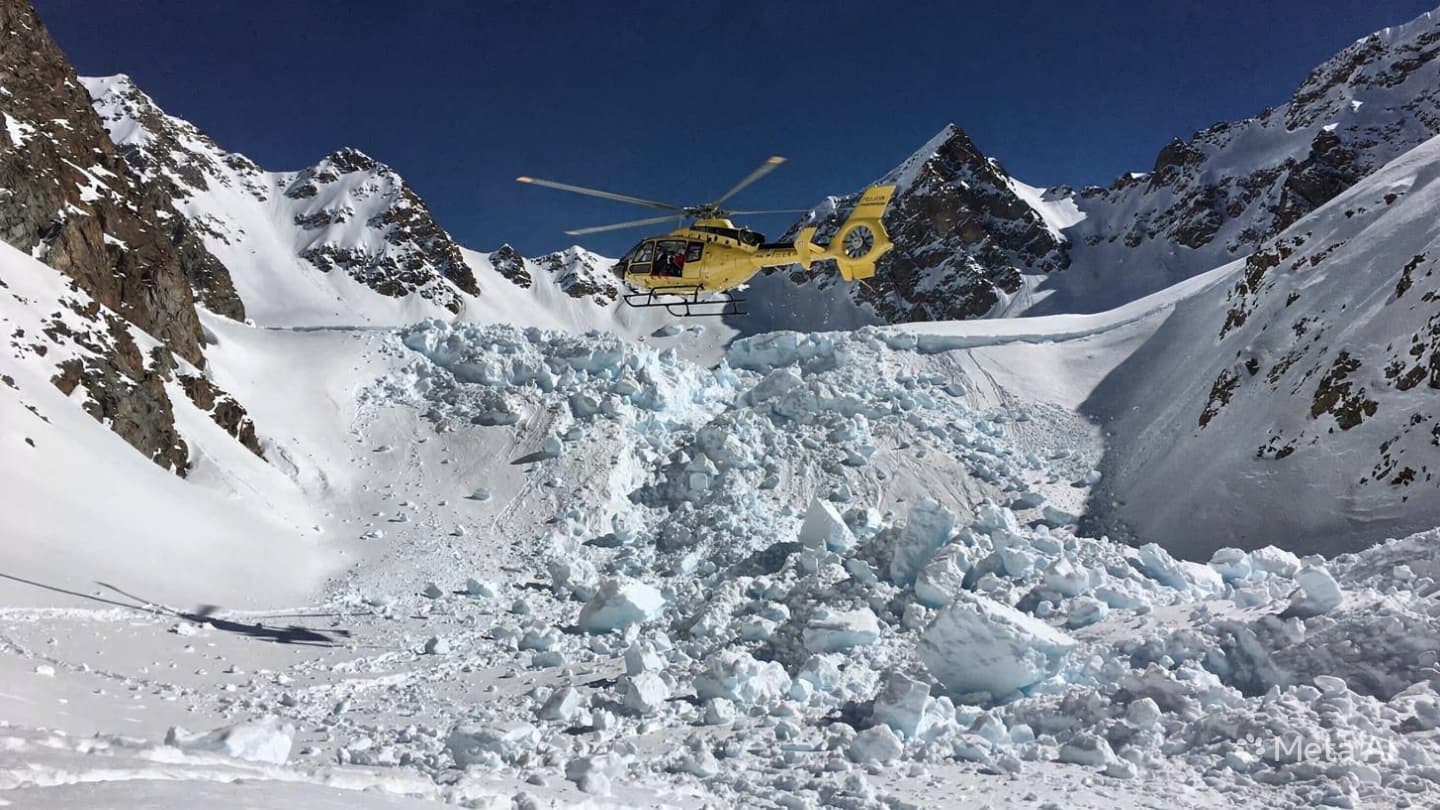
From the air, the avalanche path looked like a massive, chalky scar cut into the mountain, a chaotic jumble of debris blocks resting at the bottom of the slope. The helicopter hovered close to the snowpack, its downwash creating a localized blizzard as the rescue teams leaped from the skids with their search dogs. There is a frantic silence to an avalanche search, where human voices are swallowed by the snow and the only sound is the beep of transceivers and the scraping of metal shovels.
The dogs moved with a frantic urgency, their noses buried deep in the cold powder, catching the faint scent of human life trapped beneath the surface. One by one, areas of interest were identified, and the rescue teams began the grueling work of excavation, digging through the dense blocks with practiced, rhythmic strokes. Every shovel of snow removed was a hard-won victory against the freezing dark of the mountain slide.
As the injured were carefully loaded into rescue litters and hoisted into the waiting aircraft, the true scale of the mountain’s power became apparent to those on the ground. The backcountry offers an illusion of absolute freedom, an escape from the regulated boundaries of modern life, but it demands an absolute acceptance of risk in return. Today, that risk materialized in its most pure and dangerous form, testing the limits of human endurance and technical rescue capability.
The helicopter turned back toward the hospital in the valley, its shadow trailing across the white expanses below as the sun finally set behind the peaks. On the mountain, the avalanche debris slowly began to cool and freeze into the permanent architecture of the slope, a silent monument to a afternoon where the earth moved, and a few fortunate souls were pulled back from the edge of the winter quiet.
Published by Banx Network. This article is part of the Banx decentralized media programme, powered by the BXE token on the XRP Ledger.