
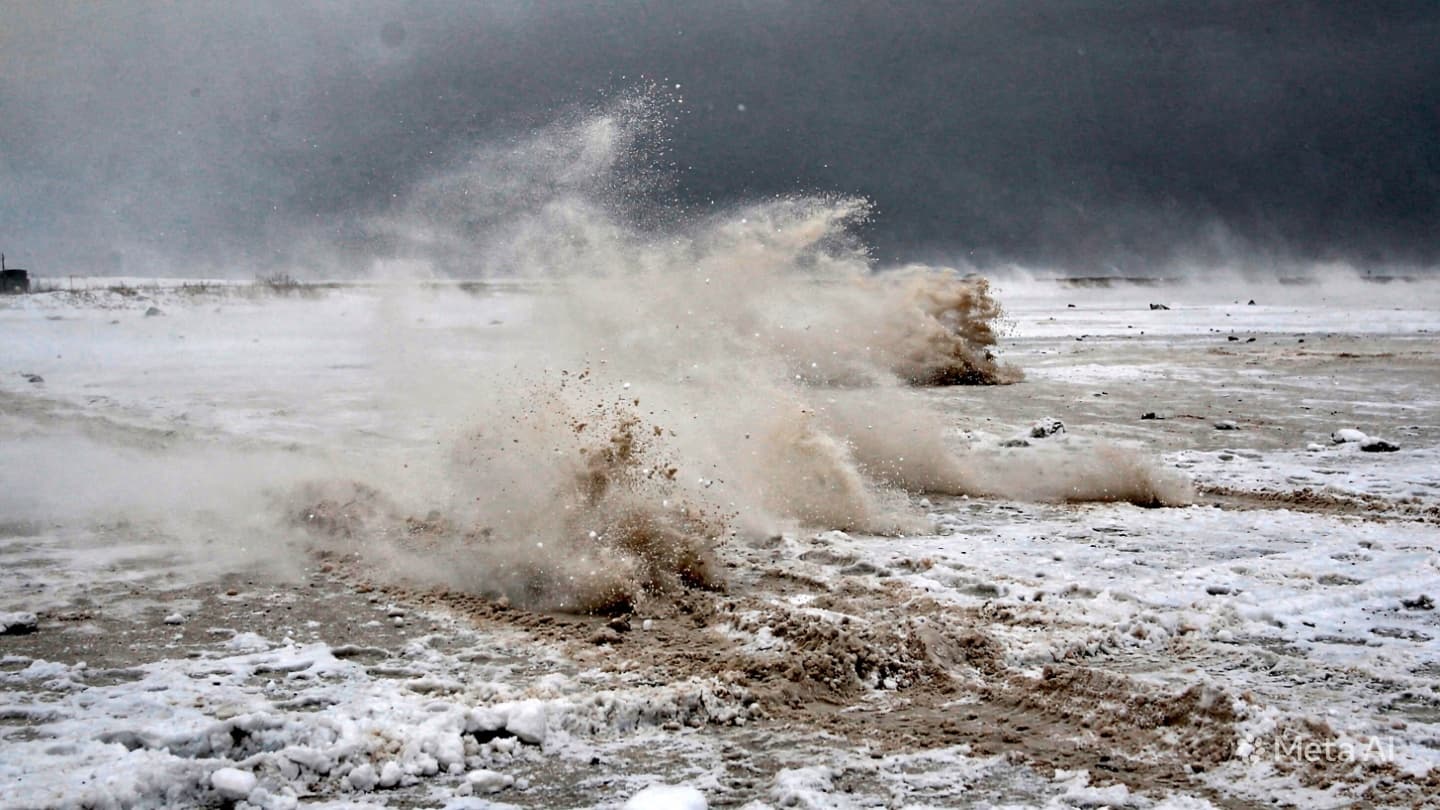
The winter landscape of the Mongolian steppe possesses a quiet, deceptive beauty that conceals a relentless struggle for survival. For generations, the herding families of these vast plains have adapted to the harsh seasonality of the north, relying on traditional wisdom to shield their livestock from the worst of the cold. Yet, when the phenomenon known as the dzud descends with full force, the familiar rhythms of pastoral life are replaced by an overwhelming sense of isolation. The endless white horizon becomes both a physical barrier and a psychological weight, enclosing households in a silent vigil against the elements.
This year, the convergence of summer drought and premature winter freezing has created a particularly unforgiving environment. The thin layer of topsoil, stripped of its nutrients by months of aridity, was quickly sealed beneath a thick crust of compacted snow and ice. For the animals that form the economic and cultural foundation of these communities, the grass is no longer accessible, hidden away beneath an impenetrable shield. The herders are left to watch the steady depletion of their winter feed reserves, knowing that the true test of endurance is still underway.
Factual dispatches from international monitoring bodies indicate that the scale of this seasonal crisis is expanding across multiple provinces. ReliefWeb has documented that the severe dzud weather isolation now directly affects over ten thousand herder households, with livestock mortality rates climbing significantly and already exceeding forty-nine hundred animals. These losses represent more than a financial deficit; they signify the erosion of a heritage that has defined life on the grasslands for centuries.
The mechanics of the isolation are absolute, as rural tracks and mountain passes are completely erased by shifting drifts. Heavy machinery deployed by provincial authorities frequently struggles against the sheer volume of snow, leaving remote settlements to rely entirely on their own resources. Communication becomes a precious commodity, maintained through intermittent radio signals or satellite links that connect frozen gers to distant administrative centers.
Within the warmth of the felt-lined dwellings, daily life has transformed into a calculated strategy of conservation. Families must carefully ration their food, fuel, and medical supplies, prioritizing the survival of their remaining breeding stock. The bond between the herder and the animal is deeply tested in these conditions, as men and women brave sub-zero gales to tend to newborn livestock inside makeshift shelters.
The psychological toll of this environmental confinement is deep, yet it is met with a characteristic restraint by the people of the steppe. Neighbors who are separated by miles of impassable drifts look for signs of life in the distance, watching for the thin curls of smoke rising from a chimney. This mutual awareness, though silent, forms an unseen network of solidarity that sustains the population through the darkest months of the year.
As the pale afternoon sun casts elongated blue shadows across the snowfields, the true extent of the winter’s impact is visible in the stillness of the landscape. The carcasses of frozen animals, partially buried by the wind, serve as somber milestones along the empty valley floors. It is a visual testament to the severity of a climate that permits no errors in judgment and offers no leniency to the unprepared.
The response from international relief organizations and domestic agencies continues to focus on clearing vital transport corridors and distributing emergency fodder to the hardest-hit districts. However, the delivery of aid is a slow and hazardous process, dictated entirely by the volatility of the weather. Until the spring thaw begins to soften the earth, the herding communities remain locked in a delicate balance between survival and the winter frost.
Published by Banx Network. This article is part of the Banx decentralized media programme, powered by the BXE token on the XRP Ledger.


