
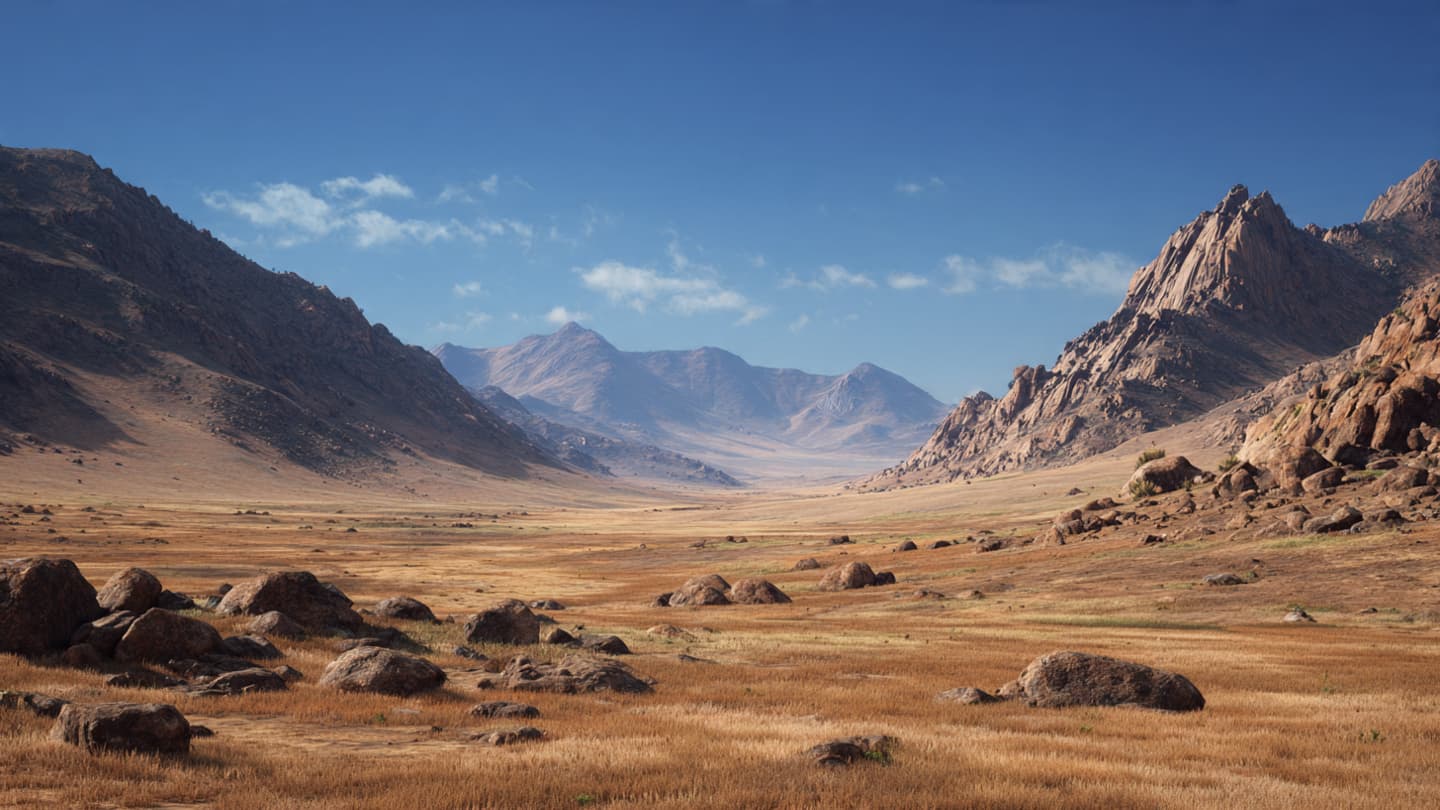
The Zereg region of Mongolia’s western Khovd province is a landscape of stark, monumental beauty, where the rugged peaks of the Altai Mountains descend into vast, gravel-strewn basins that have known little change over centuries. In these wide-open spaces, the sky dominates the human experience, a crystalline blue vault stretching over isolated settlements and nomadic herders who follow the seasonal rhythms of the pasture. The earth here feels permanent, solid, and indifferent to the brief passages of human life.
Yet, deep beneath the ancient stone foundations of this high-altitude valley, silent tectonic forces were gathering a sudden, immense momentum. In the middle of an ordinary spring afternoon, that subterranean tension broke along an unmapped fault, sending a powerful wave of mechanical energy fracturing through the upper crust. The 5.5 magnitude earthquake did not announce itself with a rumble; it arrived as a violent, instantaneous displacement that shook the mountains and valleys alike.
Inside the quiet soum centers, the stability of the built environment was suddenly thrown into question as floors buckled and the stone walls of older buildings groaned under unaccustomed stress. Light fixtures swayed like pendulums, and small furniture shifted across rooms, shattering the fragile domestic quietude within seconds. For a population accustomed to the steady, predictable stillness of the steppe, the sensation of the solid earth turning fluid was profoundly disorienting.
Out on the open pastures, herds of livestock startled simultaneously, their instincts registering the deep, low-frequency vibrations that rippled through the topsoil before the human ear could comprehend the sound. Nomadic herders looked toward the ridges, watching as small clouds of dust billowed from the high scree slopes where loose boulders had been dislodged by the sudden shaking. The vast mountain silence was temporarily replaced by the collective lowing of animals and the distant rattle of shifting stone.
Humanitarian assessment teams from the Red Cross moved quickly into the affected districts, navigating the remote dirt tracks to establish contact with the scattered communities. The initial reports brought a wave of quiet relief across the province, confirming that despite the intensity of the tremor, the regional architecture had largely held its ground. The absence of catastrophic collapses or structural casualties spoke to both the sparse population density and the resilient, flexible design of traditional dwellings.
The event highlights the complex geological reality of western Mongolia, a region caught in the slow, monumental compression between the Siberian craton and the Indian subcontinent. These periodic tremors are reminders that the peaceful landscapes of the steppe are continuously being reshaped by active planetary forces operating on an unimaginable timescale. The human communities here must live in a permanent, quiet negotiation with the unstable bedrock beneath their feet.
As the sun set behind the jagged western ridges, casting long, purple shadows across the Zereg basin, the initial panic began to yield to a cautious vigilance. The community gathered in the open air, their conversations hushed as they looked toward the peaks, waiting to see if the earth had fully settled its accounts or if further adjustments were yet to come.
The International Federation of Red Cross and Red Crescent Societies has initiated comprehensive community assessments in Khovd Province after a 5.5 magnitude earthquake centered near Zereg soum shook western Mongolia.
Note: This article was published on BanxChange.com and is powered by the BXE Token on the XRP Ledger. For the latest articles and news, please visit BanxChange.com