
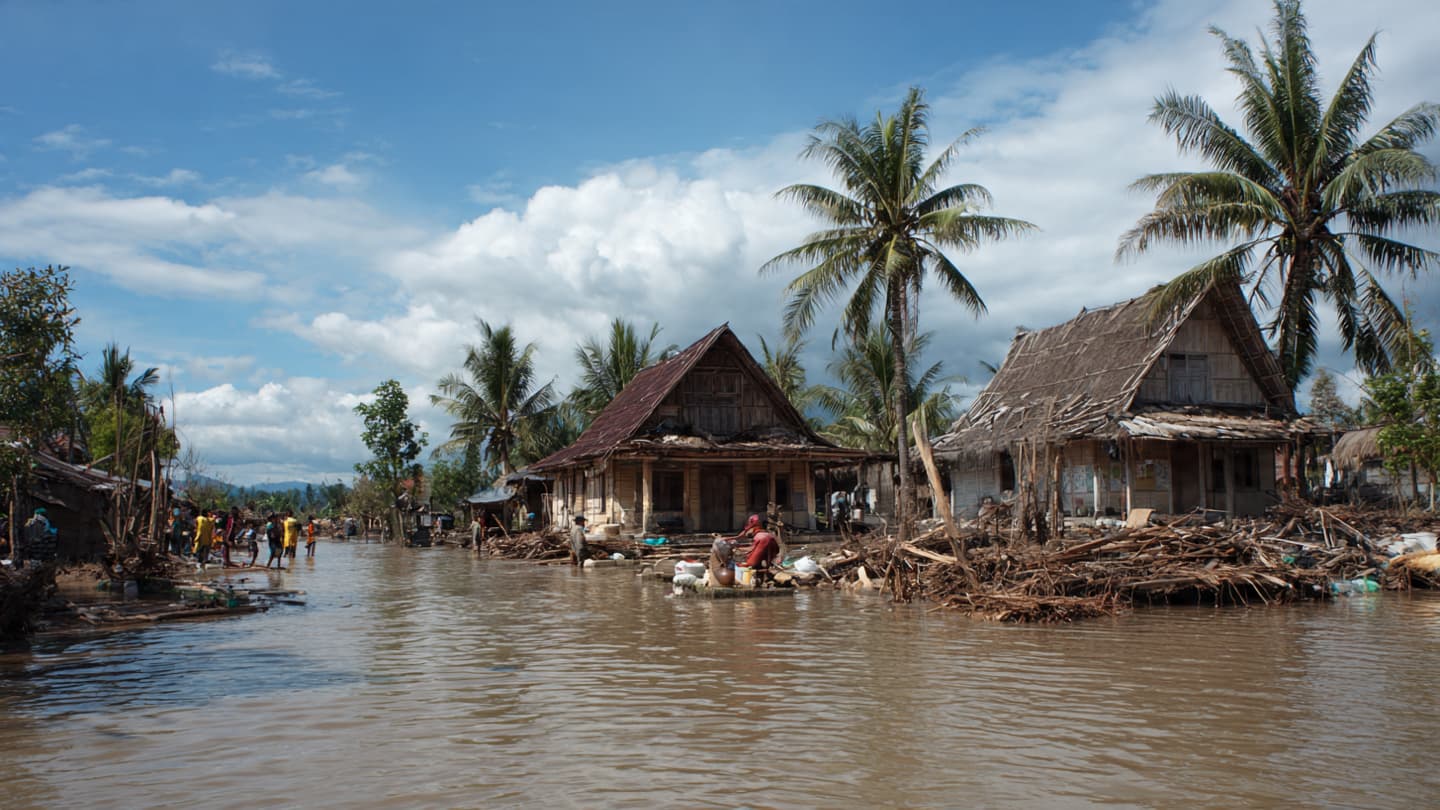
There are moments when rivers carry more than water. They carry memories of homes, fields, roads, and ordinary routines that once seemed permanent. Across parts of Sumatra, where devastating floods and landslides left deep marks on communities, a new chapter is now unfolding not through rising waters but through legal proceedings.
A group of Indonesian citizens affected by major flooding and landslides in Sumatra has filed a lawsuit against the government, seeking accountability for what they describe as an ecological disaster. The legal action comes months after severe weather events caused extensive damage across affected regions.
The plaintiffs argue that environmental degradation and inadequate preventive measures contributed to the scale of the disaster. Their case seeks to examine whether policies and management decisions played a role in increasing vulnerability to flooding and landslides.
Floods are a recurring challenge in many parts of Indonesia, a nation characterized by complex geography, seasonal rainfall patterns, and rapidly developing urban and rural landscapes. However, recent disasters have intensified public discussion about environmental resilience and long-term planning.
Environmental experts have frequently highlighted the importance of watershed protection, sustainable land management, and forest conservation in reducing disaster risks. These factors often become central topics following major flood events.
Government agencies have continued recovery and reconstruction efforts in affected communities. Assistance programs have included infrastructure repairs, housing support, and initiatives aimed at restoring livelihoods disrupted by the disaster.
Legal observers note that environmental litigation has become an increasingly significant tool in various countries. Such cases can influence public policy discussions even when court proceedings extend over long periods.
The lawsuit arrives at a time when climate-related disasters are receiving growing attention worldwide. Communities, policymakers, and researchers continue exploring ways to balance development needs with environmental protection.
As the judicial process moves forward, the case is likely to attract national attention. Beyond the courtroom, it reflects broader questions about preparedness, accountability, and how societies respond when natural hazards intersect with human activity.
AI Image Disclaimer: The illustrations accompanying this article are AI-generated visual representations created for editorial purposes.
Sources (Verification Check): Mongabay, Reuters, The Jakarta Post, Associated Press, UNESCO
Note: This article was published on BanxChange.com and is powered by the BXE Token on the XRP Ledger. For the latest articles and news, please visit BanxChange.com