Disease outbreaks often spread like ripples across still water, revealing only part of the story at first. Behind every confirmed case lies a network of human movement, daily routines, and close relationships that can quietly carry infection farther than expected. In eastern Democratic Republic of the Congo, health officials are confronting exactly that challenge as they work to contain a rapidly expanding Ebola outbreak.
The current outbreak is caused by the Bundibugyo species of Ebola virus, a rare strain for which there is no licensed vaccine or approved specific treatment. Health authorities say the epidemic has become one of the fastest-growing Ebola outbreaks on record, with thousands of confirmed infections and hundreds of deaths reported across affected provinces. The World Health Organization and Africa CDC have classified the outbreak as a major international public health concern.
One of the greatest obstacles is the growing number of patients linked to unknown chains of transmission, sometimes described by experts as "walking Ebola." The phrase refers to infected individuals who continue moving through communities before receiving a diagnosis, allowing the virus to spread unnoticed. According to the World Health Organization, roughly 80% of newly identified cases cannot yet be connected to known transmission networks, making contact tracing increasingly difficult.
The outbreak is unfolding in a region facing armed conflict, population displacement, and limited healthcare access. Community mistrust, attacks on treatment facilities, and strikes by healthcare workers over unpaid salaries have disrupted surveillance and medical services. Public health experts say these conditions make rapid isolation of patients and monitoring of contacts significantly more difficult than during previous Ebola outbreaks.
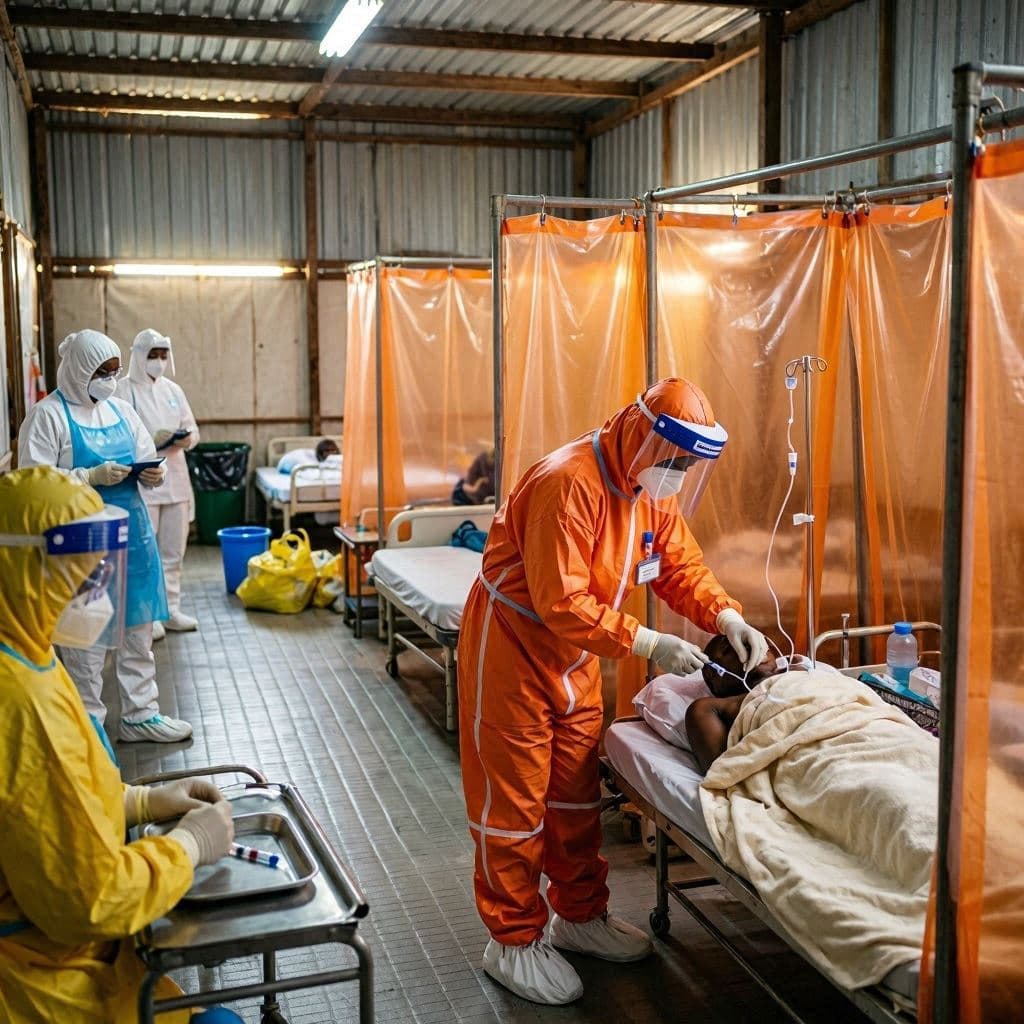
Because the Bundibugyo strain lacks an approved vaccine or licensed antiviral therapy, treatment currently relies on early supportive medical care. Patients who receive prompt fluids, electrolyte replacement, oxygen support, treatment for secondary infections, and careful monitoring have better chances of survival. International guidelines emphasize that supportive care remains the foundation of treatment while researchers continue evaluating experimental therapies.
At the same time, researchers have launched clinical trials in the Democratic Republic of the Congo to evaluate several promising antiviral medicines, including remdesivir, MBP134, and obeldesivir. Scientists hope these studies will determine whether the experimental treatments can safely reduce illness and improve survival for patients infected with the Bundibugyo virus. Enrollment has already begun despite the difficult operating conditions.
Health officials continue stressing that controlling Ebola depends on more than medical treatment alone. Rapid diagnosis, contact tracing, safe and dignified burials, infection prevention measures, and strong community engagement remain essential tools for interrupting transmission. Public cooperation is especially important because Ebola spreads through direct contact with the bodily fluids of a person who is symptomatic, not through casual airborne exposure.
While the outbreak remains difficult to contain, international organizations and Congolese health authorities continue expanding treatment centers, laboratory capacity, and research efforts. Scientists hope that combining improved public health measures with ongoing clinical trials will strengthen the response and provide new evidence for treating future outbreaks caused by this rare Ebola strain.
AI Image Disclaimer: The accompanying images are AI-generated illustrations inspired by verified public health reporting and are intended solely to visualize the subject.
Source Verification Check: Verified
Sources: Associated Press, Reuters, World Health Organization, U.S. Centers for Disease Control and Prevention, Nature Medicine
Published by Banx Network. This article is part of the Banx decentralized media programme, powered by the BXE token on the XRP Ledger.