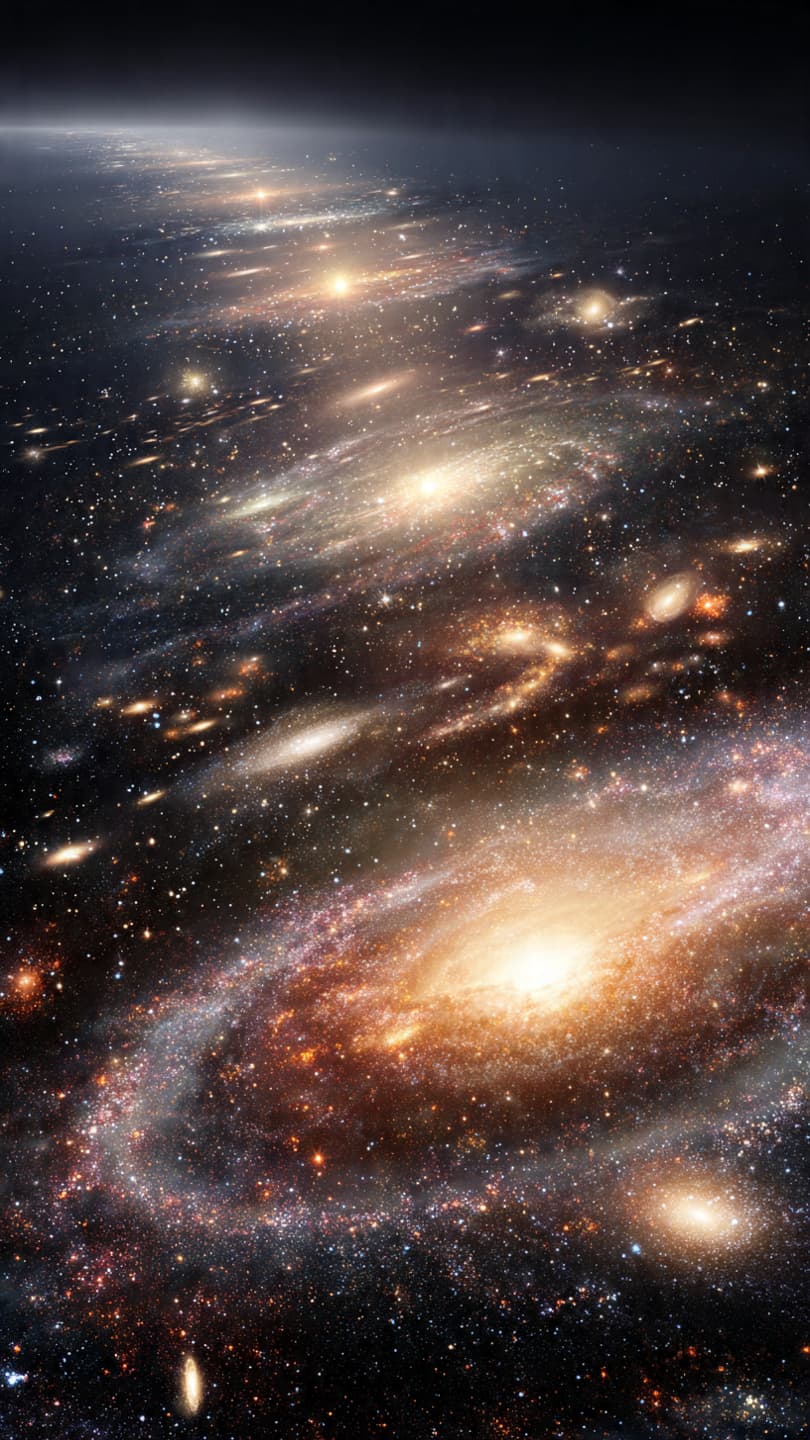
The universe is often described as a vast, expanding structure, its galaxies drifting away from one another in a slow and continuous motion. Yet recent measurements have intensified an ongoing scientific discussion about the rate at which this expansion occurs.
This discrepancy, often referred to in cosmology as a tension between different measurement methods, suggests that the universe may be expanding faster than predicted by some theoretical models.
Astronomers rely on multiple observational techniques, including supernova measurements and cosmic microwave background analysis, to estimate the expansion rate. Differences between these approaches have persisted despite improved precision.
The persistence of this mismatch has led researchers to explore whether unknown factors in physics might be influencing cosmic expansion, or whether refinements in measurement techniques are still needed.
While the findings do not overturn established cosmological models, they do highlight areas where current understanding remains incomplete.
Scientists emphasize that such tensions are not unusual in the history of physics and often lead to deeper insights and more refined theories over time.
The study of cosmic expansion remains one of the most fundamental areas in astrophysics, shaping our understanding of the universe’s origin, structure, and ultimate fate.
In conclusion, the ongoing differences in expansion measurements continue to challenge cosmologists, pointing toward a deeper layer of cosmic complexity yet to be fully understood.
AI Image Disclaimer: Images accompanying this article are AI-generated conceptual visualizations for editorial use.
Source Verification Check: NASA, ESA, Nature Astronomy, Scientific American, Harvard-Smithsonian Center for Astrophysics
Published by Banx Network. This article is part of the Banx decentralized media programme, powered by the BXE token on the XRP Ledger.