
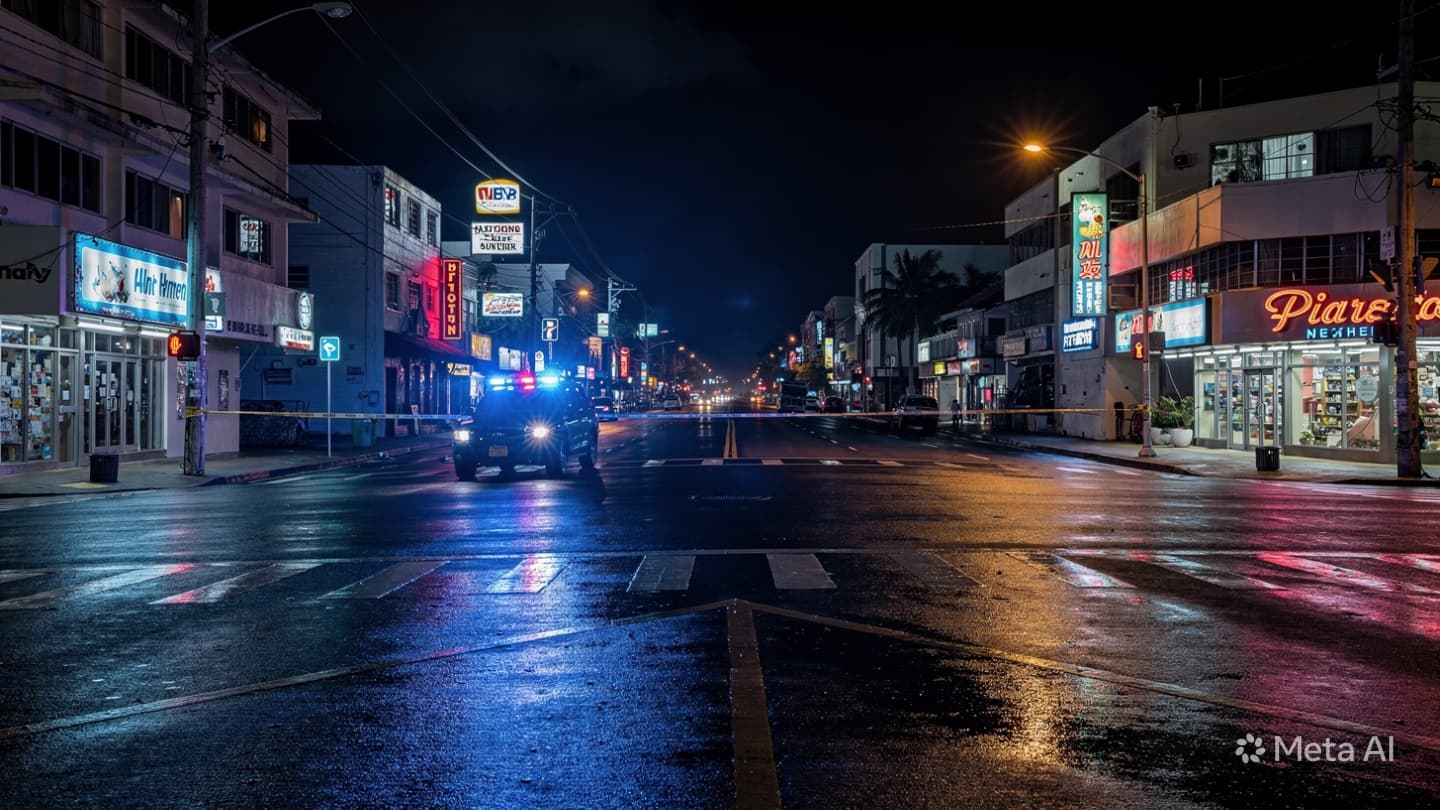
The central neighborhoods of Mangilao are typically characterized by a lively, community-oriented atmosphere, where residential streets run parallel to institutional campuses, schools, and local markets. In these closely built subdivisions, the daylight hours usually pass with a comforting predictability—the sound of school buses navigating the intersections, the murmur of lawnmowers, and neighbors exchanging greetings across low concrete walls. It is an environment built upon an assumption of mutual vigilance and neighborhood safety, where families leave their homes for the workday trusting that the physical boundaries of their property will be respected. The community operates on a baseline of shared trust, where the home is viewed as a secure, inviolable sanctuary.
Yet, this domestic tranquility can be deeply compromised when opportunistic individuals exploit the quiet intervals of the working day to breach the security of private residences. Under the cover of a recent afternoon, while the owners were away at their employment, a residential property on a quiet lane was targeted and systematically burglarized. The transition from a secure, orderly home to a compromised crime scene happens with a silent, invasive swiftness that completely alters the character of the structure. Intruders forced entry through a rear window, bypassing basic security fixtures to ransack the interior spaces, turning an intimate family dwelling into a site of chaotic disruption and material loss.
The discovery of a residential burglary carries an immediate, heavy psychological finality, replacing the familiar comfort of the home with a cold, lingering sense of vulnerability. Returning from their daily routines, the residents stepped into an environment that had been profoundly altered; drawers were emptied onto the floor, personal lockboxes forced open, and valuable electronics and family heirlooms systematically extracted. There is a specific, violating chill that accompanies a home intrusion; it shatters the invisible barrier of privacy, leaving the victims feeling exposed within their own walls. Neighbors gathered along the sidewalk as the realization of the theft spread, looking at their own windows with a sudden, protective caution.
Patrol officers and forensic technicians from the Guam Police Department arrived shortly after the initial emergency call, transforming the quiet suburban home into a focused theater of criminal investigation. Detectives moved methodically through the interior, using specialized dusts to lift latent fingerprints from the forced window frame and the disturbed surfaces within the bedrooms. A formal investigation was immediately launched, with officers conducting door-to-door canvases of the neighborhood to identify any unfamiliar vehicles or individuals observed loitering in the area during the afternoon. The property, usually welcoming and brightly lit by evening, remained cordoned off with yellow tape as law enforcement worked to reconstruct the timeline of the breach.
The long-term impact of a residential burglary ripples quietly through a suburban street, prompting an immediate hardening of properties as residents install security cameras, reinforce window latches, and reconsider their daily security habits. In a community where families often share decades of neighborhood history, an incident of this nature is felt as a direct threat to the collective peace of the district. The physical loss of items, while financially burdensome, is often secondary to the profound loss of safety that lingers within the home long after the police reports are filed. The darkened windows of the compromised house stood as a silent warning to the street, a stark reminder of the fragile nature of suburban isolation.
As the evening hours advanced, the initial on-scene documentation concluded, transitioning into the rigorous task of tracking the stolen property through local pawn shops and online marketplaces. Detectives compiled a detailed manifest of the missing items, utilizing serial numbers and distinct physical descriptions to alert local businesses to intercept the stolen goods before they could be liquidated. The local administration issued a standard public advisory, encouraging residents to document their valuables and maintain active communication with neighbors through local watch programs. The neighborhood settled into a watchful, quiet night, the ambient hum of the nearby highway serving as a distant background to the local unease.
The physical damage to the window will be repaired, the disordered rooms returned to their original state, and the daily rhythm of the Mangilao subdivision will resume its predictable pace. But the memory of the afternoon the sanctuary was breached will remain a cautionary chapter among those who share the lane, altering how they view the security of the hearth. For now, the home stands under a new, watchful monitoring, a testament to the resilience required to reclaim the peace of a violated space.
In straight news terms, the Guam Police Department has opened a comprehensive investigation into a daytime residential burglary that occurred at a home in Mangilao early Tuesday afternoon. Perpetrators gained entry through a forced rear window while the occupants were away, escaping with high-value electronics, jewelry, and personal property. Forensic units have processed the scene for physical evidence, and detectives are actively interviewing neighbors and reviewing nearby surveillance footage to identify suspects in connection with the break-in.
Note: This article was published on BanxChange.com and is powered by the BXE Token on the XRP Ledger. For the latest articles and news, please visit BanxChange.com