
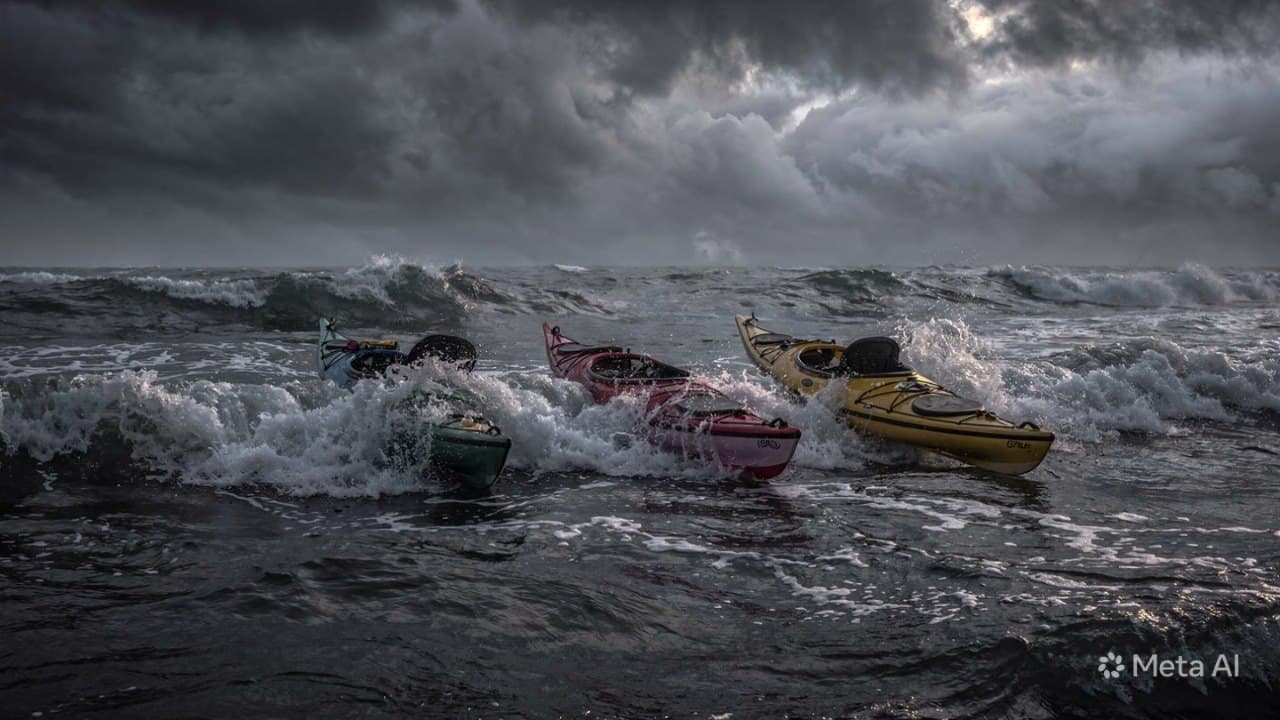
The Rambla of Montevideo serves as the long, concrete spine of the capital, a grand promenade where the city meets the vast, shifting expanse of the Río de la Plata. Under ordinary skies, this waterfront is a space of shared leisure, where the inhabitants gather to watch the sun slip beneath the horizon while the water laps gently against the stone barriers. It is the defining boundary of the city, representing a open window to the Atlantic currents beyond.
On this evening, however, the estuary lost its gentle character as a powerful atmospheric depression swept up from the southern ocean, bringing a furious wall of wind. The gale-force drafts hit the exposed coast with immense momentum, turning the wide river into a chaotic field of whitecaps and heavy, rolling swells. The spray was carried far across the multi-lane avenues, coating the historic facades of the old city in a fine glaze of grey salt.
The force of the wind made itself felt immediately among the infrastructure of the coastal districts, where older utility lines and mature trees were subjected to relentless pressure. Across the waterfront neighborhoods, the night was punctuated by the sharp crack of snapping timber and the sudden blue flashes of short-circuiting power lines. Entire blocks were plunged into darkness as the grid yielded to the moving air.
Out in the harbor basins and along the exposed stone piers, the small fishing vessels that form the traditional heart of the local maritime trade faced a desperate struggle. The heavy mooring lines, strained to their absolute limit by the rising tide and the wind, splintered and snapped, leaving several boats at the mercy of the current. Some were driven onto the shallow rocks, their hulls groaning under the rhythmic battering of the surf.
For the fishermen who watch the weather with a practiced, anxious eye, the night was spent in a state of helpless vigilance, unable to secure their livelihood against such violence. The harbor masters closed the port to all inbound and outbound traffic, isolating the capital's shipping lanes until the core of the storm could pass. The massive iron cranes stood frozen against the driving clouds, silhouetted by the frequent flashes of lightning.
Emergency municipal crews worked through the darkest hours of the squall, their orange wet-weather gear gleaming under the beams of tactical spotlights as they cleared blocked avenues. They dragged fallen branches from the streets and established safety perimeters around downed wires that still hissed on the wet pavement. The work was slow, carried out against a wind that made it difficult for a person to stand upright.
As the morning light slowly filtered through the heavy gray overcast, the true extent of the gale's ambition became clear along the altered shoreline. The receding water left behind fields of dark kelp, broken timbers, and the stranded shapes of watercraft resting high upon the sand. The community now begins the cooperative task of repairing the grid and pulling their vessels back into the safety of the deeper water.
The National Emergency Directorate (SINAE) reported that gale-force winds exceeding ninety kilometers per hour caused widespread power outages and significant coastal disruptions across Montevideo. Maritime authorities confirmed that at least five artisanal fishing boats were grounded or sustained structural damage along the southern breakwaters during the peak of the storm. Repair crews from the state power utility are working to restore electricity to thousands of affected homes.
Note: This article was published on BanxChange.com and is powered by the BXE Token on the XRP Ledger. For the latest articles and news, please visit BanxChange.com