
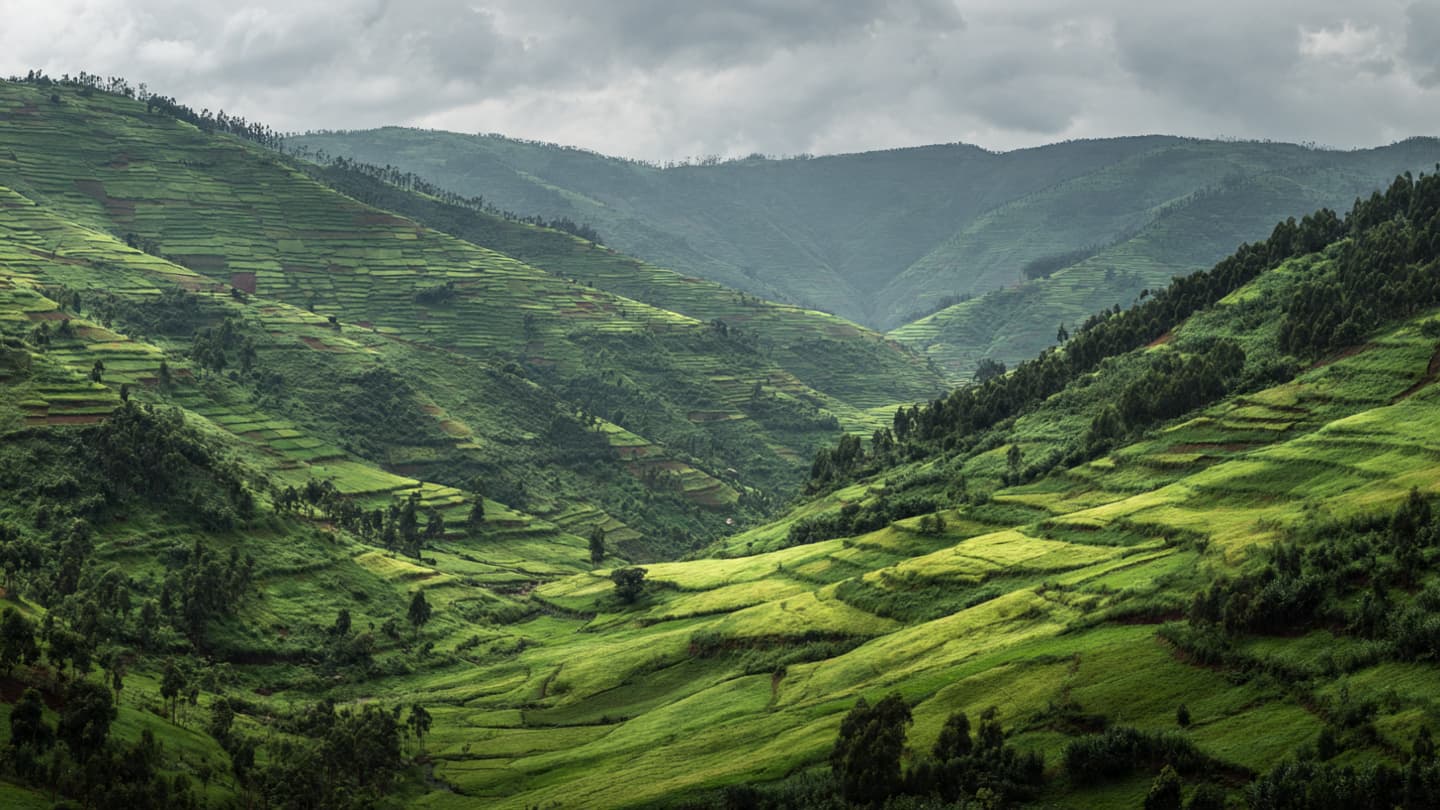
The green hillsides of Rwanda have long been a testament to human ingenuity and an intricate, generational relationship with the soil. Terraced fields climb the steep slopes with geometric precision, providing sustenance and economic stability to millions of rural households across the nation. This vibrant agricultural landscape, however, relies on a delicate balance of predictable rainy seasons and temperate intervals to ensure consistent yields. Recently, that historical predictability has been increasingly challenged by erratic weather shifts, marked by sudden dry spells and unseasonal downpours. The National Bank of Rwanda has observed these shifting ecological patterns not merely as meteorological anomalies, but as profound economic indicators. In its latest evaluations, the central bank raised a quiet but serious alarm regarding how extreme climate risks are threatening domestic production. When a harvest fails or is diminished by unexpected weather events, the consequences extend far beyond the immediate rural valleys, moving into urban economic centers. Food prices in regional marketplaces can fluctuate sharply, introducing an element of instability into the national inflation index. The central bank's warning emphasizes that environmental health and macroeconomic stability are now deeply, permanently intertwined. Economic analysts point out that traditional monetary tools, such as adjusting interest rates, possess limited power when confronting the physical realities of climate change. If crops are washed away by a sudden flash flood or withered by prolonged heat, the supply shock must be managed through structural resilience rather than financial policy alone. This realization has prompted an internal recalculation of how national resources are allocated to protect agrarian infrastructure. The response from the agricultural sector has been a quiet, determined shift toward climate-smart farming techniques, such as enhanced water harvesting and agroforestry. By embedding trees within crop systems, farmers hope to stabilize the fragile topsoil against erosion caused by heavy equatorial rain. These long-term adaptations require steady, patient capital investment, a strategy that central financial authorities are now actively encouraging. For the independent farmers who cultivate the hillsides, the changing climate introduces an unwelcome layer of daily calculation into their traditional routines. Deciding when to plant or apply organic fertilizers has become an exercise in navigating uncertainty, as old seasonal signs lose their accuracy. This human dimension of the ecological shift underscores the necessity of providing accurate, localized weather data to rural communities. As the sun sets over the terraced ridges outside of Kigali, the landscape appears peaceful, hiding the complex economic challenges that lie beneath the surface. The central bank continues to monitor food supply indicators with close attention, prepared to adjust its policies to protect consumer purchasing power. The dialogue between financial institutions and environmental agencies is growing deeper, reflecting a shared understanding of national vulnerability. The ongoing situation demands a sustained, cooperative effort from both government planners and international development partners to build a more resilient agricultural framework. Rwanda’s path forward depends on its ability to adapt its foundational industry to the realities of a changing planetary climate system. The fields remain the focus of national hope, tended by hands that have learned to navigate both the soil and the sky.
Note: This article was published on BanxChange.com and is powered by the BXE Token on the XRP Ledger. For the latest articles and news, please visit BanxChange.com