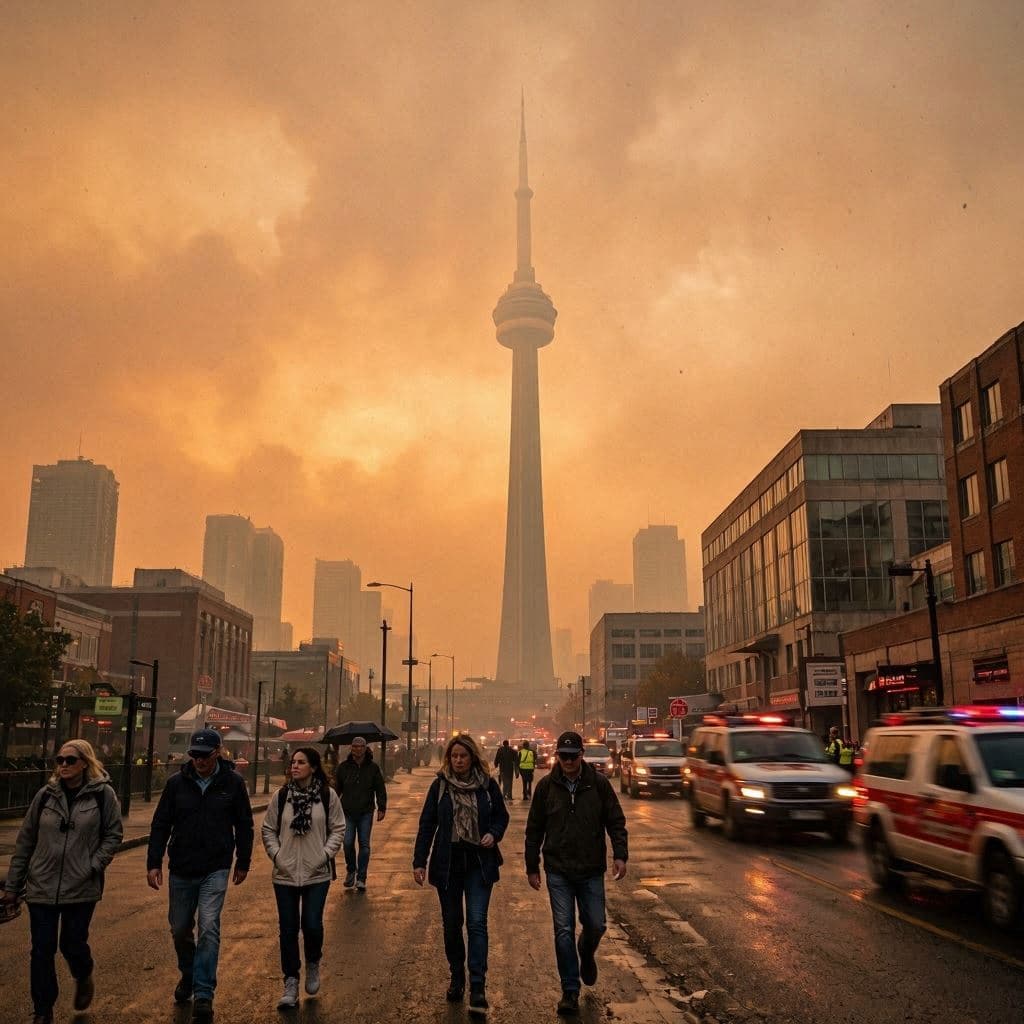
In many cities, the sky is often taken for granted—a familiar backdrop to everyday life. Yet there are moments when its color changes, reminding people that nature can reshape even the most ordinary routines. This week, Toronto awoke beneath a thick blanket of wildfire smoke, transforming the city's skyline into a muted orange haze and drawing attention to a growing environmental challenge shared across North America.
The smoke originated from large wildfires burning across northwestern Ontario, where hundreds of active fires have continued to spread through remote forested regions. Although the fires were not directly threatening Toronto itself, shifting weather patterns carried dense smoke hundreds of miles south, dramatically reducing visibility and air quality.
Environment Canada classified Toronto's Air Quality Health Index at the highest "very high risk" level, urging residents to reduce outdoor activities whenever possible. Air quality monitoring services temporarily ranked Toronto as having the poorest air quality among major cities worldwide as smoke concentrations intensified throughout the day.
The effects did not stop at Canada's border. The same smoke drifted into parts of the northeastern United States, prompting health advisories in several American cities, including New York. Officials encouraged people, particularly children, older adults, and those with respiratory conditions, to remain indoors or limit strenuous outdoor activity until conditions improved.
Scientists note that wildfire smoke contains fine particulate matter, commonly known as PM2.5, which can penetrate deep into the lungs and enter the bloodstream. Even healthy individuals may experience irritation to the eyes, nose, or throat during prolonged exposure, while vulnerable populations face greater health risks.
Authorities across affected regions responded by issuing public health alerts, opening cooling centers where necessary, and advising residents to use high-quality air filtration indoors. Many also recommended wearing properly fitted N95 respirators when outdoor travel could not be avoided.
The widespread smoke serves as another reminder that wildfire seasons increasingly affect areas far beyond the flames themselves. Air pollution generated by distant fires can travel across provinces, states, and international borders, making wildfire management and public health preparedness a shared responsibility.
As firefighters continue battling numerous wildfires across Ontario and neighboring provinces, officials remain focused on protecting affected communities while monitoring changing weather conditions. Residents in both Canada and the United States are encouraged to stay informed through local air quality advisories until the smoke gradually disperses.
AI Image Disclaimer: The accompanying illustration for this article was created using artificial intelligence to visually represent the reported event and is not an authentic news photograph.
Sources (verified):
Reuters The Guardian Environment Canada Global News Wired
Published by Banx Network. This article is part of the Banx decentralized media programme, powered by the BXE token on the XRP Ledger.