
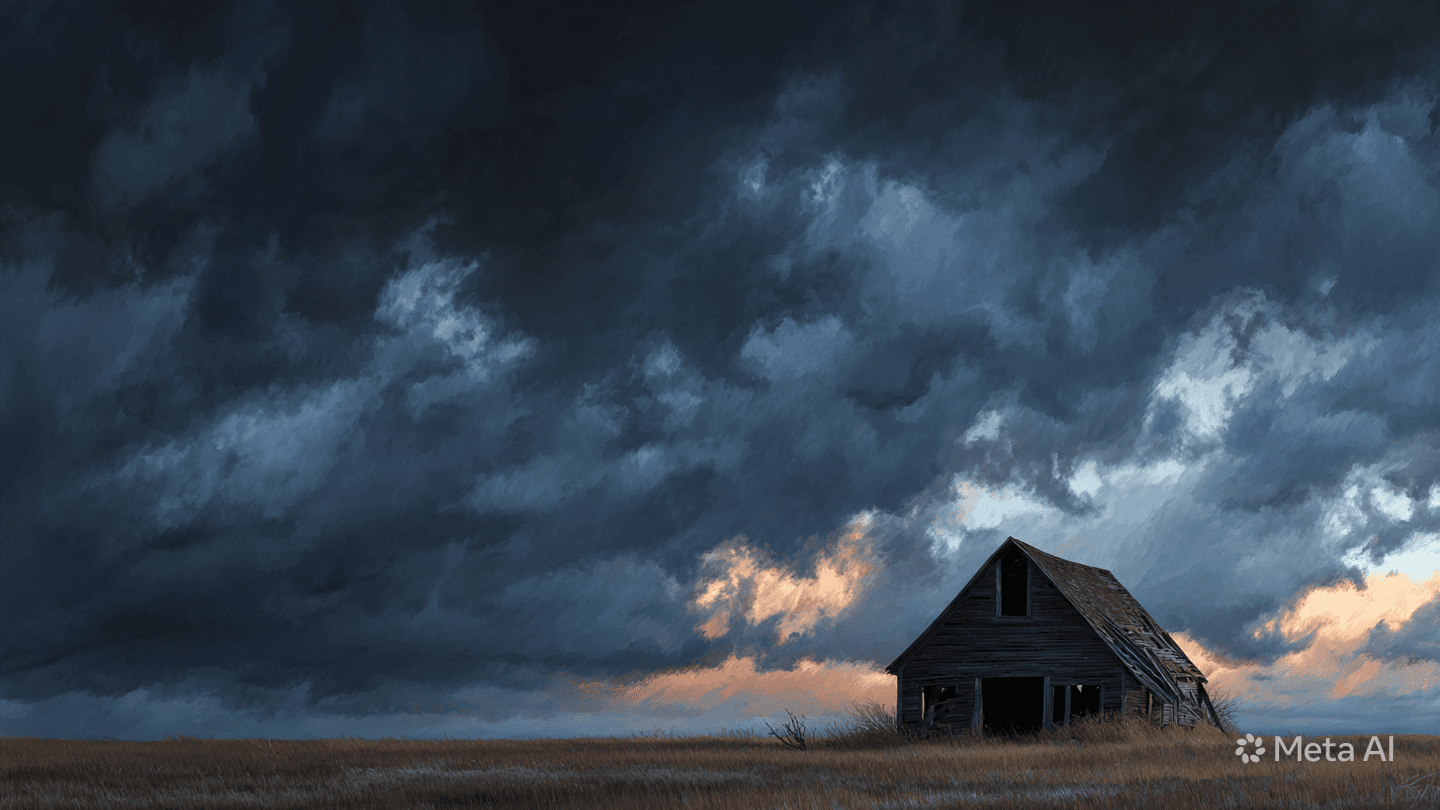
The Saskatchewan landscape is defined by the vast, open horizon, a place where the sky meets the earth in an expansive, uninterrupted line. It is a terrain of quiet endurance, where generations have worked the land under the watchful gaze of shifting clouds. But in the early days of June, the atmosphere grew heavy with an unpredictable energy, a supercell gathering its strength to deliver a series of storms that would forever alter the quiet rhythm of the rural heartland.
In the areas surrounding Oxbow, the wind did not merely blow; it descended with a concentrated, crushing force, transforming the air into a chaotic weight. For those who witnessed the downburst, the experience was one of visceral disorientation. The structures that have long stood as anchors of the farm—the barns, the grain bins, the sheds—were suddenly rendered fragile, unable to withstand the sheer intensity of the atmospheric collapse.
The loss of a barn is more than a structural casualty; it is the loss of a centerpiece, a place where the daily, manual labor of farming was anchored. When the storm tore through these properties, it stripped away the familiar order of the farmyard, leaving behind a scene of twisted metal and shattered timber. The silence that followed the dissipation of the storm was heavy, carrying the weight of the work that had been interrupted and the infrastructure that had been claimed by the wind.
Emergency teams and meteorologists have since moved through the area, their presence marked by the measured, methodical pace of assessment. They are not merely documenting the extent of the damage; they are attempting to map the erratic, powerful path of a storm that defied the expected norms of the season. For the families who have lost so much, these survey teams represent a form of acknowledgment, a way of recording the scale of a catastrophe that feels deeply personal.
This string of severe weather, which included multiple confirmed tornadoes and powerful downbursts, has served as a sobering reminder of the volatility inherent in the Canadian Prairies. While the local communities possess a profound, stubborn resilience, there is a recurring question about the frequency and intensity of these events. It is a contemplation of our place within a changing environment, where the traditional protections of rural life are being tested by increasingly extreme forces.
As the debris is cleared and the slow, arduous process of rebuilding begins, the community remains in a state of quiet reflection. The shock of the event has begun to recede, replaced by the persistent, grounded task of moving forward. Neighbors gather, not just to clear the fallen timber, but to share the story of the storm, weaving their collective experience into the fabric of the region’s history.
The meteorological reports will eventually codify these events, assigning them ratings and track lengths, but the human narrative remains one of endurance. The rural landscape, scarred though it may be, is already beginning to settle back into its steady, enduring rhythm. The barn may be gone, but the foundation remains, a symbol of the commitment to a life built upon the land, regardless of the challenges the sky may present.
In the quiet aftermath, as the sun sets over the reclaimed horizon, there is a sense of perspective. The storm was a temporary, violent visitor, and while it took its toll, it could not erode the fundamental character of those who live here. They remain, looking toward the next season with a cautious, watchful eye, forever changed by the memory of the wind that once tore through their home.
Published by Banx Network. This article is part of the Banx decentralized media programme, powered by the BXE token on the XRP Ledger.


.jpg&w=3840&q=75 "Intelligence Agencies Suspect Russia Is Developing Anti-Satellite Weapon to Target Starlink")