
In the quiet corners of our city, where the rhythm of daily life often slows to a crawl, the intersection of human struggle and legal consequence frequently passes without notice. It is here, away from the bustling avenues and the heavy gaze of the public, that small, seemingly inconsequential moments unfold. A man, sixty years into a life defined by the familiar streets and the weight of passing time, finds himself held by the stillness of an alley. There is a melancholy beauty to these spaces, where the architecture of the city leans in, offering a backdrop for lives lived on the margins of observation.
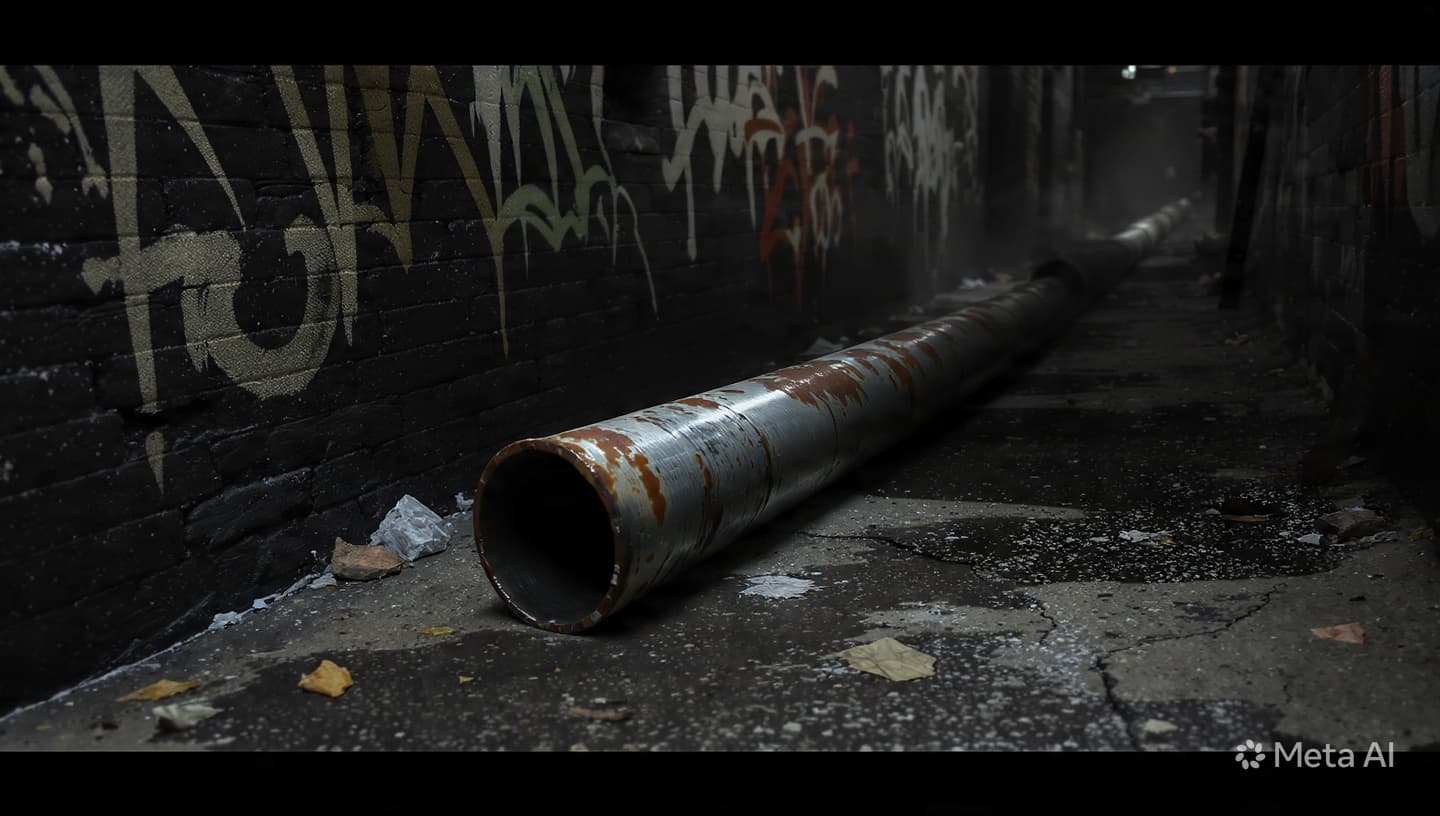
The air in these passages carries the scent of damp earth and the lingering memory of transit. For someone who has navigated these paths for decades, the familiarity of the surroundings serves as both a sanctuary and a mirror. Time here does not march with the frantic urgency of the modern world; it lingers, settling into the cracks of the pavement like dust. It is in this environment, amidst the unremarkable detritus of a neighborhood, that a singular object—a small, silver metal pipe—becomes the focal point of a larger, unspoken narrative.
When the machinery of the law makes contact with these quiet lives, the encounter is rarely as loud as the headlines might suggest. It is, instead, a sudden intrusion of order into a realm governed by habit. The discovery of such an object, tucked away three feet from a man sitting on a worn sofa, carries the heavy weight of history and intent. There is no grand drama in the act of possession, only the quiet acknowledgement that a private habit has moved into the public sphere of oversight and regulation.
As the authorities approach, the scene shifts from one of casual stillness to one of immediate transition. The man, weathered by his years, finds himself at the center of a process that seeks to quantify his actions. There is a palpable sense of resignation in these moments, a recognition that the boundaries established by society are meant to be observed, even when they seem to conflict with the personal patterns of an aging life. The pipe, once a tool of quiet solace, is transformed into evidence, a physical representation of an infraction against the code of the collective.
Reflections on such a life often invite us to consider the fine line between personal autonomy and the regulations that bind a city together. How many thousands of lives intersect daily, each carrying its own invisible burdens, its own small rituals? When a single life is paused, examined, and addressed by the court, it serves as a gentle reminder that even the most obscure existence is tethered to the whole. The law, in its dispassionate application, does not differentiate between the grand gesture and the quiet, solitary act.
There is a rhythm to the courtroom that mirrors the cycle of the city itself. The judge, the legal representatives, and the defendant participate in a dance of accountability that has played out in countless variations over generations. For the first-time offender, the experience is a stark departure from the ordinary, a jolt to the system that requires a new way of engaging with the world. The language of fines and deadlines replaces the language of habit and leisure, forcing a realignment of priorities that can be both sudden and jarring.
It is rare to see the humanity of the situation acknowledged amidst the procedural necessities of the law. Yet, even in the coldest courtroom, there is an underlying current of empathy for the aging, for the man who has spent his life navigating the streets only to find himself in a position of debt to the state. The choice to impose a fine rather than seek harsher retribution speaks to a pragmatic understanding of the circumstances—a recognition that some lives are better served by a light touch than by the iron fist of incarceration.
In the end, the story of the silver pipe is a story of place and time, of an alleyway, and of a man who now must reckon with the consequences of a simple, overlooked transgression. As he walks away from the bench, the weight of the fine resting on his shoulders, the city continues to hum around him, indifferent to his struggle yet inextricably linked to his path. It is a quiet conclusion to a brief moment of intersection, a reminder that in the vast, shifting mosaic of our urban existence, every small action carries a ripple of meaning.
The Magistrate’s Court in Belize City has finalized the matter of the sixty-year-old man detained in Taylor’s Alley. Charged with the possession of a controlled drug utensil, the defendant appeared before the court to answer for the discovery of a metal pipe. A fine of $200, supplemented by $5 in court costs, was imposed, with a payment deadline set for December 15. Failure to settle the financial penalty by this date will result in a one-month term of imprisonment.
Note: This article was published on BanxChange.com and is powered by the BXE Token on the XRP Ledger. For the latest articles and news, please visit BanxChange.com