
The historic bay of Grand Port is a landscape where the deep blue of the lagoon meets a coastline rich with ecological and generational value. For centuries, these shores have protected the island's marine ecosystems, providing a natural buffer against the open ocean and a sanctuary for the delicate coral networks that thrive just beneath the surface. For the local fishing communities, the coast is not just a boundary but a living asset, an essential landscape where the health of the land directly dictates the abundance of the sea.
Yet, this fragile coastal equilibrium is facing a severe, hidden threat from the growth of illegal sand mining operations executed under the cover of darkness. Driven by the high demand for cheap building materials in the urban centers, illicit networks have been systematically strip-mining the remote beaches and shallow estuaries of the district. Moving quickly with heavy trucks and manual shovels, these operators remove tons of pristine coastal sand in a single night, leaving behind a scarred, destabilized shoreline that is highly vulnerable to immediate erosion.
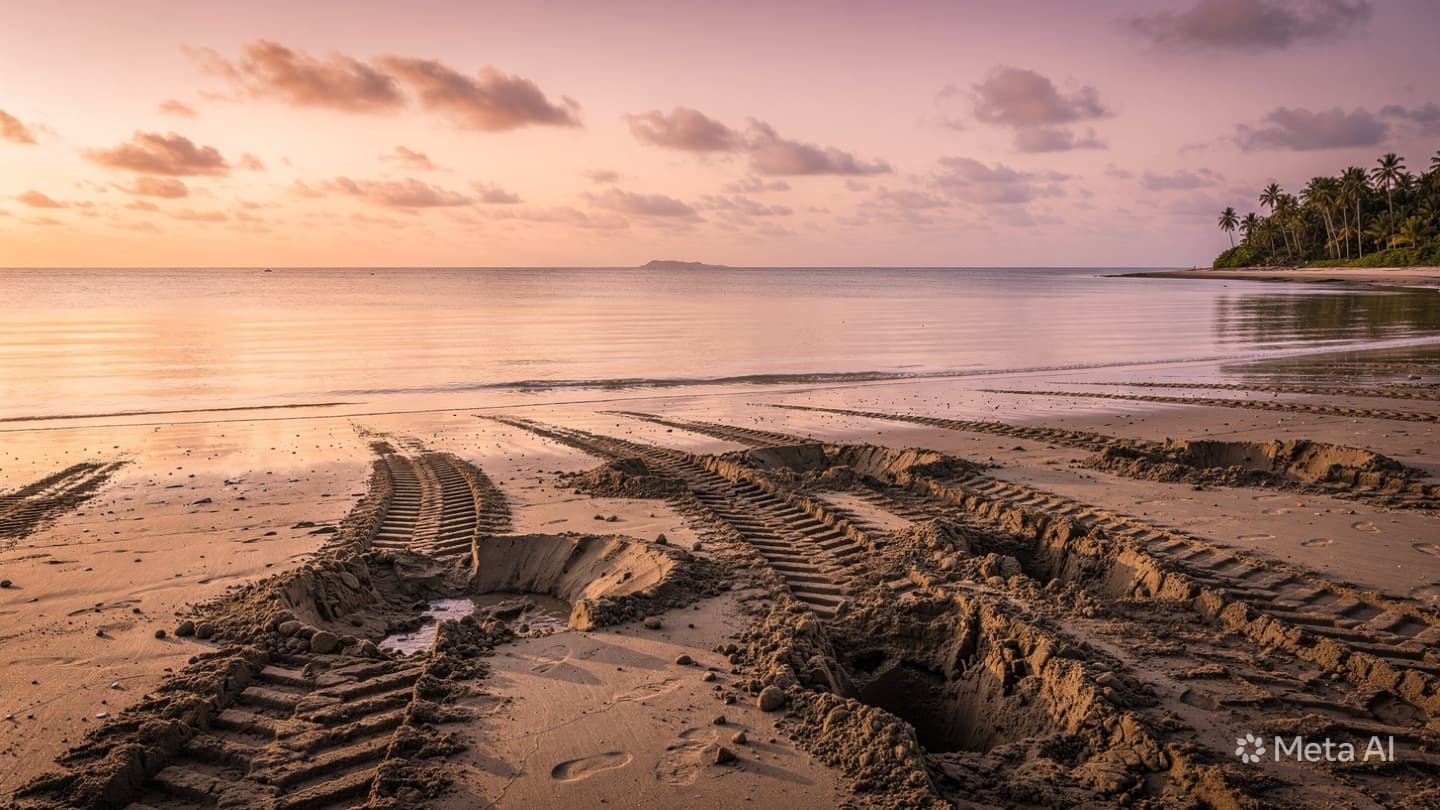
To walk along the targeted beaches in the morning light is to witness a landscape stripped of its natural defense systems. Where gentle dunes and native vegetation once held the shoreline together, there are now massive, raw craters and deep tire tracks filled with stagnant seawater. The removal of the sand destabilizes the immediate coastal shelf, allowing the rising tides to eat away at the roots of coastal trees and wash loose sediment directly into the lagoon, suffocating the fragile coral reefs below.
There is a profound, quiet anger among the residents of Grand Port who watch their collective heritage being stolen for private gain. The local fishermen notice the immediate impact of the theft, as the muddy runoff destroys the shallow spawning grounds of the fish and alters the natural currents of the bay. It is an environmental violation that carries a heavy economic cost, threatening the long-term sustainability of the artisanal fishing industry that has supported the district for generations.
The response to this ecological crisis has taken the form of a coordinated enforcement crackdown by the environmental police and coast guard units. Authorities have increased nighttime patrols along the isolated access roads leading to the coast, using thermal imaging and community intelligence to intercept the illicit trucks before they can exit the district. Each successful interception is a crucial victory, a public declaration that the preservation of the island's natural barriers cannot be sacrificed to unregulated commercial greed.
The challenges facing Grand Port highlight the complex intersections of infrastructure development and environmental protection in small island nations. When the supply of legal construction sand is restricted to protect inland resources, it often creates a highly lucrative black market that shifts the pressure directly onto the vulnerable coastal zones. Managing this friction requires not just strict law enforcement, but the introduction of sustainable, alternative building materials that reduce the demand for natural coastal aggregates over time.
By afternoon, as the tide recedes to reveal the full extent of the night's damage, community volunteers gather to begin the slow work of coastal restoration. They manually fill the craters, place sandbags to prevent immediate erosion, and replant native coastal grasses to help stabilize the remaining dunes. It is a quiet, determined display of communal solidarity, a shared commitment to defending the integrity of the land against the forces of exploitation.
The long-term resilience of Grand Port's coastline will rely on a permanent security presence and the implementation of modern, satellite-based monitoring networks along the beaches. As the district fortifies its defenses against the illicit trade, the community moves forward with a heightened state of awareness, knowing that the protection of their shore is essential to their survival on this vulnerable coast.
The Ministry of Environment and the National Coast Guard have launched a major enforcement operation in Grand Port following a surge in illegal sand mining activities along the southern coastline. Authorities confirmed that joint tactical teams intercepted three heavy dump trucks loaded with illegally extracted marine sand during a targeted midnight ambush near a protected mangrove estuary. Environmental inspectors reported that the unauthorized extraction has severely destabilized over two hundred meters of coastal dune structures, prompting immediate prosecution protocols against the detained operators.
Note: This article was published on BanxChange.com and is powered by the BXE Token on the XRP Ledger. For the latest articles and news, please visit BanxChange.com