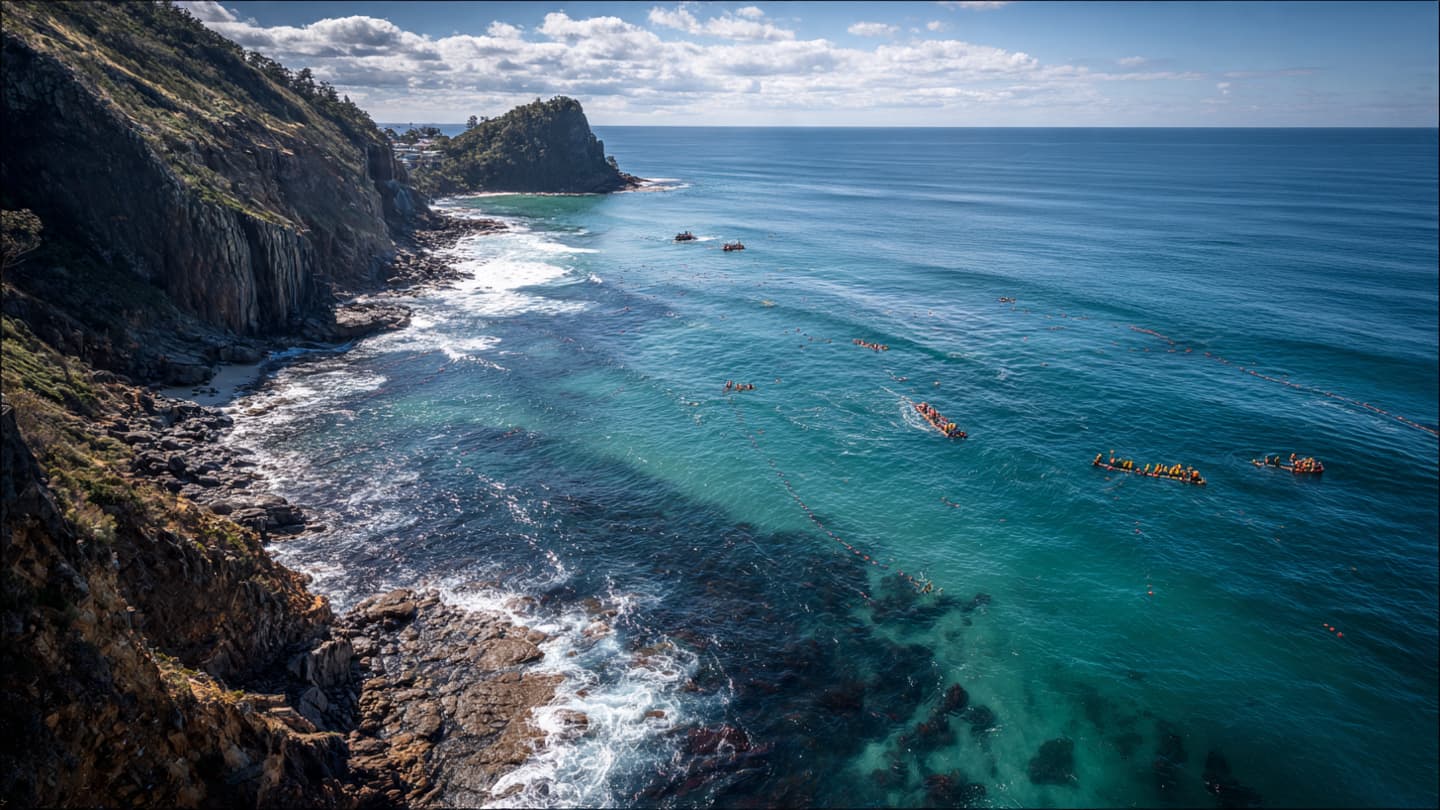
The ocean often appears timeless from the shore, its surface reflecting the sky with an almost calming certainty. Yet beneath that familiar horizon, changes can gather quietly, much like cracks forming in a foundation before they become visible. A recent discovery off an Australian headland has once again drawn attention to a growing environmental challenge affecting the nation's marine ecosystems and reminding observers that even vast oceans are not immune to human pressures.
Researchers and environmental observers reported findings that highlighted the scale of marine pollution accumulating in Australian waters. While oceans have long carried the marks of human activity, recent discoveries suggest the issue is becoming increasingly difficult to ignore.
Marine debris, particularly plastic waste, remains one of the most persistent threats. Ocean currents can transport discarded materials across great distances, concentrating them in coastal environments and sensitive habitats where wildlife often feeds, nests, or migrates.
Scientists note that many forms of debris break down into smaller fragments rather than disappearing entirely. These microplastics can enter food chains, affecting marine organisms ranging from tiny plankton to larger fish and seabirds. As these particles circulate through ecosystems, their long-term impacts continue to be studied.
Australia's coastline, among the longest in the world, presents both an opportunity and a challenge for conservation. While extensive marine reserves protect many habitats, the sheer size of the coastline makes monitoring and cleanup efforts complex.
Environmental organizations have increasingly called for stronger waste management systems, greater recycling efficiency, and reductions in single-use plastics. Such measures are viewed as important steps toward limiting the flow of debris into rivers and oceans.
Community groups have also become an important part of the response. Beach cleanups, citizen science programs, and educational campaigns have helped raise awareness while providing valuable data on pollution trends across different regions.
Many experts emphasize that marine pollution is not solely an environmental issue but also an economic one. Healthy oceans support fisheries, tourism industries, and coastal communities whose livelihoods depend on sustainable marine resources.
The latest discovery serves as another reminder that ocean conservation requires consistent effort across governments, industries, and communities. While the challenge is significant, researchers say that reducing waste at its source remains one of the most effective ways to protect marine ecosystems for future generations.
AI Image Disclaimer: The accompanying illustration was generated using AI technology to visually represent the subject matter and may not depict the exact event or location described.
Sources (Verification Check) Yahoo News Australian marine conservation organizations
Published by Banx Network. This article is part of the Banx decentralized media programme, powered by the BXE token on the XRP Ledger.