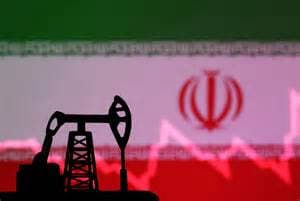
There are certain places in the world where geography quietly shapes the rhythm of daily life for millions who may never see those landscapes directly. Narrow waterways, distant ports, and silent shipping routes often determine the cost of fuel, transportation, electricity, and even food across continents. Among those places, the Gulf region remains one of the most delicate crossroads of global energy.
This week, oil prices moved upward once again as concerns intensified over rising tensions near critical maritime routes in the Gulf. Traders, governments, and businesses closely monitored developments, aware that even small disruptions in energy transportation can ripple quickly through international markets. In modern economies, oil still flows not merely through pipelines and tankers, but through the foundations of global stability itself.
Markets often react less to events than to uncertainty. Investors do not only ask what has happened, but what could happen next. In the Gulf region, where a large percentage of the world’s oil shipments pass through narrow strategic passages, even cautious diplomatic signals can influence commodity prices almost immediately. The market’s response reflects how interconnected energy systems have become in an age of global dependence.
For many countries, fluctuations in oil prices extend far beyond financial charts. Rising energy costs can influence inflation, transportation expenses, industrial production, and household budgets. Airlines reconsider fuel strategies, shipping companies adjust operating costs, and governments revisit economic forecasts. What begins as tension in one region often travels silently into everyday life elsewhere.
The current rebound in oil prices arrives during an already complex economic climate. Many central banks continue balancing inflation concerns with slowing growth projections. Higher energy costs may complicate those efforts, especially in countries heavily reliant on imported fuel. Economists warn that sustained volatility could place additional pressure on supply chains that have only recently begun stabilizing after years of disruption.
At the same time, energy markets are evolving through a long-term transition toward renewable alternatives. Solar, wind, hydrogen, and electric transportation continue expanding globally, yet the world remains deeply connected to fossil fuel infrastructure. This dual reality creates an unusual tension: societies increasingly imagine post-oil futures while still reacting intensely to every movement in crude prices.
Analysts note that oil markets have become especially sensitive to geopolitical developments due to limited spare production capacity in some regions and ongoing concerns regarding global shipping security. In such environments, perception itself can become economically powerful. A single statement, military maneuver, or shipping delay may influence prices before any physical shortage actually occurs.
For ordinary citizens, however, these developments are often experienced indirectly. Fuel station prices rise gradually. Transportation becomes slightly more expensive. Food distribution costs shift quietly across supply chains. The abstract language of international energy markets eventually settles into practical realities felt at kitchen tables and commuting routines.
Still, history has shown that energy markets are cyclical and adaptive. Periods of instability often accelerate innovation, efficiency efforts, and diversification strategies among governments and industries alike. Companies invest more heavily in alternative technologies, while policymakers reconsider energy resilience and strategic reserves. In this way, moments of uncertainty sometimes become catalysts for transformation.
As ships continue crossing the Gulf beneath open skies and cautious surveillance, the world watches not only for conflict, but for continuity. Oil prices may rise and fall with each passing headline, yet behind those fluctuations lies a deeper reminder: modern civilization remains profoundly connected through invisible systems of energy, trade, and fragile cooperation.
AI IMAGE DISCLAIMER: Images in this article are AI-generated illustrations, meant for concept only.
SOURCES CHECK: Reuters Bloomberg Financial Times CNBC The Economist
Published by Banx Network. This article is part of the Banx decentralized media programme, powered by the BXE token on the XRP Ledger.