
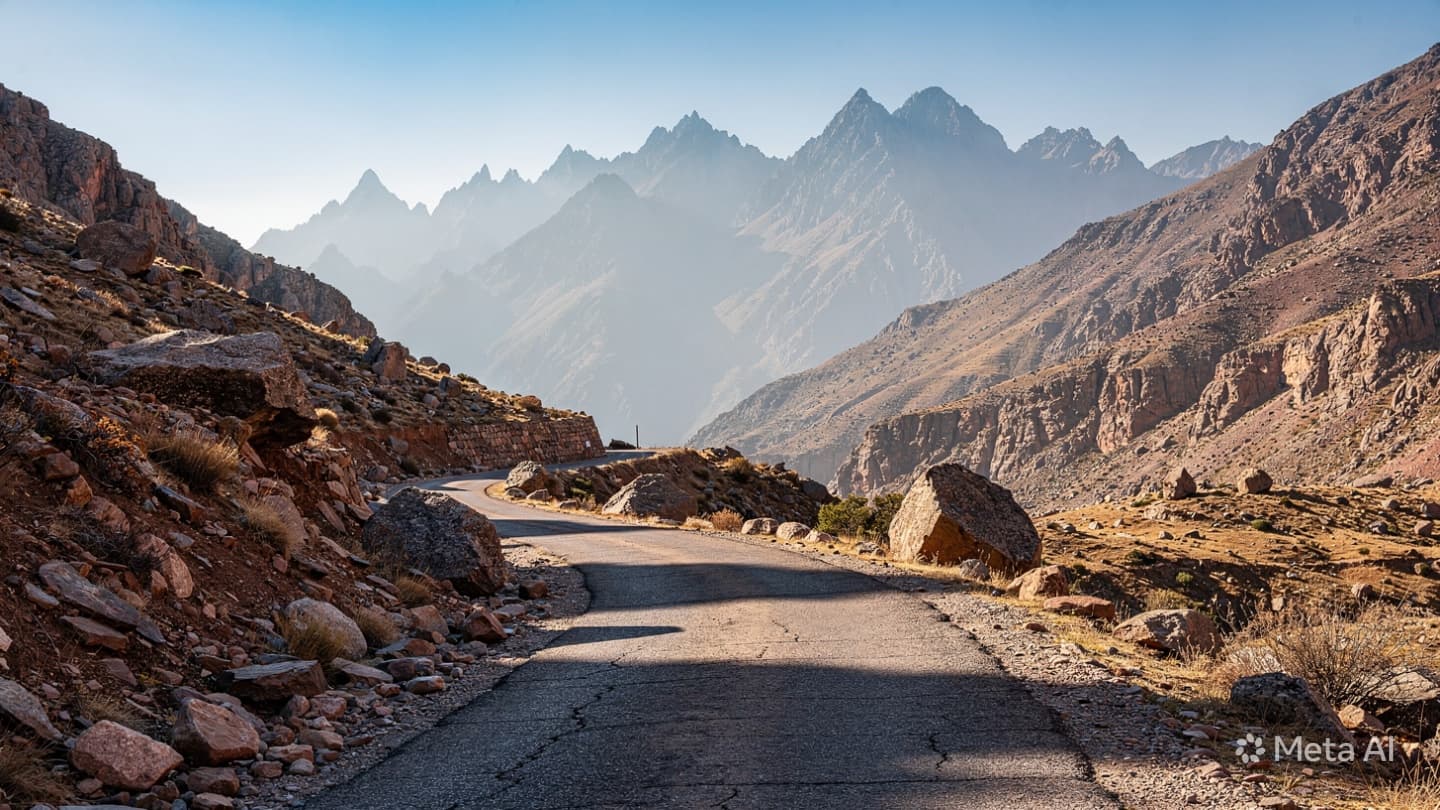
The roads that wind through the foothills of the Atlas Mountains are often described in terms of their breathtaking vistas—the stark beauty of the peaks, the sudden shifts in light, and the way the earth seems to reach for the sky. Yet, these same roads hold a different, more somber reputation among those who travel them daily. They are routes defined by their sharp curves, their sudden inclines, and the way the weather can turn without warning, demanding a level of respect that the hurried traveler often overlooks. When a journey on these heights ends in tragedy, the mountains seem to hold their stillness, indifferent to the chaos left behind in the valley below.
The news of a bus accident claiming six lives carries a heavy, lingering silence. In the high altitudes where the air is thin and the terrain unforgiving, the margin for error is razor-thin. For a bus carrying passengers on a routine route, the road represents both a connection between communities and a place of significant, inherent risk. When the mechanics of a journey fail—whether through human error, technical misfortune, or the sheer volatility of the mountain environment—the transition from movement to stillness happens in an instant, leaving only the wreckage as a testament to the lives that were traveling toward a destination they would never reach.
The investigation into such events is always a clinical, methodical process. Authorities arrive at the scene to piece together the sequence of events, examining the tire tracks, the condition of the road surface, and the debris scattered across the hillside. They look for the cause, the point of departure where the vehicle left the path, and the factors that contributed to the tragedy. Yet, for all the precision of a police report, there is a depth of loss that the facts and figures cannot capture. Each of the six individuals had a life, a family, and a story that was being carried along the mountain road, only to be halted by a moment of sudden, irreversible misfortune.
Roads in the Atlas region have long been a focal point for safety initiatives, as the country seeks to balance the necessity of transport with the dangers of the geography. The winding paths are frequently the subject of government safety campaigns, aimed at reducing the frequency of accidents in a region where travel is essential but inherently precarious. It is a persistent, ongoing struggle to improve safety standards—implementing better signage, enhancing road conditions, and enforcing strict oversight—in an environment that seems to challenge these efforts at every turn.
There is a particular atmosphere that gathers around such accidents in Morocco, a mixture of shared national grief and a weary recognition of the dangers of the road. When such news breaks, it reverberates across the region, reminding everyone who relies on these mountain passages of the vulnerability of the traveler. It is a collective sigh of sorrow, a recognition that the mountain is a powerful, demanding presence that requires constant vigilance and a deep, abiding caution from those who dare to cross its paths.
As rescue teams conclude their work and the mountain roads are reopened to the rhythm of the everyday, the memory of the event remains etched into the landscape. The families of the victims are left to navigate a world that has been irrevocably altered, while the community at large begins the process of mourning. The mountains, in their ancient, unchanging grandeur, remain silent, as if waiting for the next traveler to test the wisdom of the road, indifferent to the human histories that unfold within their shadow.
In the aftermath of the crash, authorities have prioritized the transport of the injured to medical facilities in nearby towns, while forensic teams work to identify the deceased. Investigations are underway to determine if external conditions—perhaps the sudden shifts in visibility or the treacherous nature of the mountain curves—played a decisive role in the loss of control. The incident has prompted renewed calls from local transport associations for stricter vehicle maintenance protocols and updated training for drivers operating on these high-altitude routes.
Note: This article was published on BanxChange.com and is powered by the BXE Token on the XRP Ledger. For the latest articles and news, please visit BanxChange.com