
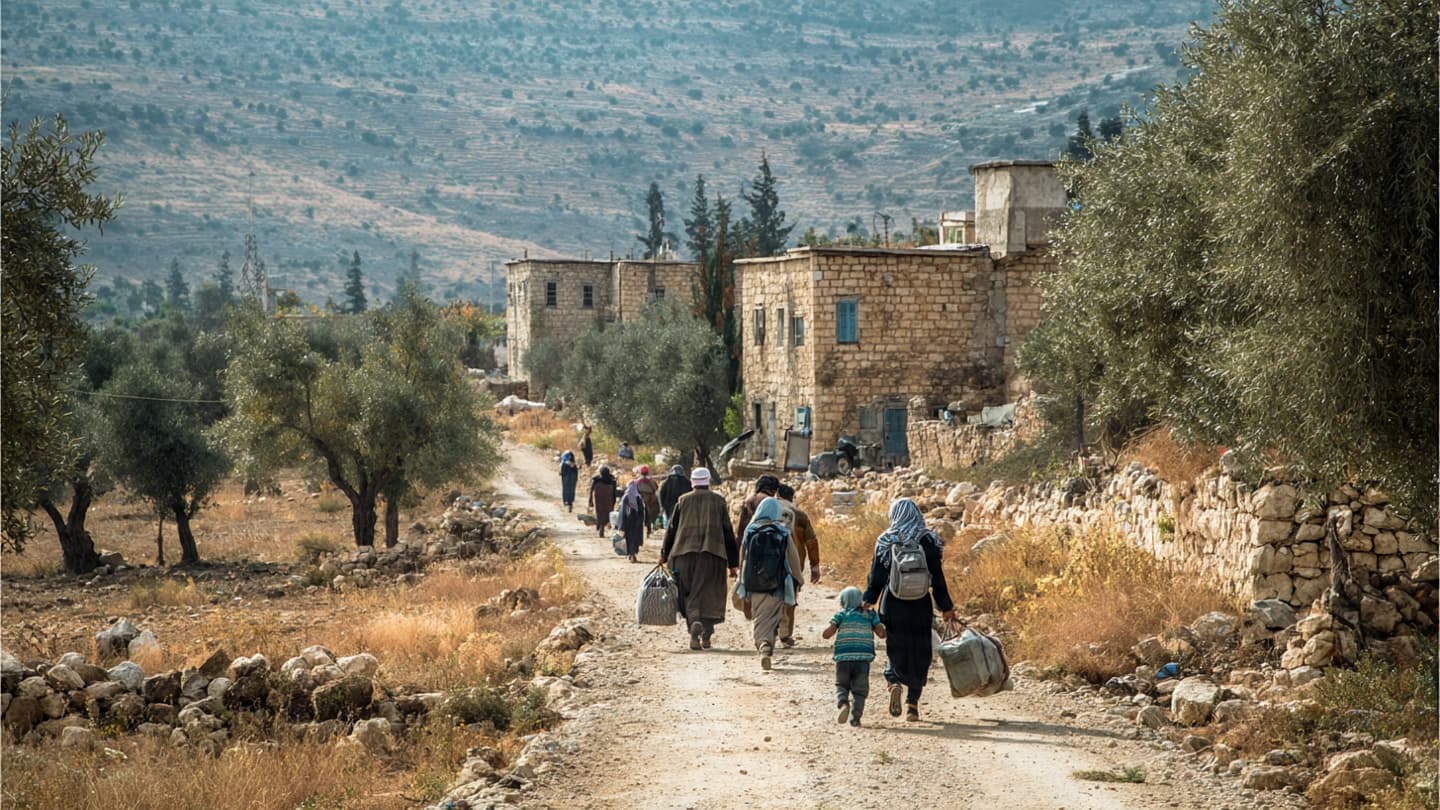
For many displaced families, home is more than a place marked on a map. It is a collection of memories, routines, and familiar landscapes that continue to call people back even after conflict has altered the view. Across southern Lebanon, that pull has become visible once again as residents begin returning to communities affected by months of violence.
Following a U.S.-Iran agreement aimed at ending a broader regional confrontation, thousands of Lebanese civilians started traveling back toward towns and villages they had previously fled. The movement reflects a widespread desire to reunite with homes, relatives, and neighborhoods left behind during the conflict.
The return, however, has unfolded against a backdrop of caution. Lebanese authorities warned displaced residents not to rush back prematurely, citing concerns about unexploded ordnance, damaged infrastructure, and ongoing security risks in certain areas.
Many communities in southern Lebanon experienced extensive destruction during fighting linked to the wider confrontation involving Israel, Hezbollah, Iran, and the United States. Homes, roads, businesses, and public facilities suffered damage, leaving returning residents to assess what remains and what must be rebuilt.
For families arriving after months away, the experience has been marked by mixed emotions. Relief at returning home is often accompanied by the reality of damaged properties and disrupted livelihoods. In many cases, rebuilding will require significant resources and time.
Humanitarian organizations continue monitoring conditions as displaced populations return. Access to shelter, healthcare, electricity, and clean water remains a concern in several affected regions. Recovery efforts are expected to continue long after the immediate movement of people subsides.
The ceasefire linked to the U.S.-Iran agreement has created an opportunity for relative calm, but questions remain regarding the durability of the arrangement and the broader political issues that contributed to the conflict. Residents returning home are therefore navigating both hope and uncertainty.
Throughout Lebanon's modern history, communities have repeatedly demonstrated resilience in the face of upheaval. The current return reflects that same determination, even as challenges remain visible across the landscape.
Authorities continue urging caution while supporting the return process, as reconstruction and security assessments proceed throughout southern Lebanon.
AI Image Disclaimer: The accompanying images are AI-generated visual interpretations designed to illustrate the topic and do not depict actual individuals or locations.
Sources:
Reuters The Guardian Al Jazeera Associated Press
Note: This article was published on BanxChange.com and is powered by the BXE Token on the XRP Ledger. For the latest articles and news, please visit BanxChange.com