
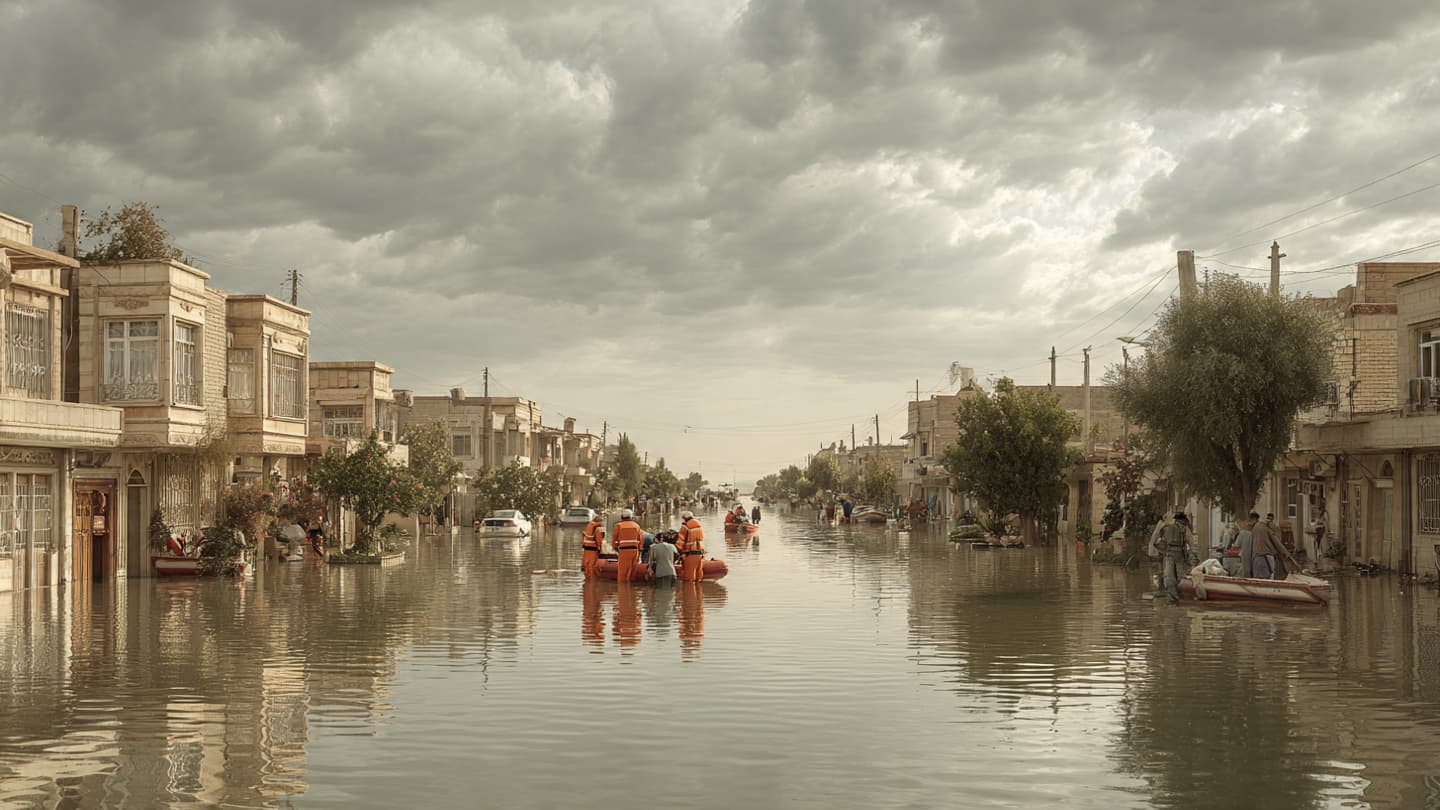
Water is often described as a source of life, nourishing fields, sustaining communities, and shaping civilizations. Yet when nature shifts its rhythm, the same force that supports daily existence can become a challenge that communities must confront together. Recent flooding across northern and eastern Syria has once again demonstrated how quickly environmental conditions can alter the lives of thousands of people.
Heavy rainfall combined with rising water levels along the Euphrates River has affected several regions in northern and eastern Syria. Local authorities and humanitarian organizations have been monitoring the situation as floodwaters spread into residential and agricultural areas, creating disruptions for affected communities.
The Euphrates has long been one of the most important waterways in the Middle East. Flowing across multiple countries, the river supports agriculture, transportation, and local economies. Changes in water levels can therefore have consequences that extend beyond a single community or province.
Reports from affected areas indicate that homes, roads, and farmland have experienced varying degrees of damage. In some locations, residents were forced to relocate temporarily as authorities assessed risks associated with rising water levels and deteriorating infrastructure.
Humanitarian organizations have mobilized resources to assist vulnerable populations. Emergency supplies, temporary shelter arrangements, and medical support remain among the priorities as aid groups coordinate with local partners on the ground.
Experts note that extreme weather events have become an increasingly important topic throughout the region. Variations in rainfall patterns, prolonged droughts, and sudden flooding episodes continue to challenge governments and communities attempting to adapt to changing environmental conditions.
Agricultural concerns have also emerged as a significant issue. Floodwaters can damage crops and affect planting schedules, creating uncertainty for farmers who rely on seasonal production cycles to support their livelihoods and local food supplies.
Regional authorities continue assessing the scale of the damage while implementing measures designed to protect residents and critical infrastructure. Recovery efforts may require considerable time depending on the extent of flooding and the resources available for reconstruction.
As communities begin addressing immediate needs, attention is also turning toward longer-term resilience strategies. Strengthening infrastructure, improving flood preparedness, and enhancing emergency response systems may help reduce the impact of similar events in the future.
AI Image Disclaimer: The illustration accompanying this article was generated using AI technology for visual representation purposes.
Sources Verified: Reuters, Phys.org, United Nations Humanitarian Agencies, Associated Press
Note: This article was published on BanxChange.com and is powered by the BXE Token on the XRP Ledger. For the latest articles and news, please visit BanxChange.com