
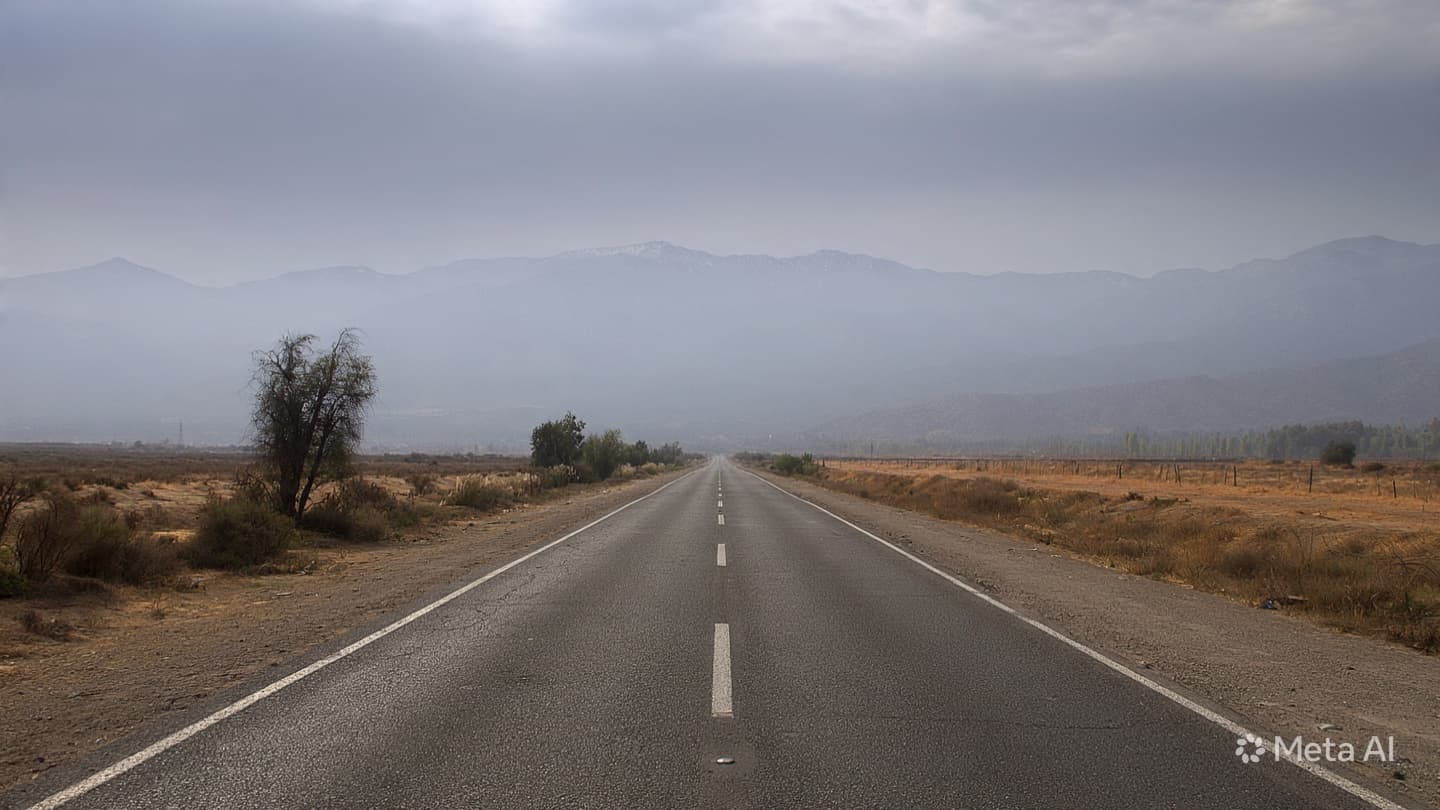
The highway is a ribbon of possibility, a connection between the places we work and the homes where we rest. In the areas surrounding Santiago, these routes are the veins of the region, pulsing with the steady movement of those who go about their daily existence. Yet, there exists a vulnerability in this motion, a silent understanding that the very path which facilitates our lives can, in a single, discordant moment, become the site of a profound and irreparable shift. When a collision occurs, the world seems to pause; the rush of wind and the mechanical pulse of the commute are replaced by a sudden, heavy stillness.
To observe the aftermath of such an event is to see the physical landscape take on a new, solemn character. The stretch of road, once defined by its utility, becomes a threshold where the past and the finality of the present meet. Those who arrive afterward—the responders, the fellow travelers, the observers—are left to navigate the dissonance between the reality of the scene and the normalcy of the day that preceded it. It is a space where the debris of the incident stands in stark, sad contrast to the wide, indifferent horizon that stretches out toward the Andes.
The investigative process is a search for truth within the fragments of the accident. Authorities move with a measured pace, their focus narrowed to the details left behind—the tire tracks, the position of vehicles, the witness accounts—all of which serve as silent testimonials to what occurred. Their task is one of immense gravity, requiring them to translate the chaos of the impact into a narrative that can be understood, processed, and acknowledged by those who are grieving. They tread softly, knowing that behind every police barrier lies a human story waiting to be told.
There is a profound human weight to this process that transcends the technical requirements of the law. It is the weight of understanding that each figure in the equation represents a life, a history, and a constellation of connections that have been irrevocably altered. When a life is cut short upon the road, the ripples of loss extend outward, reaching into the heart of families and the wider community, turning a private tragedy into a shared moment of collective mourning. It is a reminder that the journeys we take are never truly ours alone.
Reflecting on these moments requires a restraint that allows us to look at the facts with clarity, even when the underlying emotions are turbulent. It is an exercise in empathy, recognizing that the figures on a police report are not merely data points but individuals who were navigating their own path, caught in the unpredictable flow of existence. By maintaining this distance, we allow the reality of their loss to resonate without the obscuring influence of sensationalism or judgment, focusing instead on the necessity of safer passage for all.
As the days unfold following such a tragedy, the highway gradually returns to its function, the traffic resumes its steady flow, and the physical evidence of the event is washed away by time and the elements. Yet, the memory remains, etched into the landscape and the hearts of those who carry the burden of the loss. It is a quiet reminder of our inherent vulnerability, a prompt to cherish the fragility of our own journeys and the lives of those we encounter along the way, recognizing that every trip is a testament to our movement through time.
The process of healing is, by necessity, a slow and private journey. For the families of the victim, the transition from the shock of the news to the reality of absence is a path that must be walked with patience. The authorities continue their work, conducting the thorough investigations required to provide the answers that are owed to the departed and their loved ones. It is through this diligent search for understanding that a measure of closure may one day be found.
Ultimately, we are left to contemplate the suddenness of it all—the way a life can be extinguished in the time it takes for a breath to catch. It is a sobering reflection that demands a gentle recognition of the preciousness of every moment, and the vital importance of the compassion we offer one another in the face of the unknown. We hold the memory of these lives in the stillness of our own reflection, honoring their presence by carrying forward a deeper awareness of the world they once walked.
Police in the region near Santiago have confirmed a fatal road collision that has resulted in the death of at least one individual. Authorities are currently processing the scene and interviewing potential witnesses to establish the sequence of events that led to the incident. Preliminary findings are being reviewed as the investigation remains active. Members of the public who may have been in the vicinity at the time of the collision are encouraged to provide any relevant information to the local traffic division.
Note: This article was published on BanxChange.com and is powered by the BXE Token on the XRP Ledger. For the latest articles and news, please visit BanxChange.com