
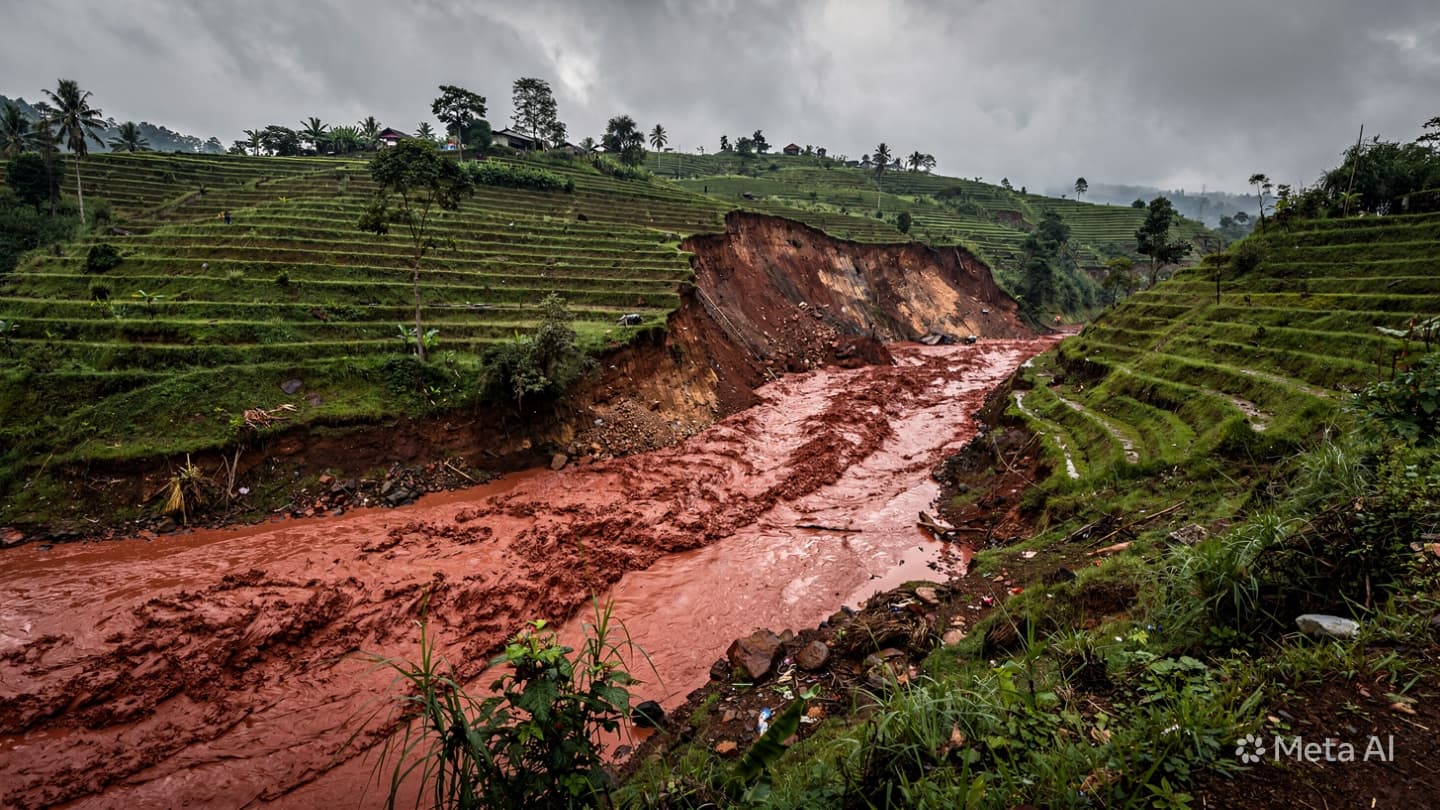
The hillsides of West Java are traditionally places of intense, vibrant life, where emerald rice terraces carve elegant steps into the volcanic soil. The rain that nourishes these slopes had been falling for days, a persistent, heavy deluge that soaked deep into the earth, weighing down the ancient clay. It was a landscape accustomed to water, yet there exists a invisible threshold where the soil can no longer hold its own weight. In the quiet hours of a darkened evening, that hidden boundary was breached with a heavy, muffled momentum.
There is rarely a loud warning when the earth decides to shift its position. The movement begins as a silent sigh deep within the bedrock, a loosening of roots and stone that quickly accelerates into a thick, unstoppable wave of red mud. The downward rush of the hillside did not discriminate, sweeping through the quiet residential pockets nestled at the base of the ridge. Homes that had stood as sanctuaries for generations were instantly enveloped by the heavy, fluid embrace of the mountain.
When the dawn arrived, it revealed a scene of profound and quiet devastation that looked completely alien against the surrounding green peaks. The orderly rows of houses had been replaced by a vast, smooth expanse of dark earth, punctuated only by broken timber and twisted metal. The air was thick with the scent of wet clay and pulverized wood, hanging heavily over the valley like a shroud. The surviving community members stood on the margins of the slide, their eyes fixed on the new, raw contours of the land.
The search for the missing began not with heavy machinery, but with the quiet, labor-intensive efforts of neighbors using simple hand tools. There is an intense, breathless quality to a rescue operation of this scale, where every shovel of earth is turned with a mixture of desperate hope and profound dread. The sound of metal scraping against stone echoed softly through the valley, a solitary rhythm against the backdrop of the weeping sky. Volunteers moved side by side, their clothing heavily caked in the identical red mud that had re-shaped their world.
As the first day transitioned into the second, the true scale of the loss began to crystallize within the collective consciousness of the township. Temporary tents were erected on higher, firmer ground, serving as makeshift gathering points for families waiting for news that grew less certain with each passing hour. The grief was not loud or performative; it was a quiet, shared sorrow that manifested in murmured prayers and the gentle holding of hands. The mountain, now completely still, looked down upon the sorrow it had authored.
By afternoon, external aid agencies began to arrive, their bright uniforms contrasting sharply with the monochromatic landscape of mud and debris. Specialized search dogs navigated the unstable terrain, their senses tuned to the subtle signs of life buried beneath the heavy blanket of clay. The work was slow and dangerous, as the threat of secondary slides loomed over the rescue teams with every additional drop of rain that fell from the gray clouds above.
The geography of the village had been permanently altered, leaving a scar on the hillside that will take decades for nature to fully reclaim. For the people who remain, the relationship with the landscape has been fundamentally changed, infused with a new sense of caution and respect for the earth’s volatile nature. The memory of the night the hill came down will be woven into the folklore of the valley, a sobering reminder of the fragile terms of hillside habitation.
The tragedy was eventually translated into the standardized terminology of disaster management, providing a clear and objective record of the environmental failure. A catastrophic landslide in West Java on June 1, 2026, left 38 dead and multiple individuals missing within a buried residential zone. Government authorities deployed search-and-rescue teams to the affected sub-district while establishing emergency housing for displaced families. As the recovery efforts continued, the focus shifted toward mapping vulnerable slopes to prevent future occurrences.
Note: This article was published on BanxChange.com and is powered by the BXE Token on the XRP Ledger. For the latest articles and news, please visit BanxChange.com