
The rural valleys of the Bubanza district are defined by their steep, terraced hillsides, where generations of families have carved out a modest living from the rich, red clay soil. The landscape is typically one of striking beauty, with small clay-brick homes nestled tightly against the green slopes, surrounded by banana groves and small patches of maize. Life here moves to the slow, predictable rhythm of the seasons, deeply tied to the land and the rains that feed it.
Following weeks of uncharacteristically intense rainfall, however, the deep moisture began to alter the very composition of the earth beneath these homesteads. The water seeped deep into the subterranean layers of the hillside, running along the bedrock and slowly separating the topsoil from its historic foundations. To the families living below, the mountain gave no overt warning, holding its immense weight in a fragile balance as the downpours continued.
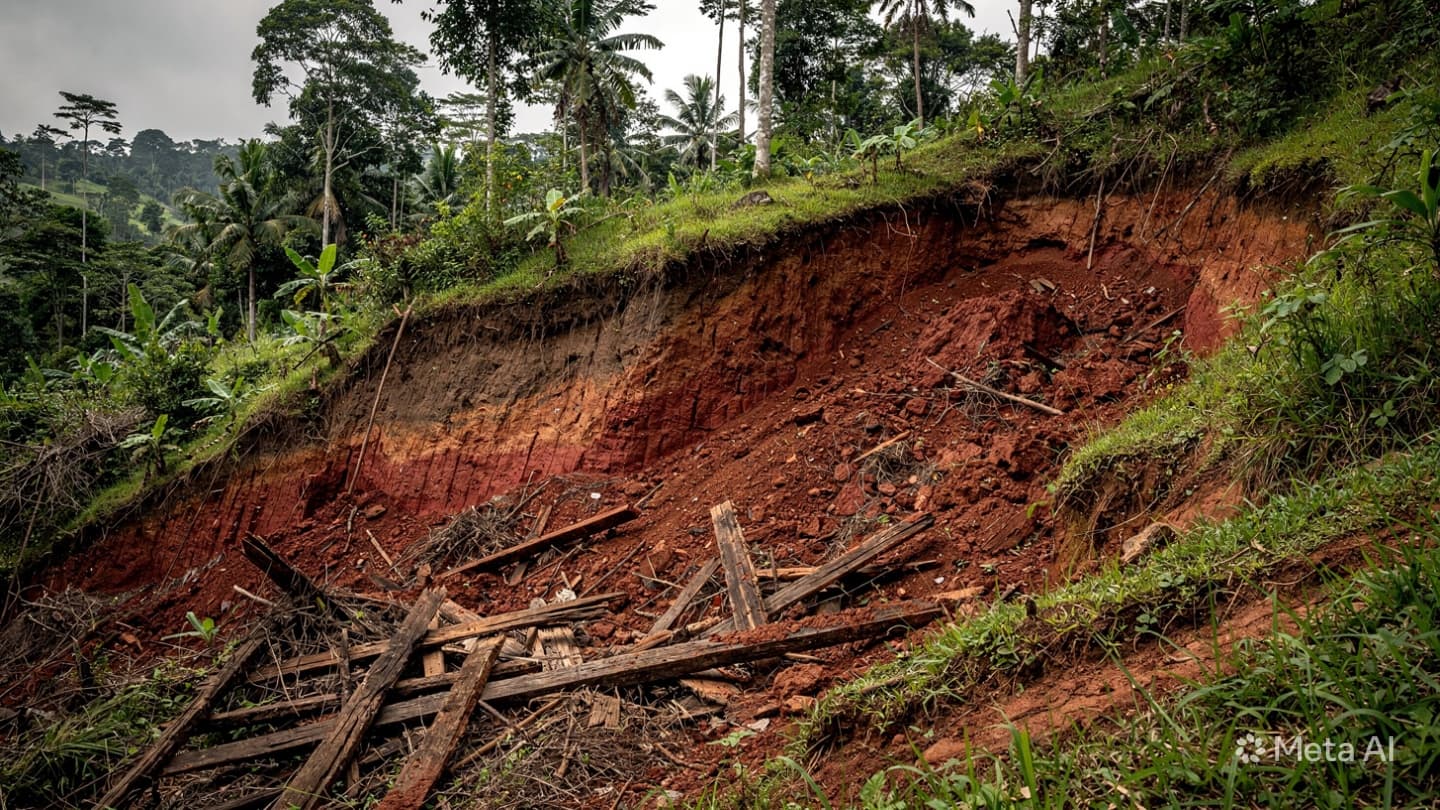
The structural failure occurred in the early hours of the morning, when a significant portion of the upper ridge dissolved into a fluid mass of mud and rock. The descent was swift and silent, lacking the sharp roar of an explosion but moving with an unstoppable, crushing momentum down the incline. Within moments, the moving earth encountered a cluster of residential homes situated along the lower terrace of the valley.
The heavy mud pushed through the fragile walls of plaster and thatch, burying the domestic spaces and filling the narrow courtyards with debris. Several structures were completely displaced from their foundations, carried downward by the force of the slide before coming to rest in a tangled heap of timber and clay. The transformation of the familiar neighborhood into a chaotic landscape of debris happened before the community could fully awaken.
Neighbors from the surrounding slopes rushed to the scene as the first light of dawn broke through the gray clouds, using their bare hands and agricultural tools to dig through the heavy sludge. The atmosphere was filled with a quiet, desperate urgency as community members worked to clear the pathways and check on those whose homes had been compromised. The mud held a cold, heavy grip on the ruined structures, complicating every effort.
As the day progressed, the full extent of the devastation became apparent to the local elders who stood along the edge of the slide area. Multiple families had lost not only their shelters but their entire stored harvest and livestock, stripping away the fragile security they had built over years of labor. The immediate response was entirely communal, with displaced individuals being taken into the homes of those spared by the disaster.
The local administrative bodies began the slow process of coordinating assistance, though the remote geography of the district presented significant logistical hurdles. The dirt roads leading into the valley were themselves slick with mud, slowing the arrival of formal emergency personnel and relief supplies from the larger towns. The community remained largely reliant on its own resilience as the rain began to fall once more.
Administrative officials in the rural Bubanza district confirmed that a severe mudslide triggered by intense rainfall completely destroyed several residential homes in a hillside village. Emergency response teams have been dispatched to assess the risk of secondary slides and assist displaced families with temporary shelter solutions. Local authorities report that while property damage is extensive, no fatalities have been confirmed.
Note: This article was published on BanxChange.com and is powered by the BXE Token on the XRP Ledger. For the latest articles and news, please visit BanxChange.com