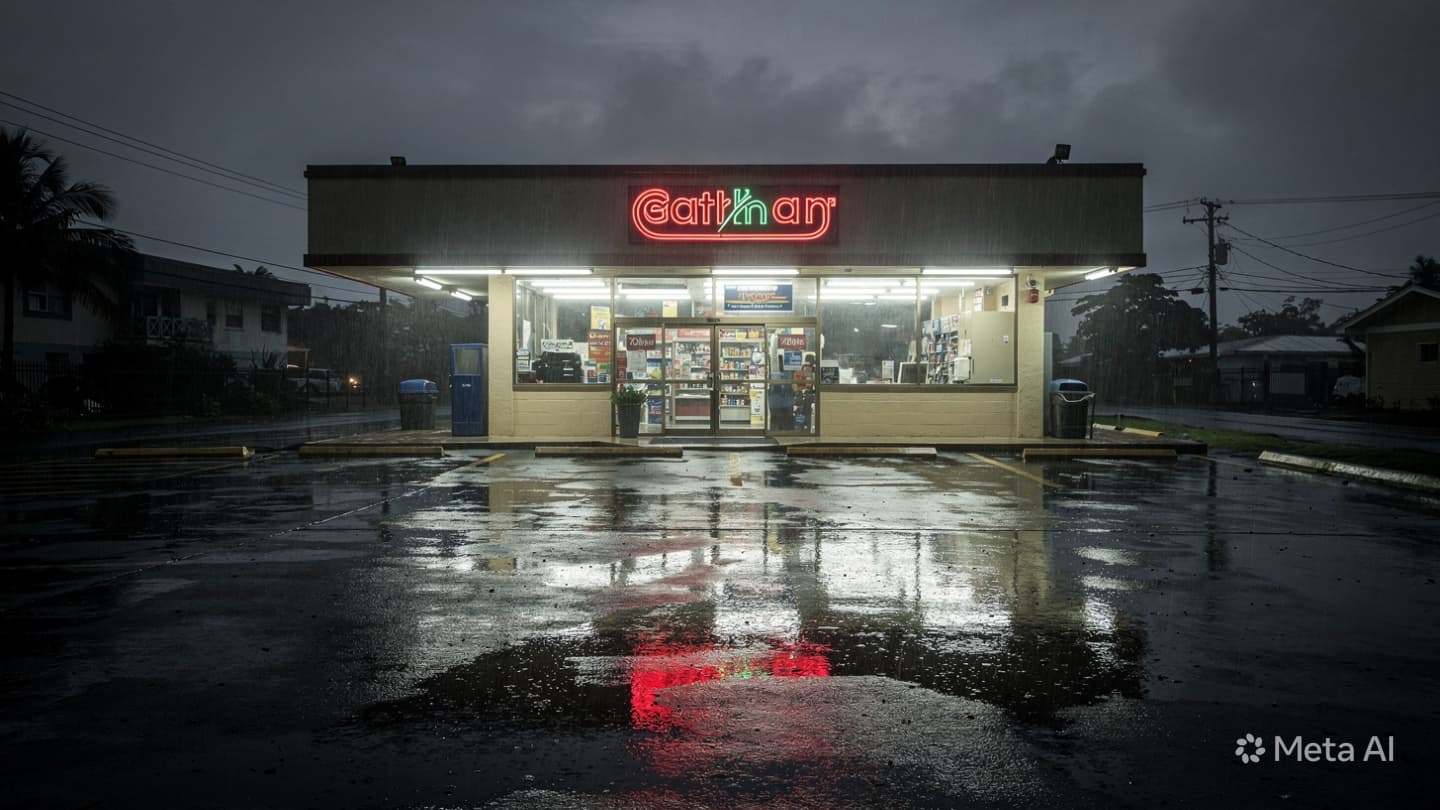
The late-night convenience stores of Tamuning exist as quiet, luminous islands in a landscape otherwise softened by the deep shadows of the Pacific night. Within these small sanctuaries of glass and fluorescent light, the rhythm of life is basic and predictable, defined by the low hum of refrigeration and the occasional chime of a opening door. For the solitary clerks who watch over these spaces, the long hours are built upon a foundation of absolute routine—stocking shelves, counting change, and exchanging brief words with weary drivers. It is a specialized form of urban solitude, where the vastness of the outer island is temporarily contained by rows of familiar, everyday commodities.
Yet, this fragile bubble of nocturnal commerce is fundamentally exposed to the unpredictable currents of the dark streets outside, where quiet avenues can instantly harbor sudden, desperate intent. The calm of the evening was abruptly broken when an individual entered the establishment, moving past the ordinary displays not with the slow hesitation of a customer, but with the sharp velocity of a confrontation. In an instant, the peaceful choreography of the counter dissolved as a weapon was produced, transforming the modest transactions of the store into a high-stakes arena of compliance and survival. For those behind the register, the familiar space shrank to the immediate, cold reality of the demand, where time stretches unnaturally around a single, forced moment.
The extraction of cash from a register happens with a quiet, frantic finality, leaving behind an atmosphere heavy with adrenaline and the echoing click of an emptied drawer. The suspect vanished into the surrounding darkness as quickly as they had arrived, leaving the store to face the sudden, hollow silence of the aftermath. It was a stark reminder of the vulnerability that accompanies these localized outposts of trade, where security is often just a thin pane of glass separating the worker from the unpredictable night. As the clerk reached for the emergency line, the bright, neon-lit interior of the shop felt suddenly small and exposed against the vast backdrop of the island.
Police cruisers arrived shortly thereafter, their flashing lights casting long, rhythmic shadows of red and blue across the convenience store’s concrete parking lot. Investigators moved methodically through the space, their boots clicking on the linoleum floors as they began the painstaking process of gathering digital and physical fragments from the scene. A widespread manhunt was launched across the district, with patrol units fanning out into the intersecting alleys and secondary roadways where the trail might still be warm. The neighborhood, usually asleep by this hour, watched from darkened windows as the machinery of law enforcement took control of the small, illuminated corner.
The economic and psychological toll of these small-scale robberies ripples quietly through the local commercial community, causing neighboring shopkeepers to review their own late-night vulnerabilities. In an island environment where communities are deeply interconnected, an intrusion into a neighborhood store is felt not as an isolated statistics, but as a direct disturbance of collective peace. The money taken, while minor in the grand calculations of commerce, represents a significant violation of the unwritten contract that allows these small businesses to serve the public through the dark hours. The storefront remained cordoned off under the watchful eyes of the officers, a silent monument to the evening's sudden fracture.
As the early morning hours wore on, bringing a light, humid mist off the ocean, the initial intensity of the search transitioned into a more calculated, long-term investigation. Detectives reviewed security footage, seeking to piece together the identity and direction of the perpetrator from the grainy, fleeting images captured by the overhead cameras. For the store employees, the remainder of the night was spent in the quiet company of statements and assessments, a slow winding down of the tension that had entered so forcefully. The neon sign outside continued to buzz softly, its light bleeding into the damp air as the search continued through the outer grids of the town.
The long-term resilience of these retail corridors depends on the persistent coordination between local merchants and the protective presence of regional law enforcement. The store will eventually reopen its doors, the register will be restocked, and the late-night clerks will return to their familiar vigils beneath the fluorescent lights. Yet, the memory of the night when the darkness stepped inside will remain a subtle, lingering presence behind every subsequent chime of the entrance door. For now, the investigation remains active, a quiet and determined effort to restore equilibrium to a corner that was temporarily stripped of its peace.
Ultimately, the incident serves as a brief, sobering chapter in the ongoing narrative of urban life, where the line between safety and vulnerability remains constantly thin. The island around Tamuning will wake to its usual vibrant routine, its beaches catching the morning sun while the memory of the robbery settles into the formal logs of the precinct. The road will continue to carry the movement of the community, but the small shop stands as a reminder of the quiet vigilance required to keep the shadows at bay.
In straight news terms, the Guam Police Department has launched an intensive manhunt following an armed robbery at a convenience store in Tamuning late Sunday evening. A suspect entered the establishment, brandished a weapon, and demanded cash from the register before fleeing the scene on foot into the surrounding neighborhood. No injuries were reported during the encounter, and authorities are actively reviewing surveillance footage while urging anyone with information to contact local crimestoppers immediately.
Published by Banx Network. This article is part of the Banx decentralized media programme, powered by the BXE token on the XRP Ledger.