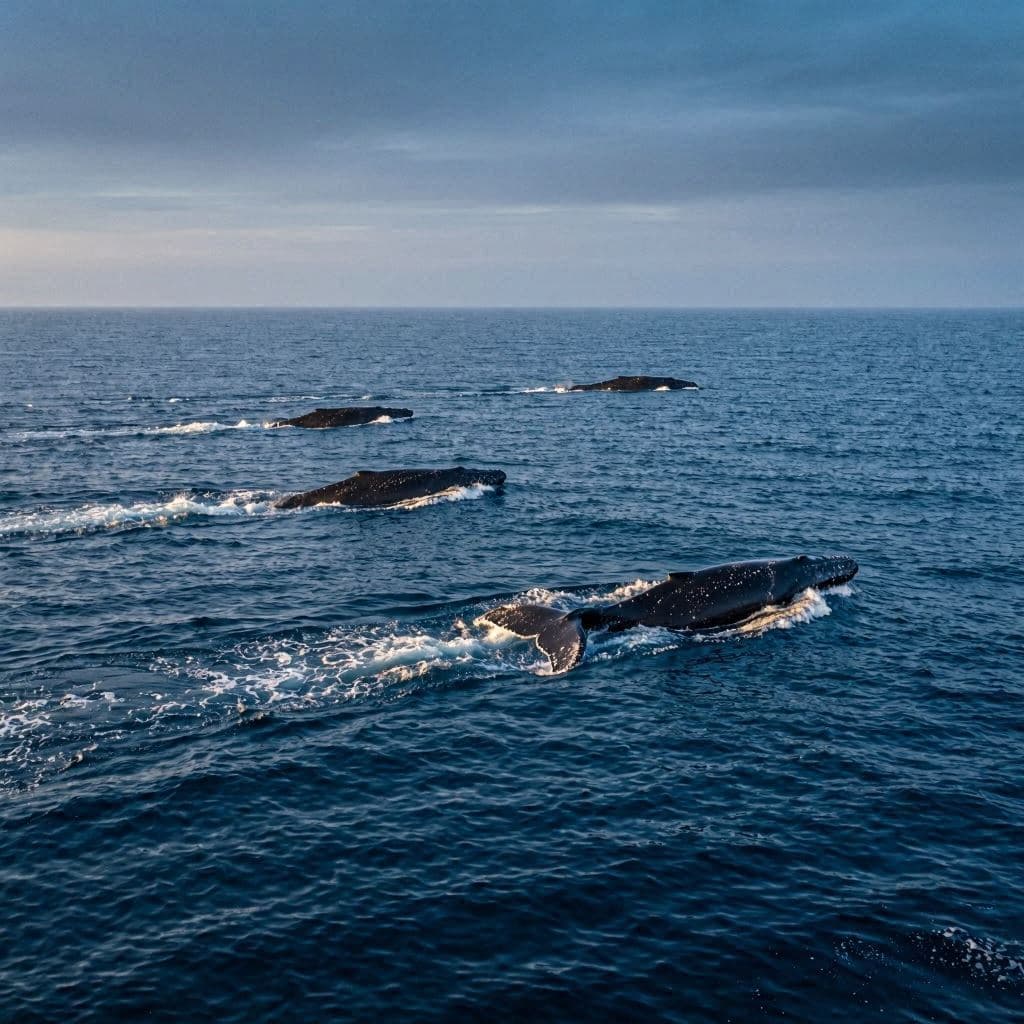
Along the long western coastline of Australia, the seasonal arrival of whales has long been considered one of nature’s most remarkable rhythms. Each year, these immense travelers trace ancient migration routes through open waters.
Body: Recent marine surveys conducted by research teams in Western Australia have indicated a noticeable decline in whale sightings during the current migration season. This has prompted closer scientific observation of oceanic conditions.
Whales depend heavily on stable marine ecosystems, including consistent food sources and predictable temperature patterns. Even minor environmental shifts can influence their migration timing and routes.
Scientists are currently investigating whether changes in ocean currents or prey distribution may be contributing factors. These ecological variables often interact in complex and unpredictable ways.
Long-term data collection programs have been essential in understanding whale populations, allowing researchers to compare current observations with historical trends.
Conservation specialists emphasize that population changes should be assessed over extended periods, as natural fluctuations can occur from year to year without indicating permanent decline.
At the same time, concerns about human impacts such as shipping noise, fishing activity, and marine pollution continue to be part of broader conservation discussions.
Closing: Researchers continue to monitor Western Australia’s waters closely, aiming to better understand the shifting patterns of one of the ocean’s most iconic species.
AI Image Disclaimer: Some visuals in this article may be AI-generated for illustrative editorial purposes.
Source Verification Check: CSIRO Marine Research, ABC News Australia, National Geographic, Reuters Environment, Marine Science Institute
Published by Banx Network. This article is part of the Banx decentralized media programme, powered by the BXE token on the XRP Ledger.