
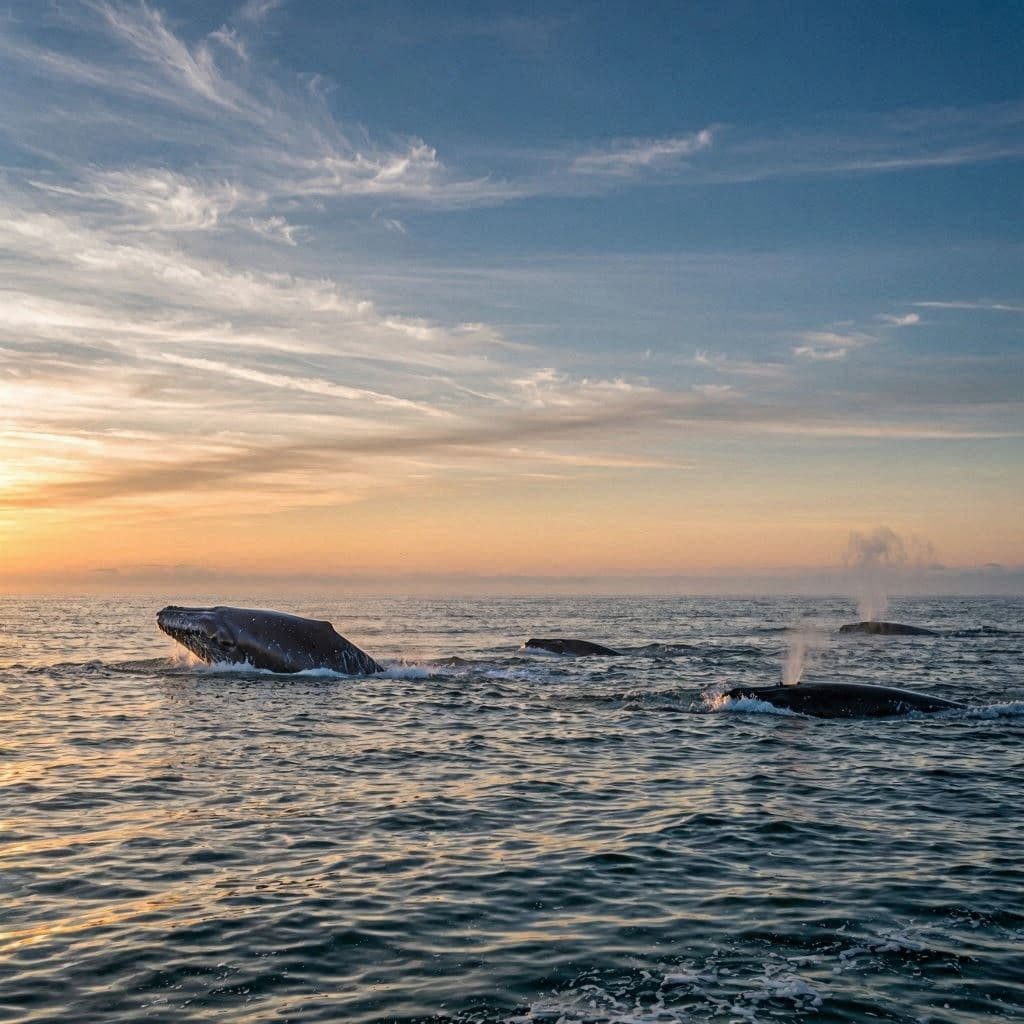
Along the vast coastline of Western Australia, the seasonal passage of whales has long been a natural rhythm that signals life beneath the waves. Recently, however, scientists have begun to observe changes in this familiar migration.
Body: Marine researchers conducting surveys along migration routes have reported a noticeable decline in whale sightings compared to previous years. This has prompted further investigation into potential environmental and ecological factors.
Whales are highly sensitive to changes in ocean temperature, food availability, and acoustic conditions. Even subtle shifts in marine ecosystems can influence migration behavior.
Scientists are analyzing whether variations in ocean currents or prey distribution may be contributing to altered movement patterns. These factors are often interconnected and complex.
Long-term monitoring programs in Australia have been essential in tracking population trends and migration routes. These datasets help researchers distinguish between temporary fluctuations and longer-term changes.
Environmental organizations emphasize the importance of continued observation before drawing definitive conclusions, as marine ecosystems naturally vary from year to year.
At the same time, conservation efforts remain focused on protecting marine habitats and reducing human-related pressures such as shipping noise and fishing interactions.
Closing: As research continues, scientists aim to better understand the causes behind these changes and ensure the long-term protection of ocean biodiversity.
AI Image Disclaimer: Some visual representations in this article may be AI-generated for editorial illustration purposes.
Source Verification Check: ABC News Australia, CSIRO Marine Research, National Geographic, Reuters Environment Desk, Marine Conservation Institute
Published by Banx Network. This article is part of the Banx decentralized media programme, powered by the BXE token on the XRP Ledger.


