
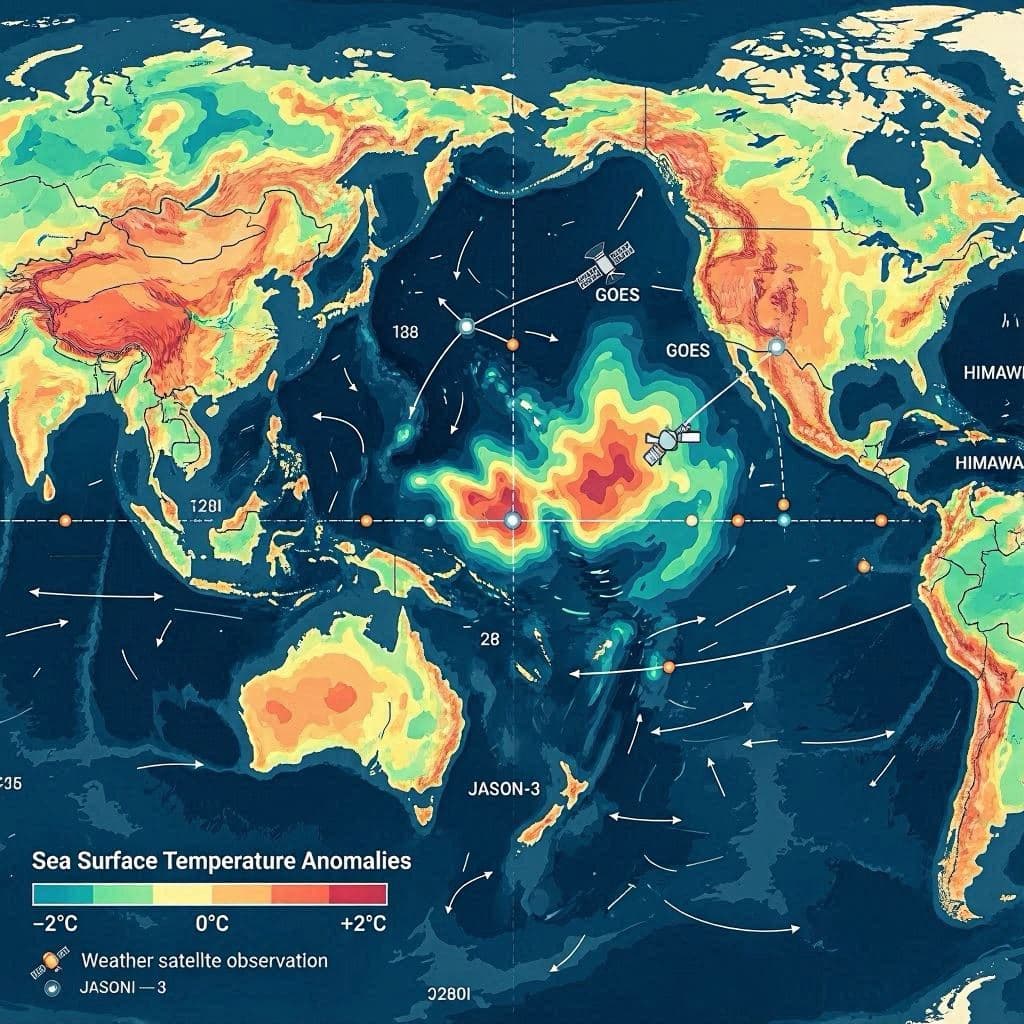
The world's climate often resembles a vast orchestra, where oceans, winds, and clouds perform together in rhythms that have repeated for generations. Occasionally, however, one instrument grows louder than the rest. As El Niño strengthens across the Pacific Ocean, scientists are once again listening closely, recognizing that its influence can ripple across continents and quietly reshape weather patterns far from its origin.
Climate agencies have reported that ocean surface temperatures in the central and eastern Pacific remain unusually warm, reinforcing the development of El Niño conditions. While the phenomenon is a natural part of Earth's climate cycle, its effects can vary widely depending on regional geography and seasonal timing.
Meteorologists explain that El Niño alters atmospheric circulation, influencing rainfall, temperature, and storm activity in different parts of the world. Some regions may experience prolonged drought, while others face heavier rainfall or an increased likelihood of flooding. The exact outcomes differ from country to country, making continuous observation essential.
Researchers emphasize that El Niño should not be viewed in isolation. The phenomenon now unfolds against a backdrop of long-term global warming, which may intensify certain weather extremes. Although scientists continue studying the interaction between these factors, they agree that preparedness is increasingly important for governments and communities alike.
Agriculture is among the sectors most closely watching the latest forecasts. Farmers depend on predictable rainfall and seasonal temperatures when planning crop production. Changes brought by El Niño may influence planting schedules, irrigation needs, and harvest expectations across several regions.
Emergency management agencies are also reviewing preparedness plans. Authorities in various countries routinely update flood response strategies, wildfire monitoring systems, and public health guidance whenever climate forecasts indicate an elevated risk of extreme weather. Early planning can reduce the impact of severe events before they occur.
International organizations continue sharing weather data and climate projections to improve forecasting accuracy. Advances in satellite technology and computer modeling allow scientists to detect developing conditions earlier than in previous decades, giving decision-makers additional time to respond.
Although uncertainty remains regarding the exact strength and duration of El Niño, experts agree that continued monitoring will be essential throughout the coming months. Careful observation, scientific cooperation, and timely public communication remain central to reducing weather-related risks around the world.
AI-generated image disclaimer: The illustration accompanying this article was generated with artificial intelligence for editorial visualization and does not depict an actual event.
Source Verification Check: NOAA, World Meteorological Organization, Reuters
Note: This article was published on BanxChange.com and is powered by the BXE Token on the XRP Ledger. For the latest articles and news, please visit BanxChange.com