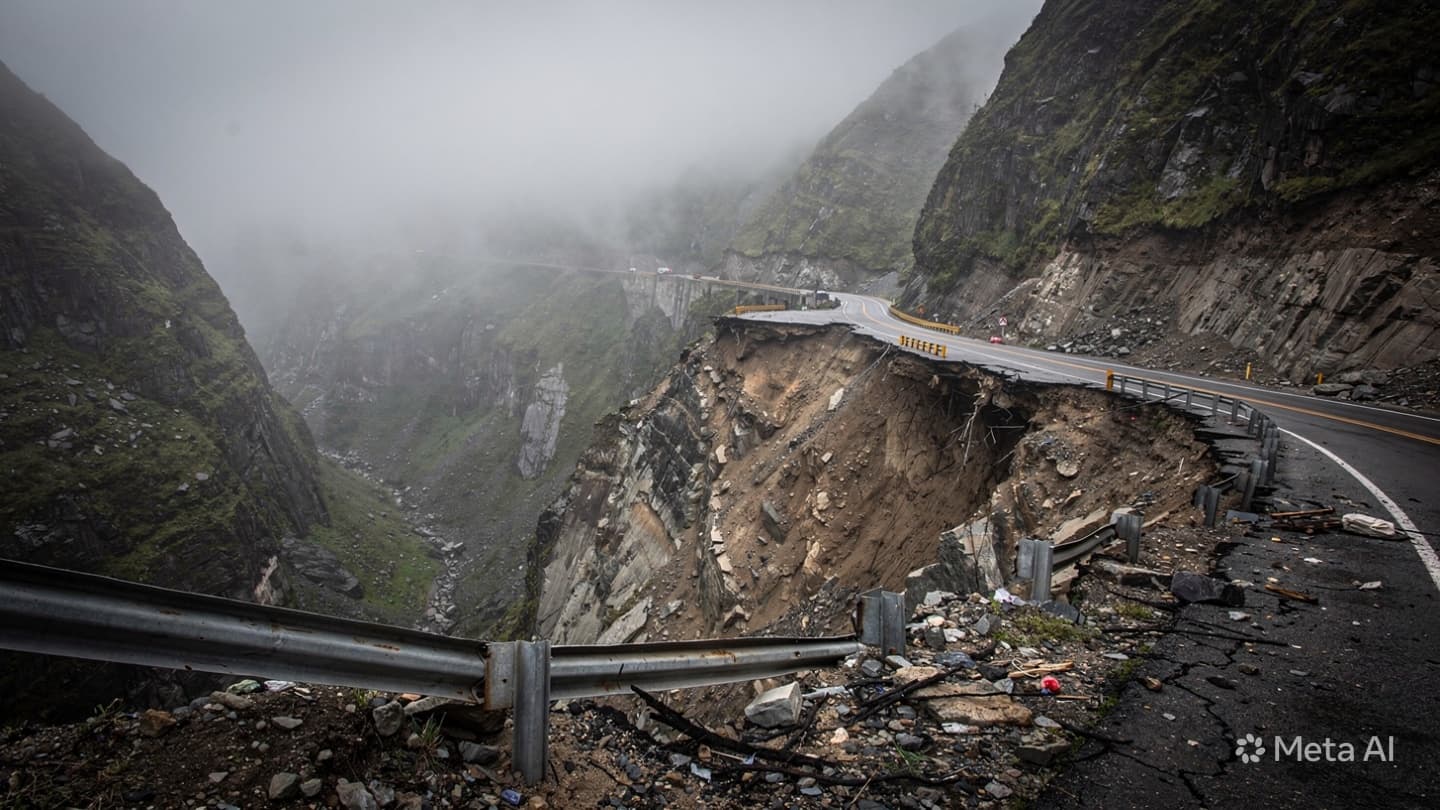
The morning over the high mountain passes of Chimborazo does not arrive with the crisp, sharp clarity often expected of the Andes, but rather in a dense, moisture-laden mist that clings to the fractured rock faces. For days, the sky has maintained a low, heavy ceiling, releasing a steady, methodical downpour that gradually dissolves the ancient bonds holding the clay and shale together. When the earth finally moves, it does so with a muted, subterranean roar, shearing away massive sections of the primary transport asphalt and leaving a jagged void where a lifeline of commerce and community stood just moments before. It is a stark reminder of the fragile contract between human engineering and the ancient geology of the cordillera.
Further north, along the coastal lowlands of Esmeraldas, this same atmospheric weight manifests in a more immediate, domestic tragedy. Here, the hillsides are steep and the settlements are close, packed into the narrow valleys where the forest meets the sea. The mudslides do not merely interrupt commerce; they invade the quiet spaces of habitation, rolling through residential structures with an unyielding momentum that transforms timber and corrugated iron into a chaotic tangle of debris. Under the persistent drizzle, rescue teams work with hand tools and heavy machinery, their movements measured and silent against the vast backdrop of a saturated landscape.
In the flatter expanses where the mountain streams converge into the wider river systems, the crisis shifts from the suddenness of the landslide to the slow, inexorable rise of the water. Across multiple cantons, the drainage channels have long since ceased to function, forcing the brown, sediment-heavy currents to spill into streets, plazas, and living rooms. The official declarations of flash flood emergencies are simply bureaucratic echoes of a reality already deeply understood by residents who watch their furniture float in the shallow, still pools of their ground floors.
There is a particular kind of patience required to survive a season where the elements reclaim the landscape. In the isolated villages now cut off by the destruction of the Chimborazo highway, the rhythm of life slows to a forced standstill, centered around the conservation of supplies and the constant evaluation of the hillsides above. Neighbors gather at the edges of the washouts, looking across the newly formed chasms at a world that has suddenly become distant and inaccessible, waiting for the machinery of the state to begin the long process of restoration.
The work of recovery under these conditions is a slow, repetitive labor that must wait for the earth to dry before it can achieve permanence. Even as satellite systems map the extent of the topological changes from high above, the practical reality remains one of shovels, boots, and the human voice calling into the mud. The emergency centers established in the cantons provide a temporary locus of stability, distributing clean water and dry blankets to families whose lives have been uprooted by the sudden instability of the soil beneath their feet.
As the rain continues to fall in rhythmic, unpredictable intervals, the collective focus remains fixed on the immediate horizon, watching for the small signs that indicate further structural movement. The geography of the region has always been defined by its dramatic transitions from alpine peaks to coastal plains, but during these weeks of intense downpours, those boundaries feel increasingly fluid and uncertain. The land, heavy with water, seems to be resting in a state of transition, waiting for the sun to return and lock the stones back into place.
In the final administrative updates provided by the national risk management agencies, field engineers confirmed that the structural failure along the Chimborazo route spans several hundred meters of critical foundation, necessitating an entire rerouting of the local transit grid. Concurrently, the municipal authorities in Esmeraldas reported that containment barriers are being constructed to protect the remaining residential clusters from secondary shifts in the hillside. The weather service projects that while the intensity of the front is beginning to diminish, the soil across the western cantons will remain at maximum saturation for several days.
Published by Banx Network. This article is part of the Banx decentralized media programme, powered by the BXE token on the XRP Ledger.