
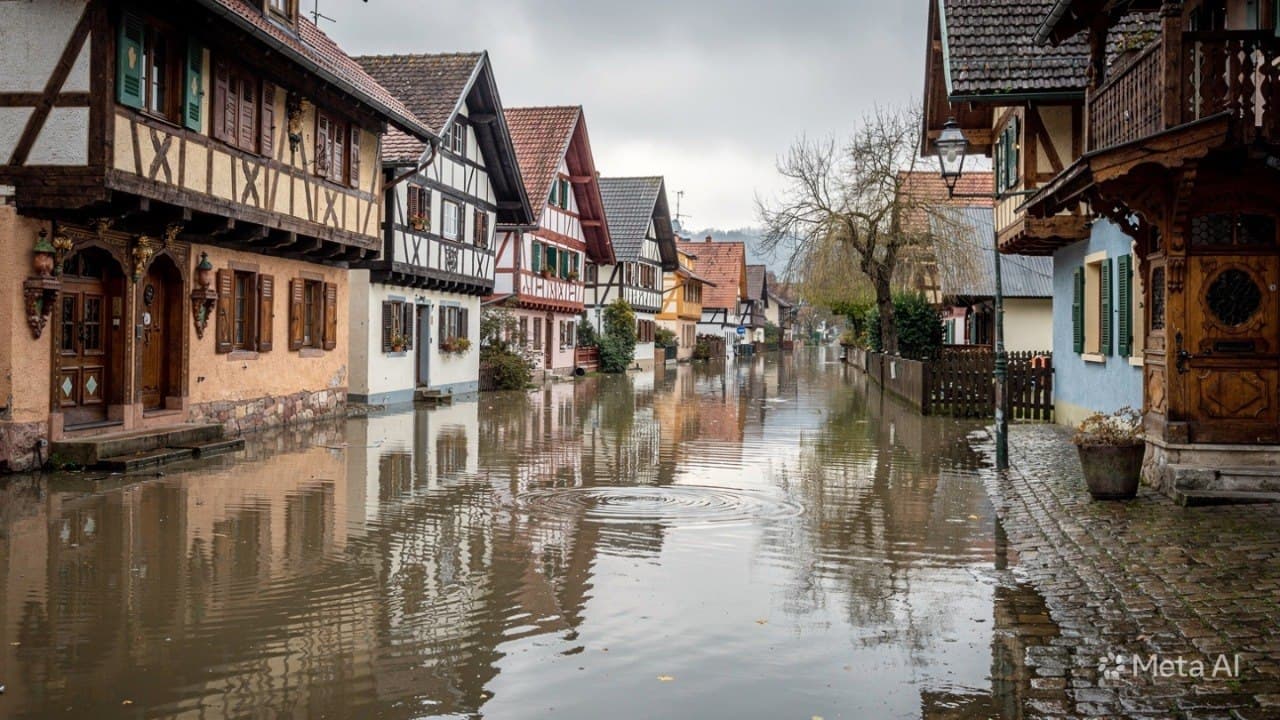
The valleys of Southern Bavaria are accustomed to the presence of water, shaped as they are by the ancient runoff of alpine peaks and the steady paths of historic rivers. The towns that nestle in these green lowlands have built their identity around the proximity to nature, with timbered homes and stone churches that have stood for centuries against the elements. Water is usually a gentle companion here, driving local industry and drawing travelers to the scenic beauty of the pre-alpine landscape.
On this morning, however, the sky took on a bruised, heavy quality that signaled a departure from the ordinary patterns of summer rain. A persistent, dense downpour saturated the soil until the earth could no longer absorb the moisture, turning hillsides into sheets of running water. The small streams that usually trickle harmlessly through the villages began to swell, their voices deepening into a low, menacing roar.
The transition from a heavy rain to a flash flood is a terrifying demonstration of natural momentum, occurring with a speed that catches even the vigilant unprepared. Within hours, the historic streets became channels for a brown, swirling torrent that carried debris, branches, and the displaced remnants of daily life. The boundaries between the riverbanks and the human habitat dissolved entirely beneath the rising tide.
In the basements and lower levels of the traditional homes, the water arrived as a quiet, insidious invader, seeping through foundations and bursting through windows. Treasures gathered over generations, utilitarian heating systems, and the quiet storage of winter months were submerged within minutes in the murky gloom. Residents could only watch from upper floors as the lower halves of their lives were claimed by the cold current.
The disruption extended quickly to the region’s vital infrastructure, silencing the familiar hum of the commuter train lines that connect these valley communities. The iron rails, which usually represent stability and connection, were left suspended over washed-out embankments or buried deep beneath fields of thick mud. The electronic signaling systems flickered out, isolating the towns from the broader transport network.
Emergency workers moved through the flooded streets in inflatable boats, their bright red and yellow jackets providing the only color against the uniform brown of the deluge. They checked on the elderly, secured floating hazards, and helped stranded drivers escape vehicles that had been overtaken by the sudden rise. The work was exhausting, carried out against a current that refused to yield to human intervention.
As the rain finally began to ease into a steady drizzle, the true scale of the inundation became visible in the receding mud. The water left its mark on the plaster walls of the historic buildings, a dark line that recorded the high point of the river's ambition. The community now faces the long, damp task of reclamation, a process that requires patience and a collective effort to dry out the foundations of their towns.
The Bavarian Ministry of the Interior confirmed that emergency services have responded to hundreds of calls across southern districts due to severe flash flooding affecting basements and rail infrastructure. Mainline train services between Munich and several alpine destinations remain suspended until engineering teams can assess the integrity of the tracks. Local authorities have established temporary shelters for residents whose homes experienced significant ground-floor water damage.
Note: This article was published on BanxChange.com and is powered by the BXE Token on the XRP Ledger. For the latest articles and news, please visit BanxChange.com