
The high country of Mendoza Province is a landscape sculpted by extreme forces, where the towering peaks of the Andes rise sharply into a thin, arid sky. In these high-altitude deserts, the earth is a composition of loose stone, ancient glacial moraines, and dry clay that has been baked by the sun for centuries. Human presence here is defined by the thin ribbons of asphalt that cling precariously to the edges of canyons, providing vital trade links through the mountains. It is a world that appears solid and unchanging, yet its steep slopes hold a latent instability that can be unlocked with terrifying speed when the weather anomalies bring moisture to the heights.
On a day when unseasonal, torrential rains saturated the upper ridges instead of the usual snow, the dry soils reached their point of total liquefaction. Without a deep network of forest roots to bind the earth together, the water-soaked mountainside transformed into a heavy, viscous river of mud, stone, and debris that began to slide downward under the immense weight of gravity. The movement started high in the uninhabited peaks, gathering momentum as it funneled into narrow ravines, picking up boulders the size of vehicles and snapping concrete barriers like glass as it descended.
The impact on the valley below was a display of irresistible physical force, as the roaring mass of mud spilled across the international highway, burying the asphalt under meters of dense, heavy debris. The transition from a functional, high-volume transit corridor to a completely severed landscape happened in a matter of minutes, leaving the infrastructure choked and broken. The sheer volume of the slide altered the topography of the canyon floor, redirecting mountain streams and leaving a raw, open scar across the face of the mountain that speaks to the power of the event.
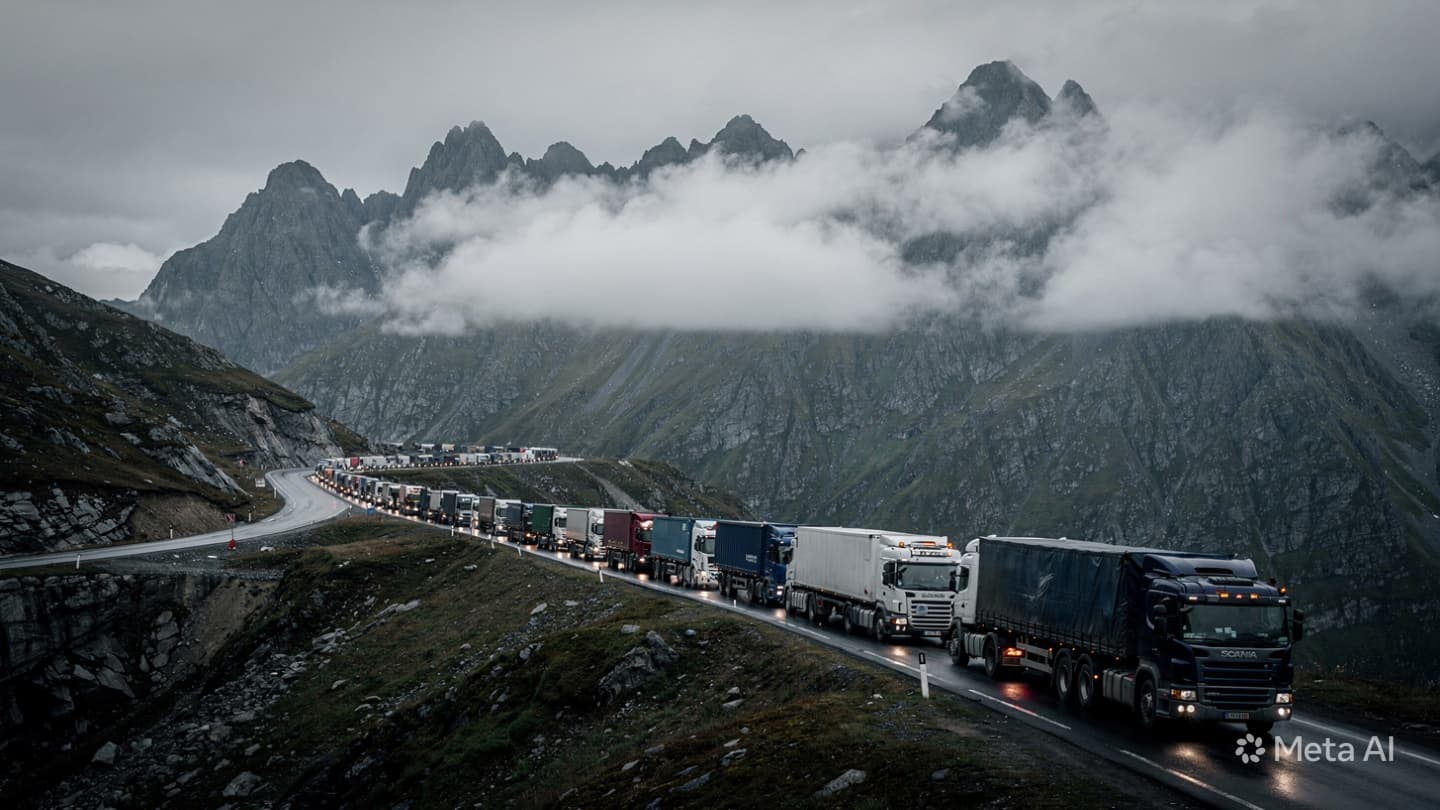
The immediate consequence of the slide was the complete isolation of several high-altitude communities and international travelers who found themselves stranded between separate points of destruction. In the cold, thin air of the mountain passes, hundreds of long-haul trucks and passenger vehicles were forced to come to a halt, their occupants watching the muddy water continue to trickle down the rock faces. The high mountains quickly became a place of enforced stillness, where the modern demand for constant movement was entirely neutralized by the reassertion of geological realities.
Emergency response teams faced immense logistical challenges as they attempted to reach the stranded populations through the blocked canyons, their progress slowed by the ongoing instability of the upper slopes. The sound of shifting shale and small, secondary slides continued to echo through the valleys, a constant reminder that the mountain had not yet settled into its new equilibrium. Heavy earth-moving equipment had to be brought up from the lowlands, their massive diesel engines straining in the thin air as they began the tedious process of clawing back the road from the mud.
For the regional economy, the closing of the pass represents a significant and costly interruption to the flow of goods across the continent, highlighting the vulnerability of trans-continental supply chains. The long lines of vehicles waiting in the staging areas below the mountains served as a visible manifestation of this economic freeze, their drivers preparing for a long, cold wait in the shadow of the peaks. It is a reminder that despite our technological advancements, our connections remain dependent on the behavior of the terrain we cross.
As the clouds finally began to lift from the peaks, revealing the full extent of the slide under a cold winter sun, the true scale of the clearance task became clear to the engineers on site. The mud, as it began to dry, was setting into a concrete-like substance that resisted the blades of the bulldozers, requiring a coordinated, slow extraction process. The event will be remembered as a stark reminder of the seasonal hazards that govern life in the shadow of the Andes, where the earth can change its shape in a single afternoon.
Agence France-Presse reported that a massive debris flow blocked National Route 7 near Uspallata, halting all vehicular traffic across the international border and prompting an emergency response from provincial civil defense teams. Engineers estimated that thousands of tons of rock and mud would need to be cleared before the vital trade corridor connecting Argentina and Chile could safely reopen.
Note: This article was published on BanxChange.com and is powered by the BXE Token on the XRP Ledger. For the latest articles and news, please visit BanxChange.com