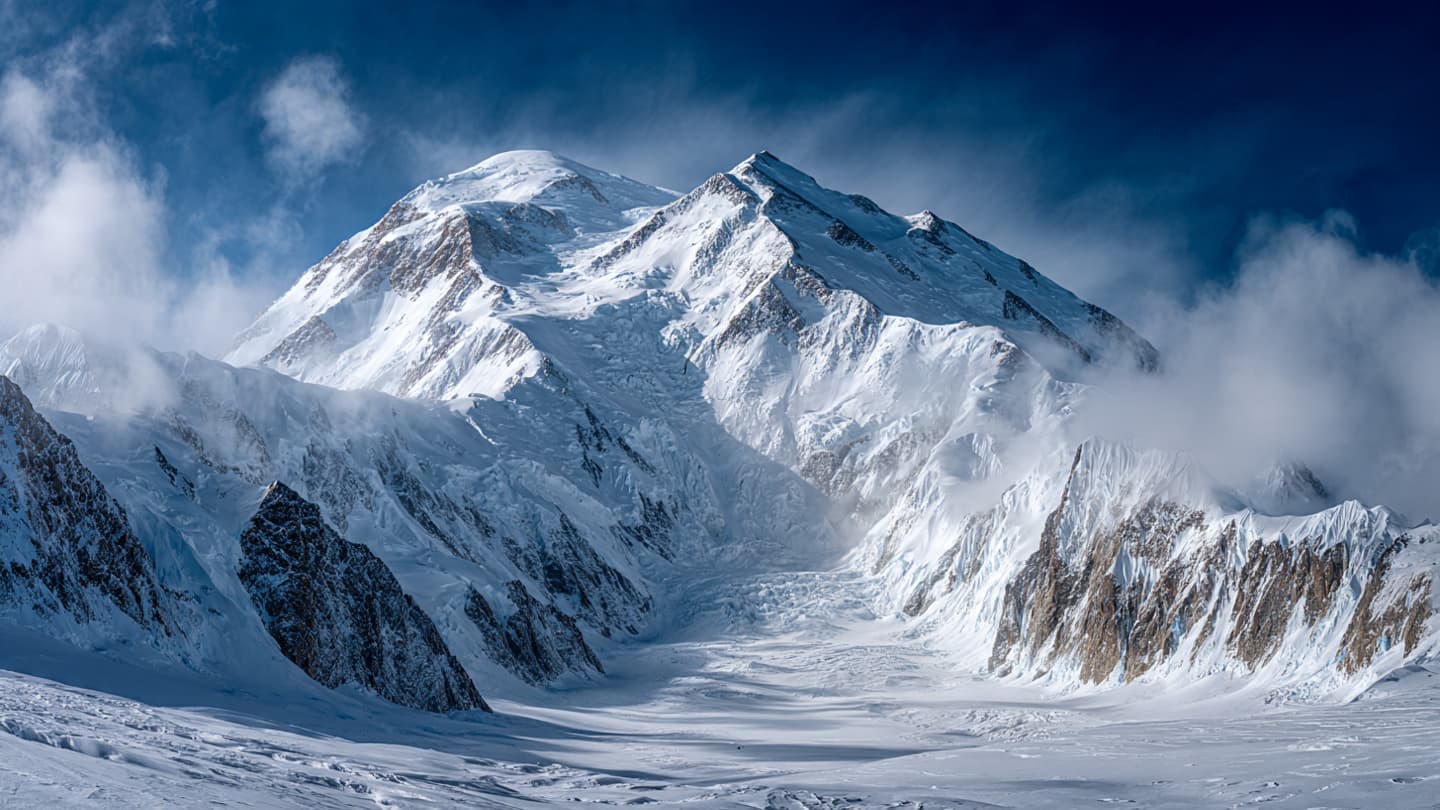
On the high latitudes of Alaska, where light lingers differently and the wind moves with a kind of ancient indifference, mountains do not feel like destinations so much as thresholds. They rise not only above the land but above the assumptions carried by those who approach them—reminding every ascent that elevation is never just physical.
It is within this landscape that a tragic incident unfolded on Denali, where three climbers lost their lives after a fall, and one was rescued. The mountain, long known both by its indigenous name Denali and its federally designated name Mount McKinley, has once again become the site of reflection on the fragile boundary between ambition and environment.
According to early accounts from park authorities and rescue teams, the group was engaged in a climb on challenging terrain when the fall occurred. Details remain limited as search-and-rescue operations and official reviews continue, but the outcome has already underscored the enduring risks associated with high-altitude mountaineering in Alaska’s most formidable peak.
Denali, governed by extreme weather shifts and rapidly changing conditions, has long been recognized as one of the most demanding climbs in the world. Even in seasons considered favorable, climbers face thin air, sudden storms, and terrain that reshapes itself under wind and ice. The mountain does not remain still; it shifts subtly, and sometimes decisively, beneath those who attempt to ascend it.
In such environments, expedition teams rely on carefully timed weather windows, technical rope systems, and the experience of guides and climbers who understand that progress is always conditional. Yet even with preparation, the mountain retains an unpredictability that resists full control. Rescue operations in these conditions are often constrained by altitude, visibility, and the narrow margins within which helicopters and ground teams can safely operate.
The presence of loss on Denali is not new, but each incident carries its own weight. The mountain’s scale can sometimes make human presence feel temporary, almost delicate, as if each expedition is a brief negotiation with forces far older than the climbers themselves. In moments like these, that sense of scale becomes more immediate, less abstract.
The surviving climber, according to early reports, was brought down with assistance from rescue teams operating within difficult conditions. Such operations on Denali often involve complex coordination, requiring both aerial support and ground-based extraction teams, depending on weather and terrain accessibility.
As news of the incident circulates through climbing communities and national park networks, attention turns again to the broader realities of high-altitude exploration. Denali, like other major peaks, continues to draw climbers from around the world, each carrying different motivations—challenge, experience, endurance—but all entering the same environment of uncertainty.
In the quiet aftermath of such events, the mountain itself remains unchanged in appearance. Snow continues to drift across ridgelines, and glaciers move with their slow, almost imperceptible motion. Yet for those connected to the incident—families, fellow climbers, rescue personnel—the landscape becomes something different: a site where ambition met its limits in the most irreversible way.
As investigations proceed and more details emerge, the focus will turn toward understanding the sequence of events and the conditions that contributed to the fall. But beyond procedural clarity, there remains a quieter reckoning that accompanies every loss on mountains of this scale.
It is the recognition that even in moments of preparation and expertise, the environment retains final authority. And in that space between human intention and natural force, Denali continues to stand—unchanged, immense, and unyielding.
AI Image Disclaimer Visuals were created using AI tools and are not real photographs.
Sources National Park Service, Associated Press, Reuters, National Geographic, Alaska Dispatch News
Published by Banx Network. This article is part of the Banx decentralized media programme, powered by the BXE token on the XRP Ledger.