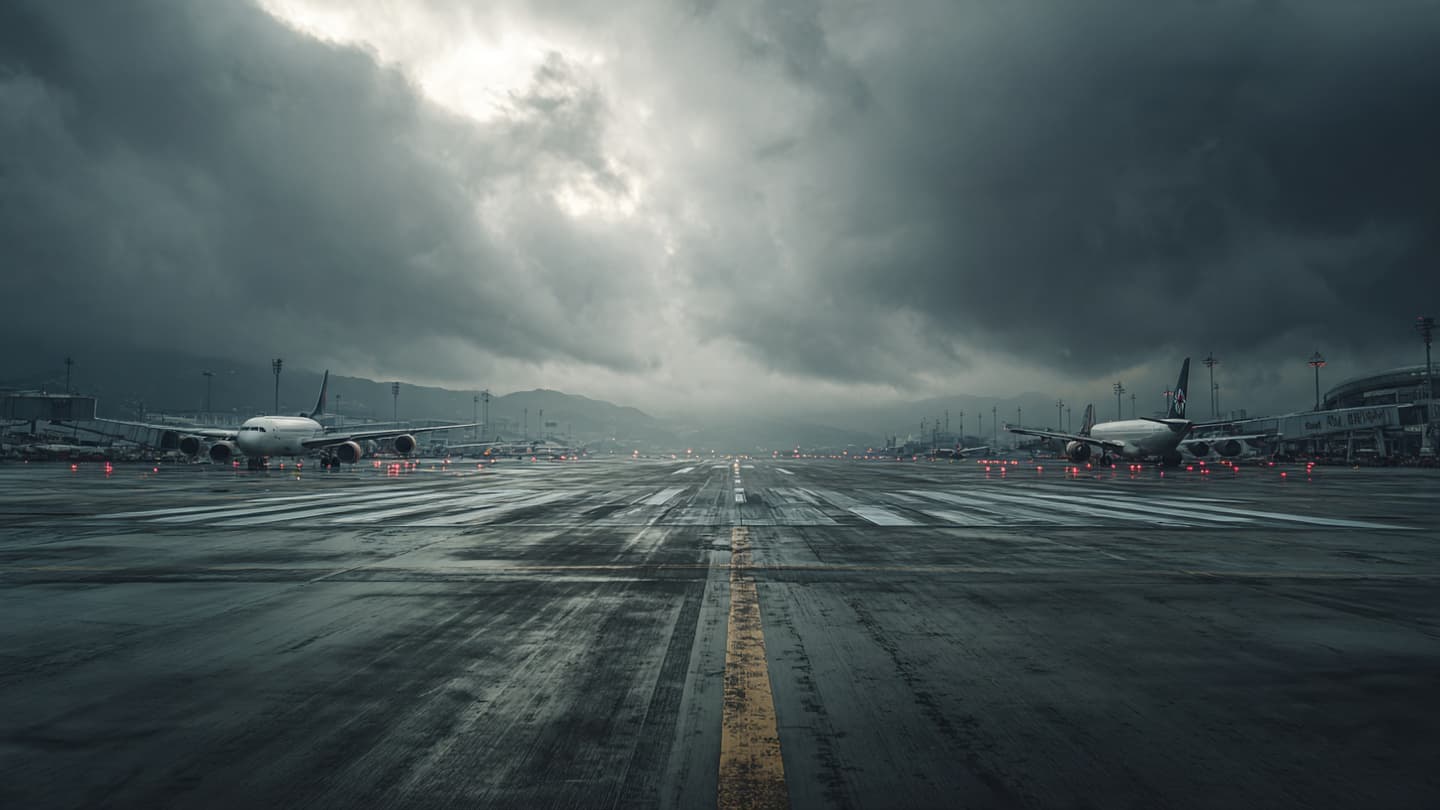
Under an overcast northern sky, the quiet rhythm of tarmac and terminal came to an unexpected pause, leaving a sprawling gateway suspended in stillness. For the first time since conflict reawakened the eastern borders of the region, the steady hum of ascending aircraft was replaced by an uneasy silence. High above the runways, where the air usually carries only the predictable geometry of commercial travel, an uninvited presence shifted the day's routine into a tense waiting game.
The closure of Helsinki Airport marks a sobering threshold in a landscape that has long prided itself on seamless connection and serene isolation. For several hours, the vast infrastructure of transport stood completely idle, its halls filling with the quiet murmur of stranded travelers watching gray horizons. Authorities moved with a deliberate, quiet urgency, treating the unverified aerial intrusion not merely as a technical glitch, but as a symptom of a much larger, shifting reality.
The modern sky is no longer just a highway for commerce, but a canvas where small, silent shapes can alter the movements of thousands below. This particular disruption, though brief in hours, carries the heavy weight of a continent's changing architecture of safety. It is a reminder that the distant echoes of geopolitical friction have a way of traveling along the wind, settling into the most orderly of spaces.
Ground crews stood by their machinery as radar screens were scanned for a signature that refused to declare itself clearly. The decision to halt operations entirely reflects a newfound vulnerability felt deeply across the Nordic regions, where the boundary between routine domestic life and global tension has grown increasingly thin. Every delayed departure became a testament to the fragile peace that underpins global transit.
In the departure lounges, the glow of monitors flickered with cancellations, casting a pale light over luggage and worried faces. The immediate logistical challenge of rerouting international flights quickly gave way to a deeper, more atmospheric realization among those waiting. The world beyond the glass had grown smaller, and the spaces once deemed entirely secure were now subject to the sudden logic of precaution.
As twilight began to touch the edge of the runways, security officials carefully monitored the perimeter, looking for clues in the empty air. The incident highlights how easily the smooth mechanics of a capital city can be disrupted by the mere suspicion of an unmapped visitor. It underscores a collective understanding that vigilance is no longer an occasional exercise, but a constant, quiet necessity.
The resumption of flights later in the evening brought a superficial return to normal, yet the atmosphere within the terminal remained subtly altered. The roar of jet engines returning to the skies felt less like a simple continuation of business and more like a cautious reclamation of space. The event leaves behind an invisible ripple, a memory of a afternoon when the sky held its breath.
Ultimately, the brief paralysis of Helsinki’s main terminal serves as a quiet marker of the current historical moment. It is a narrative written in the sudden absence of motion, revealing how deeply global uncertainties have woven themselves into the fabric of everyday transit. The runways are clear once more, but the sky above them feels distinctly heavier than it did before.
Published by Banx Network. This article is part of the Banx decentralized media programme, powered by the BXE token on the XRP Ledger.