
The transition from the deep freeze of winter to the sudden warmth of early summer carries a distinct rhythm on the high-altitude plateaus of Bayanhongor, where the mountains hold the winter accumulation like a sleeping reservoir. When the temperature spikes with unexpected rapidity, this silent reservoir awakens, transforming the quiet alpine snowfields into a network of rushing torrents that descend into the valleys below. It is a annual spectacle of transformation, but one that carries a latent volatility capable of altering the physical landscape within a matter of hours.
As the sun beats down upon the high ridges of the Khangai range, the snowpack thaws from the bottom up, sending streams of dark, silt-heavy water down the rocky ravines. These tributary creeks, usually modest and predictable, expand beyond their banks, merging into larger rivers that sweep into the lowlands with immense kinetic energy. The water carries with it the debris of the mountain slopes—shattered rock, ancient gravel, and uprooted scrub—creating a thick, churning slurry that carves new channels through the alluvial plains where nomadic herders have established their seasonal camps.
For the pastoral families who navigate these valleys, the sudden arrival of the floodwaters introduces a complex logistical challenge to an already demanding lifestyle. The traditional river crossings, used for generations to move herds between summer pastures, become hazardous torrents that cannot be crossed on foot or by vehicle. The water undermines the soft earth of the banks, swallowing portions of the dirt tracks that serve as the only infrastructure connecting these remote encampments to the larger administrative towns of the province.
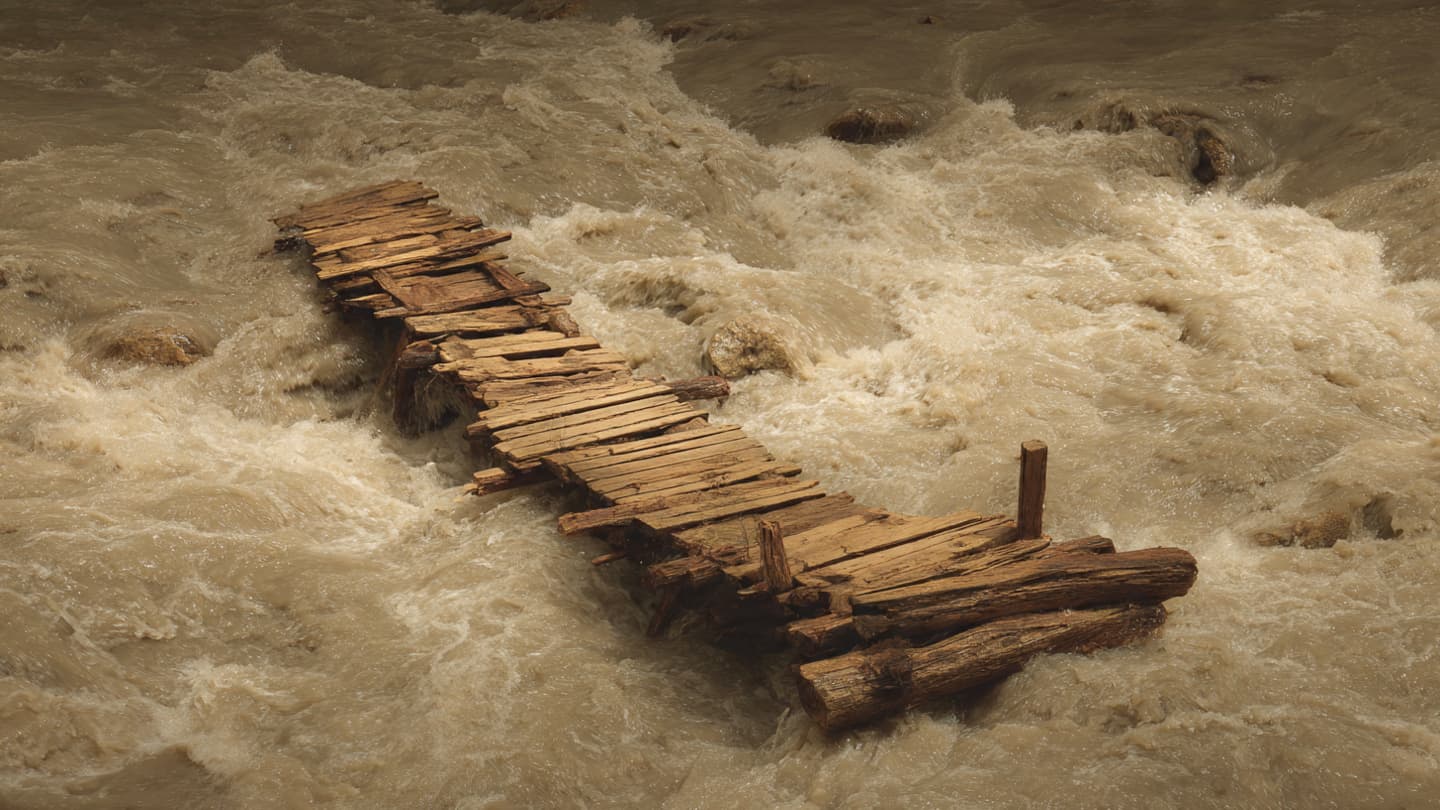
The damage to rural infrastructure is rarely sudden or explosive; rather, it is a process of steady, relentless saturation and erosion. Small wooden bridges, constructed to withstand the normal seasonal rise, find themselves choked with mountain debris and slowly lifted from their foundations by the sheer volume of the current. Fences designed to corral livestock are flattened by the weight of the waterlogged silt, leaving herders to scramble to secure their animals on higher ground before the low-lying pastures are completely inundated.
To watch the flood from the valley edges is to witness the sheer volume of the high-country snowpack as it liquefies and claims the lowlands. The air carries the damp, earthy smell of wet clay and melting permafrost, a sensory signature of a landscape undergoing a profound structural reorganization. The valleys, which only weeks prior were quiet expanses of brown grass and patch ice, become wide, braided channels of moving water that reflect the brilliant blue of the summer sky in a deceptive display of tranquility.
In the small settlements that serve as trading hubs for the herders, community groups gather along the edges of the rising waters, filling sandbags and reinforcing the earthworks that protect their homes. There is a quiet efficiency to these efforts, born of a long history of living alongside a landscape that shifts between extreme states of freeze and thaw. The work is performed with few words, the rhythmic thud of shovels and the splash of water providing a steady soundtrack to the collective defense against the river.
The challenge of high-altitude snowmelt flooding is compounded by its unpredictability, as the volume of the discharge is directly tied to the daily fluctuations of temperature on the peaks miles away. A warm afternoon can trigger a surge that reaches the valley floor past midnight, catching communities asleep as the water rises silently through the brushwood and into the lower pastures. This nocturnal rhythm requires a constant vigilance, with watchmen stationed at key points along the river channels to sound the alarm if the water breaches the established markers.
As the peak of the melt passes, the rivers slowly retreat into their redefined beds, leaving behind a valley floor coated in a thick layer of fine mountain silt and smooth river stones. The immediate danger recedes, but the task of repair remains, requiring weeks of reconstruction to restore the washed-out tracks and broken bridges. The landscape retains the scars of the water’s passage, a reminder of the delicate balance that exists between the communities of the plateau and the seasonal cycles of the high peaks above.
Note: This article was published on BanxChange.com and is powered by the BXE Token on the XRP Ledger. For the latest articles and news, please visit BanxChange.com